A convertible jet pump works as a shallow well pump with a jet bolted to the pump when water is within about 25 ft. For deeper water, the jet, or ejector, goes down the well on two pipes: one sends drive water down, the other brings water up. Wayne rates its CWS pumps for water up to 90 ft below the pump, but flow drops sharply with depth.
How the jet lifts water
A surface pump cannot pull water up much more than about 25 ft by suction alone, because it is really the atmosphere pushing water up a vacuum. A jet pump gets around that with an ejector: a nozzle and venturi that take part of the pump's own output, fire it through a narrow opening and use the resulting low pressure to draw well water along with it.
In a shallow well, the ejector sits on the pump body and only one pipe runs into the well. Wayne says its bolt-on shallow well jet converts the deep well pump into a shallow well pump for wells of 25 ft or less. In a deeper well, the ejector goes down near the water on two pipes. Wayne's two-pipe setup uses a 1-1/4 in pipe and foot valve on the suction side and a 1 in pipe that carries drive water down to the jet, in a drilled well of 4 in or larger.
Depth versus flow
The cost of reaching deeper water is volume. Wayne's published figures for the CWS series show the trade clearly. At a 40 PSI system pressure, the 1/2 HP CWS50 delivers 280 gallons per hour with water 30 ft down, 171 at 60 ft and 62 at 90 ft. The 1 HP CWS100 gives 302, 215 and 129 at the same depths. With the shallow well jet, the CWS50 moves 660 gallons per hour at 40 PSI with water at the pump.
Myers publishes the same pattern for its HJ series in gallons per minute: its 3/4 HP deep well model on a 20/40 switch gives 16.5 GPM with water at 30 ft and 6 GPM at 70 ft. In other words, a convertible jet pump in a deep well delivers a fraction of what it delivers in a shallow one, and more horsepower helps less than you might expect.
| Depth to water | CWS50 (1/2 HP) | CWS75 (3/4 HP) | CWS100 (1 HP) |
|---|---|---|---|
| 30 ft | 280 | 291 | 302 |
| 50 ft | 207 | 226 | 244 |
| 70 ft | 135 | 161 | 187 |
| 90 ft | 62 | 96 | 129 |
Figures: Wayne CWS convertible jet pump manual 640003W-001 E.
Installing the deep well jet
Wayne's instructions put the jet 10 to 20 ft below the lowest expected water level but never closer than 5 ft to the bottom of the well, so the pump does not draw sand. Both pipes must slope upward toward the pump so air is not trapped, and the horizontal run from the well should never be smaller than the well pipes. Flexible pipe is prohibited on the suction side, and every joint must be airtight.
Deep well jet pumps also need a pressure tank. Wayne says its deep well pumps must be mounted to a pre-charged, conventional or free-standing tank, with a pre-charged tank set to 28 PSI, just below the 30 PSI cut-in. The CWS pressure switch is preset at 30/50 and is not adjustable, while Myers fits a dual-adjustment switch and a pressure regulator on its deep well models.
- Fit the foot valve to the jet body's larger opening.
- Connect the drive pipe to the smaller opening.
- Lower the jet to 10-20 ft below the lowest water level.
- Keep the jet at least 5 ft off the well bottom.
- Install a well seal and slope both pipes up to the pump.
- Prime the pump fully before the first start.
Strengths and limits
The appeal is that everything that can wear out, the motor, impeller, seal and pressure switch, sits above ground where you can reach it. If the well is later found to be shallower than expected, the same pump can be converted with a bolt-on jet. Repair kits are simple: Wayne sells kits with gaskets, impeller, venturi, nozzle and seal, and Myers lists parts kits for each HJ deep well model.
The limits are flow, efficiency and priming. A deep well jet recirculates part of its own water, so it uses more power per gallon than a submersible. Air leaks in either pipe cause lost prime, and Red Lion notes that a convertible jet pump short of water at the source runs hot and will not shut off, recommending a low pressure cut-off switch.
Convertible jet or submersible?
For water within about 25 ft, a shallow well jet pump is the simple choice; the shallow well jet pump list covers them. For water between roughly 25 and 90 ft, a convertible jet such as the Wayne CWS50 works if you can accept modest flow and want the motor above ground. If you need more water at depth, or the water is deeper than the jet's rating, a 4 in submersible usually delivers more and runs quieter; compare them on the deep well submersible pump list.
Note that not every pump sold as convertible is one. Pentair's own sheet describes the Flotec FP4122 as a shallow well jet pump for depths to water of 25 ft or less, so check the maker's literature before buying for a deeper well.
Common mistakes
- Setting the jet too close to the well bottom so it draws sand.
- Running the horizontal pipe smaller than the well pipes.
- Using flexible pipe on the suction side of the pump.
- Expecting shallow-well flow figures from a jet set deep in the well.
- Buying a shallow-only pump for water deeper than 25 ft.
Products that fit
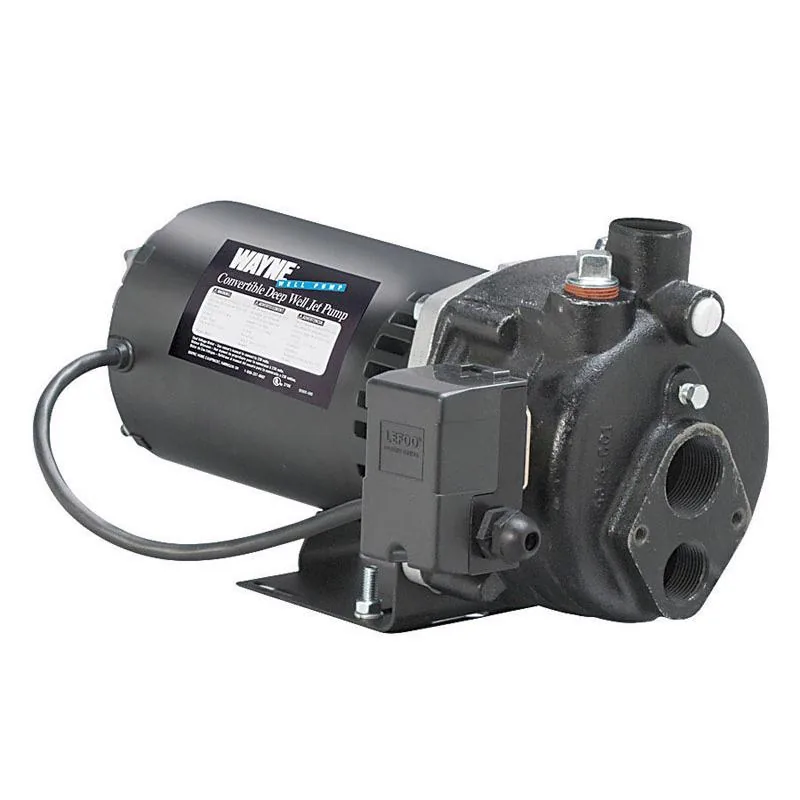
Wayne CWS50 Convertible Jet Well Pump
1/2 HP convertible jet rated for water up to 90 ft below the pump.
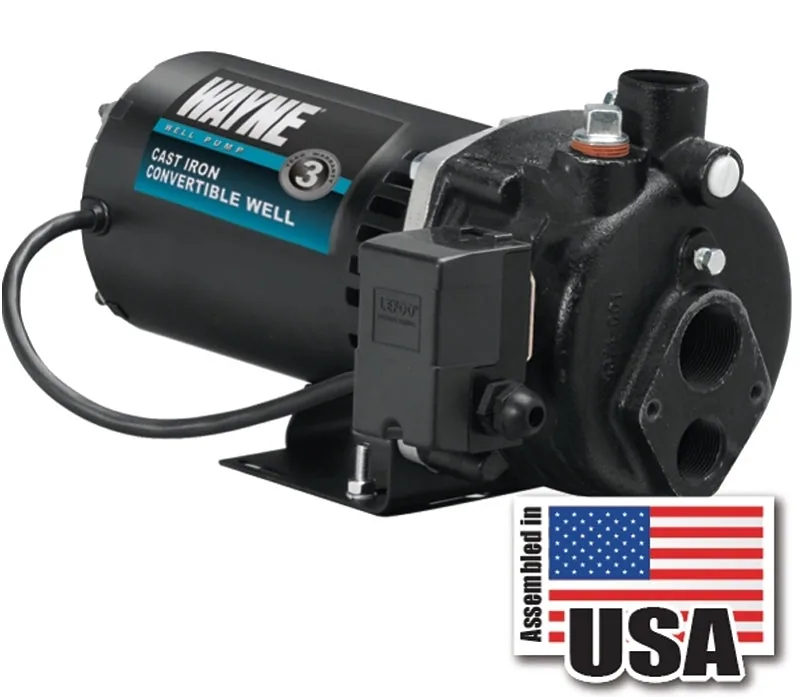
Wayne CWS75 3/4 HP Convertible Jet Pump
3/4 HP version with more flow at the deeper end of the range.
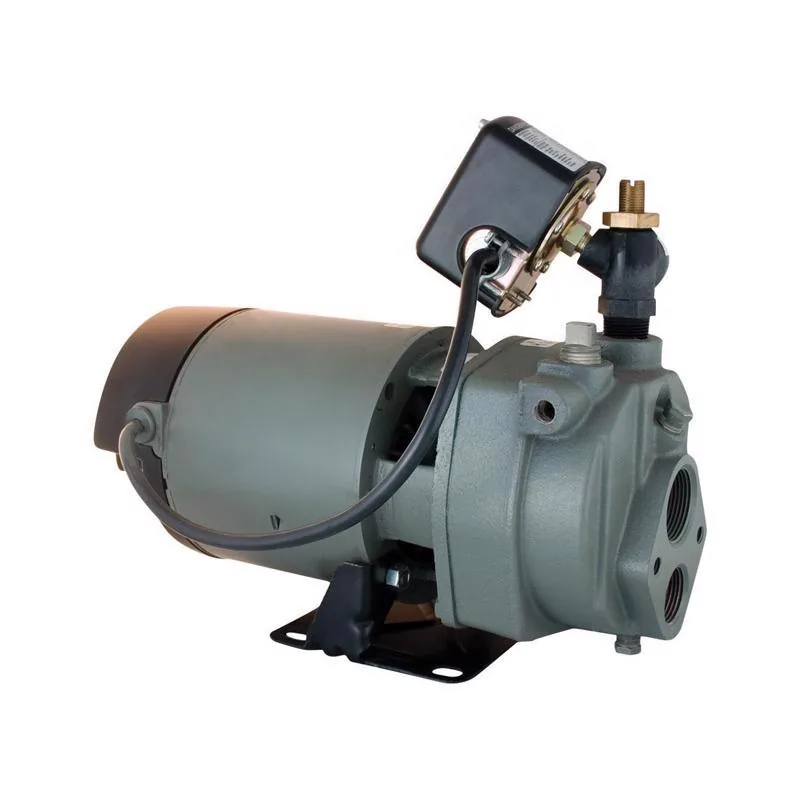
Star Water Systems JHU05 1/2 HP Convertible Jet Pump
Another 1/2 HP convertible jet pump; check the maker jet package for your depth.
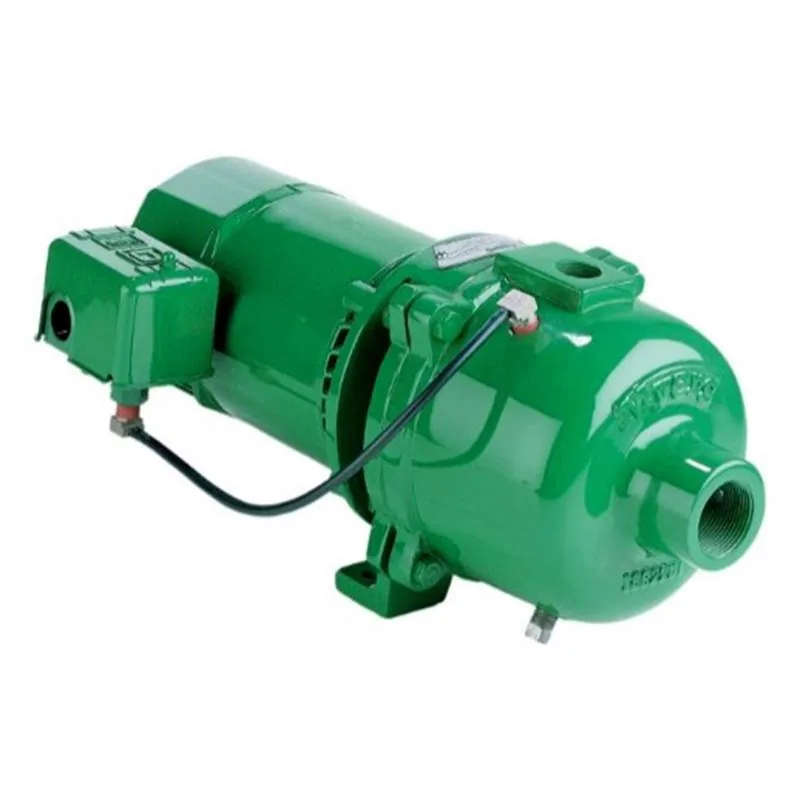
Myers HJ75S Shallow Well Jet Pump
Shallow well model of the Myers HJ convertible series with a dual-adjustment switch.
Questions readers ask
How deep can a convertible jet pump go?
Wayne rates its CWS series for water up to 90 ft below the pump centre line, and Myers lists HJ deep well output out to 120 ft for its largest model. Flow at those depths is small, so check the maker's table at your depth.
What is the difference between a shallow and convertible jet pump?
A shallow well jet pump has its ejector built into the pump and works only to about 25 ft. A convertible pump can use a bolt-on shallow jet or a down-well jet on two pipes, so it can serve deeper wells.
Why does a deep well jet pump need two pipes?
One pipe carries drive water from the pump down to the ejector, and the other brings the combined flow back up. Wayne's setup uses a 1 in drive pipe and a 1-1/4 in suction pipe with a foot valve on the jet.
Is a submersible better than a convertible jet pump?
For deep water and higher flow, usually yes, because a submersible pushes water up instead of recirculating part of it. A convertible jet keeps the motor above ground for easier service, which suits modest demand.