Mount the alarm's float in the pit a little above the pump's switch-on level, so it only trips when the pump falls behind, and plug the alarm into a separate circuit from the pump. When it sounds, check whether the pump is running, then the breaker and GFCI, the float and the discharge. Wi-Fi models add phone alerts but need the router powered during outages.
Why every sump pit needs an alarm
The pump makers are unanimous. Zoeller says a high water alarm is always recommended on a submersible pumping system, especially where there is only one pump. Wayne's manual says an independent high water alarm or a backup pump should be used whenever high water could damage property. Liberty recommends an alarm in any application where losing the pump could cause damage.
An alarm does not pump water. What it gives you is time: a stuck float, a tripped GFCI, a frozen discharge line or a pump at the end of its life all show up first as water rising past the normal on level. Hearing that early turns a flooded basement into a quick fix.
Types of alarms and monitors
Alarms differ in how they sense water and how they tell you. The simplest is a plug-in alarm with a float, such as the Superior 92060, which Superior lists with a 15 ft tethered float, an 87 decibel horn and a 9 volt battery backup for the alarm itself. Wi-Fi models add phone alerts; some also report power loss, temperature or humidity. A different approach monitors the pump's own electrical draw instead of the water level.
| Device | Senses | Alerts | Backup power for alarm |
|---|---|---|---|
| Superior 92060 | Tethered float, 15 ft cord | 87 dB horn, low-battery chirp | 9 V battery, not included |
| MOKYDUO Z2PRO | Tethered float, high and low | Wi-Fi, 90 dB alarm | Backup battery listed |
| Level Sense LS-ProXV | Water level, leak, power, temperature, humidity | Wi-Fi alerts | Not stated in the listing |
| Liberty ALM-P1 on SJ10A | Float sensor on the backup pump | 86 dB, LED ring, auxiliary contacts | Internal battery |
| Basement Watchdog BW-WIFI | Reports from a Watchdog backup system | Email, text or in-app | Runs from the backup system |
Figures: Superior Pump 92060 alarm system product page; MOKYDUO Z2PRO Wi-Fi sump alarm listing; Level Sense LS-ProXV listing; Liberty SJ10-Series sales literature LLIT004400; Basement Watchdog BW-WIFI quick start guide.
How to install a sump pump alarm
Placement decides whether the alarm is useful. Set the float too low and it sounds on every normal cycle; set it too high and water may reach the floor before it trips. Aim for a point a short distance above the pump's switch-on level and below the inlet pipe, where water only reaches when the pump has failed or fallen behind.
Power matters as much. Liberty says an alarm must be connected to a separate electrical circuit from the pump, so the fault that stops the pump does not also silence the warning. A battery backup inside the alarm covers power cuts.
- Find the pump's switch-on level and the height of the inlet pipe.
- Clip the alarm float a few inches above the on level, clear of other floats.
- Mount the alarm box above the pit where it will be heard.
- Plug it into an outlet on a different circuit from the pump.
- Fit the alarm's backup battery if it uses one.
- Unplug the pump, pour water into the pit and confirm the alarm sounds.
What to do when the alarm goes off
Stay calm and look before you reach. If water is on the floor near outlets, switch off power at the panel first. Then work through the likely causes in this order.
Is the pump running? If it hums or runs but the level is not dropping, suspect a blocked discharge, a frozen outdoor line, a stuck check valve or air lock. If it is silent, check the breaker and the GFCI outlet, then the float: debris or a tipped pump can hold it down. If the pump is running hard and simply cannot keep up with a storm, the alarm is doing its job; a backup pump buys time while you plan a bigger primary.
Do not just silence the alarm and walk away. Most units let you mute the horn, but the cause is still there.
Wi-Fi monitors: what they add and their limits
A Wi-Fi monitor sends the warning to your phone, which matters most for second homes, travel and basements nobody visits. The Basement Watchdog BW-WIFI module connects a Watchdog backup system to an app that sends email, text or in-app alerts. Others, like the Level Sense LS-ProXV, work on their own and add leak, power and temperature sensing.
The weak point is power. Liberty's NightEye literature warns that during an outage your router stops sending signals unless it is on backup power, though the alarm in the basement still sounds on its internal battery. If phone alerts during storms matter to you, put the router and modem on a small battery backup.
Alarm noise at night and false alarms
A low-battery chirp is the usual night-time noise. Superior describes a chirp on the 92060 when its backup battery runs low, so replace that battery once a year. Repeated high-water alarms with a working pump usually mean the alarm float sits too close to the pump's on level or is tangled with the pump float. For backup systems with their own alarms, the Basement Watchdog troubleshooting guide covers each code.
Common mistakes
- Plugging the alarm into the same outlet or circuit as the pump.
- Setting the alarm float so low that it sounds on every normal cycle.
- Letting the alarm float tangle with the pump's own float switch.
- Silencing the alarm without finding out why the water rose.
- Relying on Wi-Fi alerts while the router has no backup power.
Products that fit
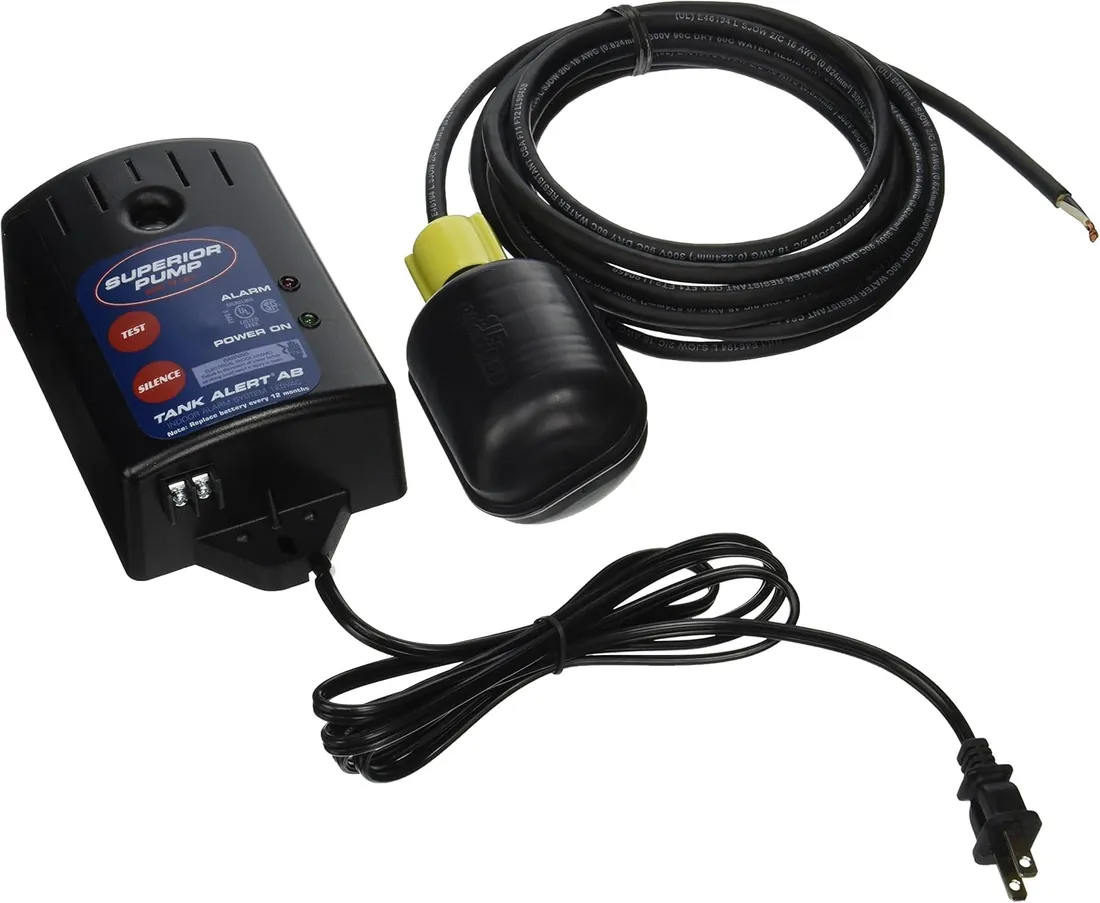
Superior Pump 92060 Sump Alarm
Plug-in alarm with a 15 ft tethered float, loud horn and 9 V backup.
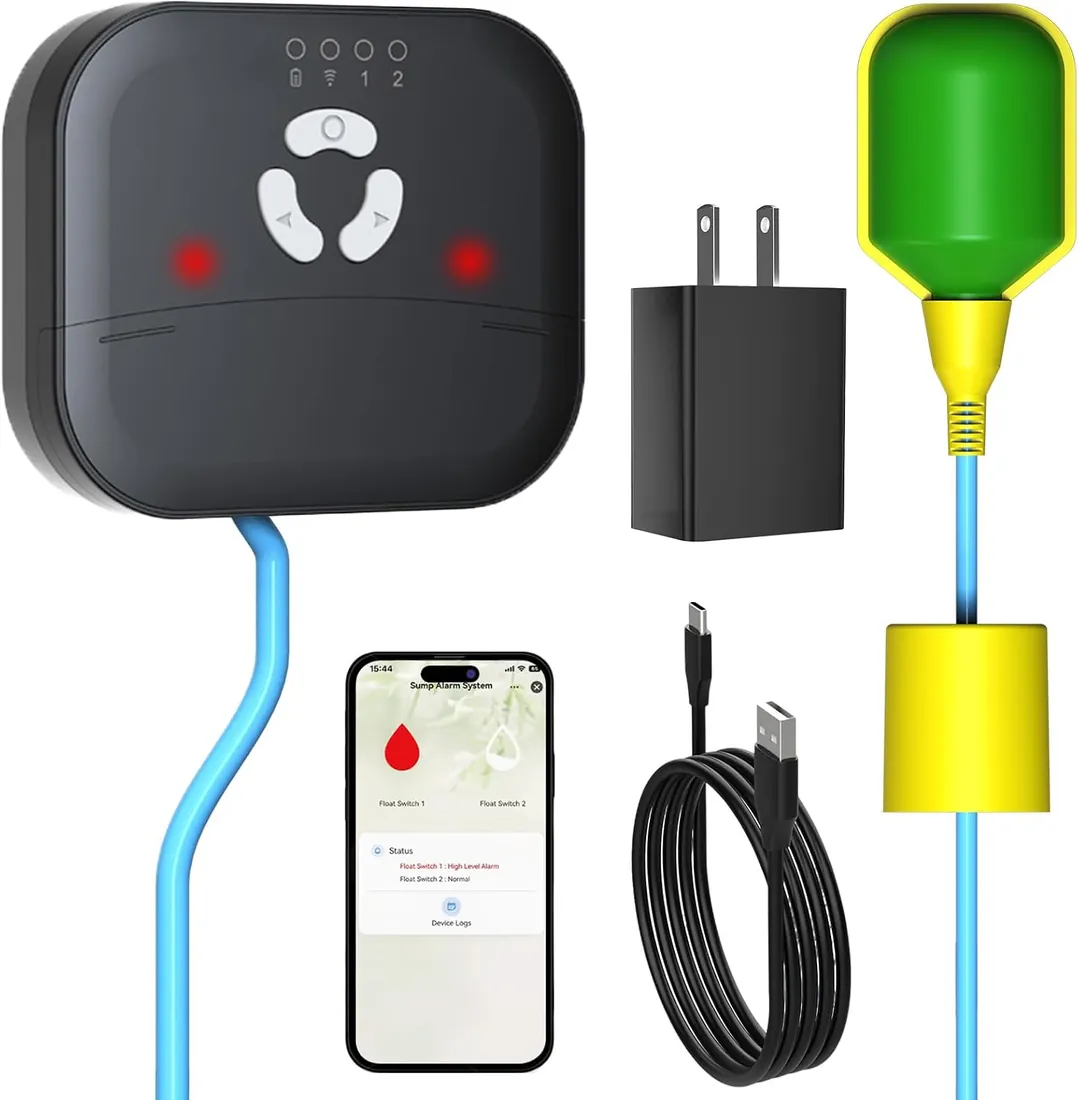
MOKYDUO Z2PRO Wi-Fi Sump Pump Alarm
Wi-Fi alarm with high and low float alerts and a backup battery.

Level Sense LS-ProXV Wi-Fi Sump Pump Alarm
Wi-Fi monitor that also reports leaks, power failure, temperature and humidity.
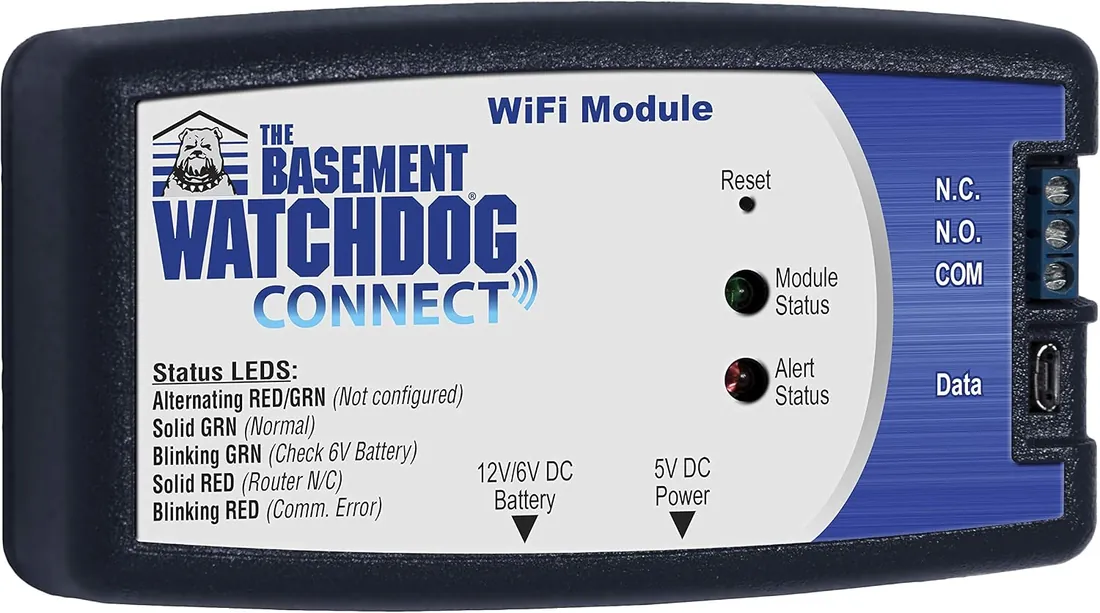
Basement Watchdog BW-WIFI Module
Adds app, email and text alerts to a Basement Watchdog backup system.
Questions readers ask
What do I do if my sump pump alarm goes off?
Check whether the pump is running. If it is silent, check the breaker, GFCI and float. If it runs without lowering the water, check the discharge pipe, check valve and air lock. If it runs hard but cannot keep up, start a backup pump.
Where should a sump pump alarm float go?
A few inches above the pump's switch-on level and below the inlet pipe, clear of the pump float. That way it sounds only when the pump has failed or fallen behind, not on every cycle.
Do Wi-Fi sump alarms work during a power outage?
The alarm itself usually keeps sounding on its internal battery, but phone alerts need the router and modem powered. Liberty notes this for its NightEye alarm and suggests keeping network gear on backup power.