Quick verdict
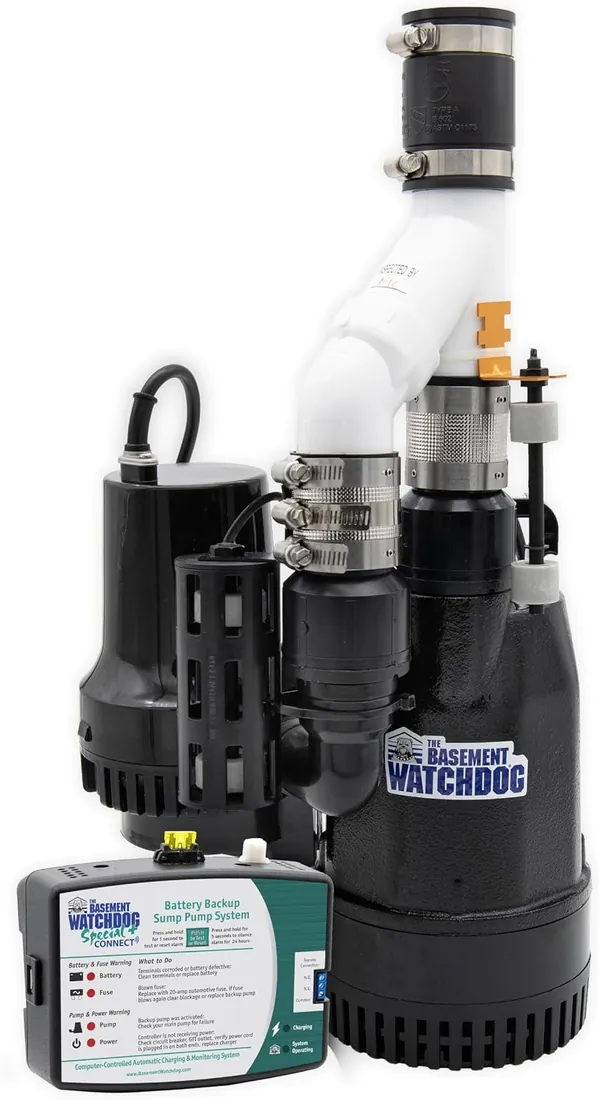
The CITS-50 is the combo for a small pit. Glentronics says it fits a basin as small as 12 in wide, and both pumps run on dual float switches, so one stuck float does not stop either pump. Built-in check valves remove a common install mistake. Its weak spots are a primary with no published shut-off head and a backup that is still a plastic battery pump.
Who it fits, and who should skip it
A good fit if
- Your sump pit is narrow, down to about 12 in wide.
- You are replacing the main pump and want backup in the same job.
- You want redundant floats on both the primary and the backup.
- You may add the optional Wi-Fi module later.
Look elsewhere if
- Your current primary is healthy; a stand-alone backup is less work.
- You need a published shut-off head for a high lift.
- You need more than 1/2 HP from the primary.
Specifications
Primary pump (AC)
| Horsepower | 1/2 HP (replacement part SIT-50NS) |
|---|---|
| Voltage | 115 V, 60 Hz; backup 12 V DC |
| Motor | Copper-wound PSC (listing) |
Figures: Basement Watchdog CITS-50 combination sump pump system instruction manual (US edition); Amazon listing B08BX6H22H.
Performance
| Primary flow at 10 ft | 3,540 GPH |
|---|---|
| Max flow | 4,400 GPH primary at 0 ft (listing figure) |
| Backup flow at 10 ft | 1,850 GPH |
| Max head | Not stated in the maker's manual |
Figures: Basement Watchdog CITS-50 combination sump pump system instruction manual (US edition); Amazon listing B08BX6H22H.
Switches
| Switch type | Caged dual float with piggyback controller (primary); dual float (backup) |
|---|---|
| Run-on times | Primary 10 seconds after the float drops; backup about 25 seconds |
Figures: Basement Watchdog CITS-50 combination sump pump system instruction manual (US edition).
Backup system
| Battery | Basement Watchdog AGM standby battery, not included |
|---|---|
| Runtime | 60 hours on the maker's battery at a 10% duty cycle |
| Controller | BWSP-A: lights, alarm, USB port for BW-WiFi2, N.O./N.C. remote terminal |
Figures: Basement Watchdog CITS-50 combination sump pump system instruction manual (US edition).
Build
| Discharge | 1-1/2 in, joined with the supplied rubber union |
|---|---|
| Check valves | Built in: 1-1/2 in on the primary, 1-1/4 in with weep hole on the backup |
| Size | 12 in W x 19-1/2 in H; fits a pit 12 in wide and 15 in high |
| Construction | Cast iron primary housing; noncorrosive backup housing and strainers |
| Warranty | 2 years parts and labor, excluding installation |
Figures: Basement Watchdog CITS-50 combination sump pump system instruction manual (US edition); Basement Watchdog CITS-50 series limited warranty.
Installation and setup
Because the check valves are built in, the old pump's valve comes out and is thrown away. The key measurement is height: cut or extend the existing discharge so it ends 20-1/2 in above the pit floor, or above the bricks or stand if you raise the unit out of silt. Join a lengthened pipe with a 1-1/2 in PVC connector or a rubber union.
Lift the assembly only by the handle on the larger black primary pump, never by the pipes or wires. Slide the supplied rubber union up the house pipe, lower the system in level with both floats moving freely, then slide the union down so it covers both pipe ends and tighten the clamps. Plug the blue piggyback controller into a grounded outlet at least 4 ft above the floor, plug the primary into it, and mount the backup controller on its battery box with the Velcro strips.
Switch and sizing notes
The primary's switch is a cage holding two floating rings. A lift of 1/4 in on the lower ring starts the pump; if that ring fails, the upper one takes over. The primary then runs for 10 seconds after the float drops. The backup has its own dual float and runs about 25 seconds after the water falls away.
The manual gives one flow point for each pump: 3,540 GPH for the primary and 1,850 GPH for the backup at 10 ft. It lists no shut-off head, so if your pipe climbs well beyond 10 ft, compare the curve of a pump that publishes one. The sizing calculator estimates your total head, and the combo systems guide covers how these pairings work.
Ownership and maintenance
Air relief is easy to overlook. While the pumps run, water should spray from a small hole on top of the primary and from the 3/16 in hole in the backup's check valve. Keep both clear or an air lock can stop the system. The manual calls the primary's hole 1/8 in in one place and 3/16 in in another; either way, clear it, do not plug it.
Service the system once or twice a year: lift each float, clear the pit floor and strainers, and confirm a strong flow. The backup's lights work like the Special CONNECT: Battery means about half an hour of continuous pumping left, Fuse a jam or short, Pump that the backup ran. Replace a battery older than five years. Coverage is two years of parts and labor, excluding installation.
Pros and cons
Pros
- Fits a pit as small as 12 in wide.
- Dual floats on both pumps.
- Check valves are already built in.
- Cast iron primary pump housing.
Cons
- No published shut-off head.
- The backup battery costs extra.
- Warranty is two years with no extension listed.
Alternatives worth comparing
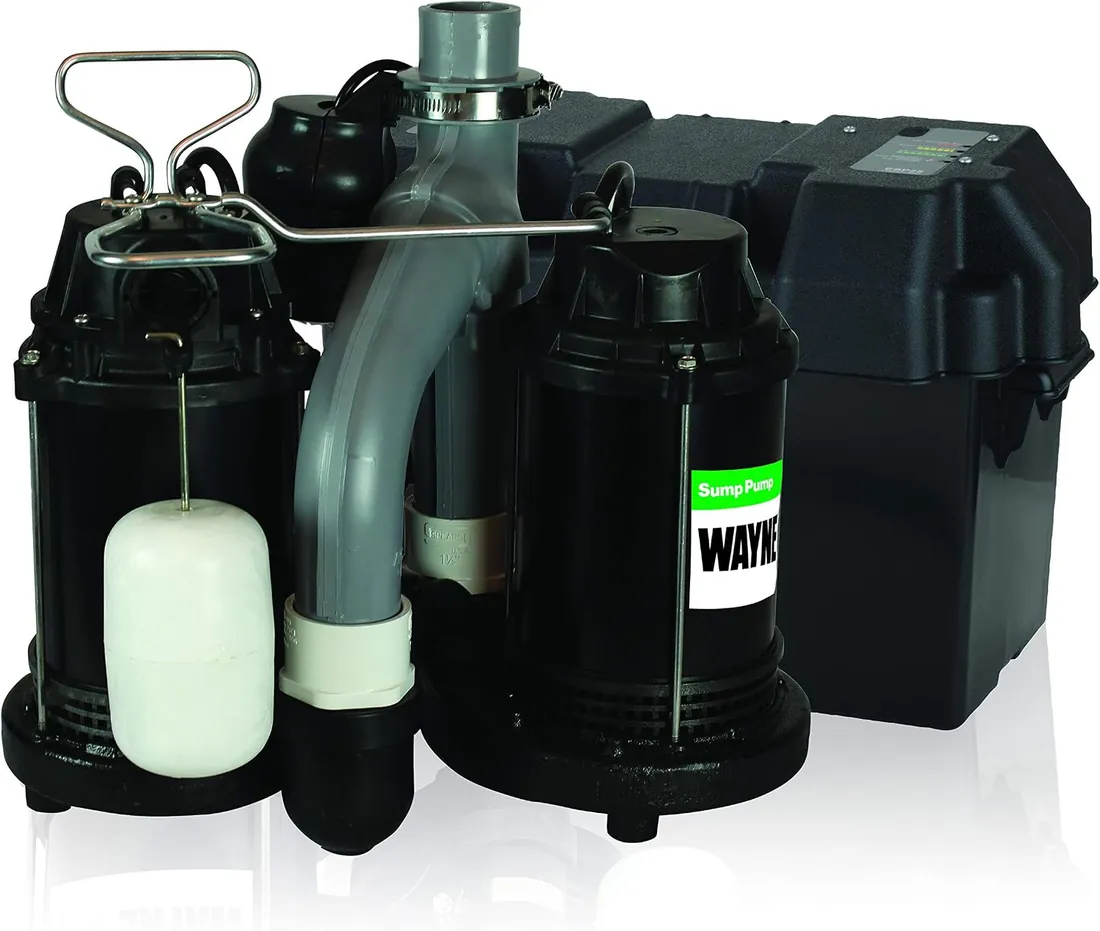
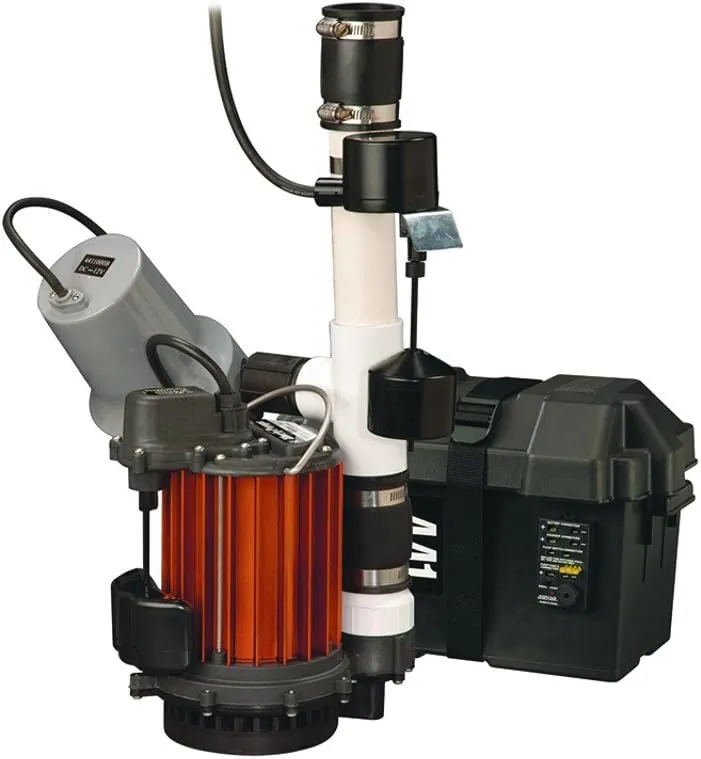
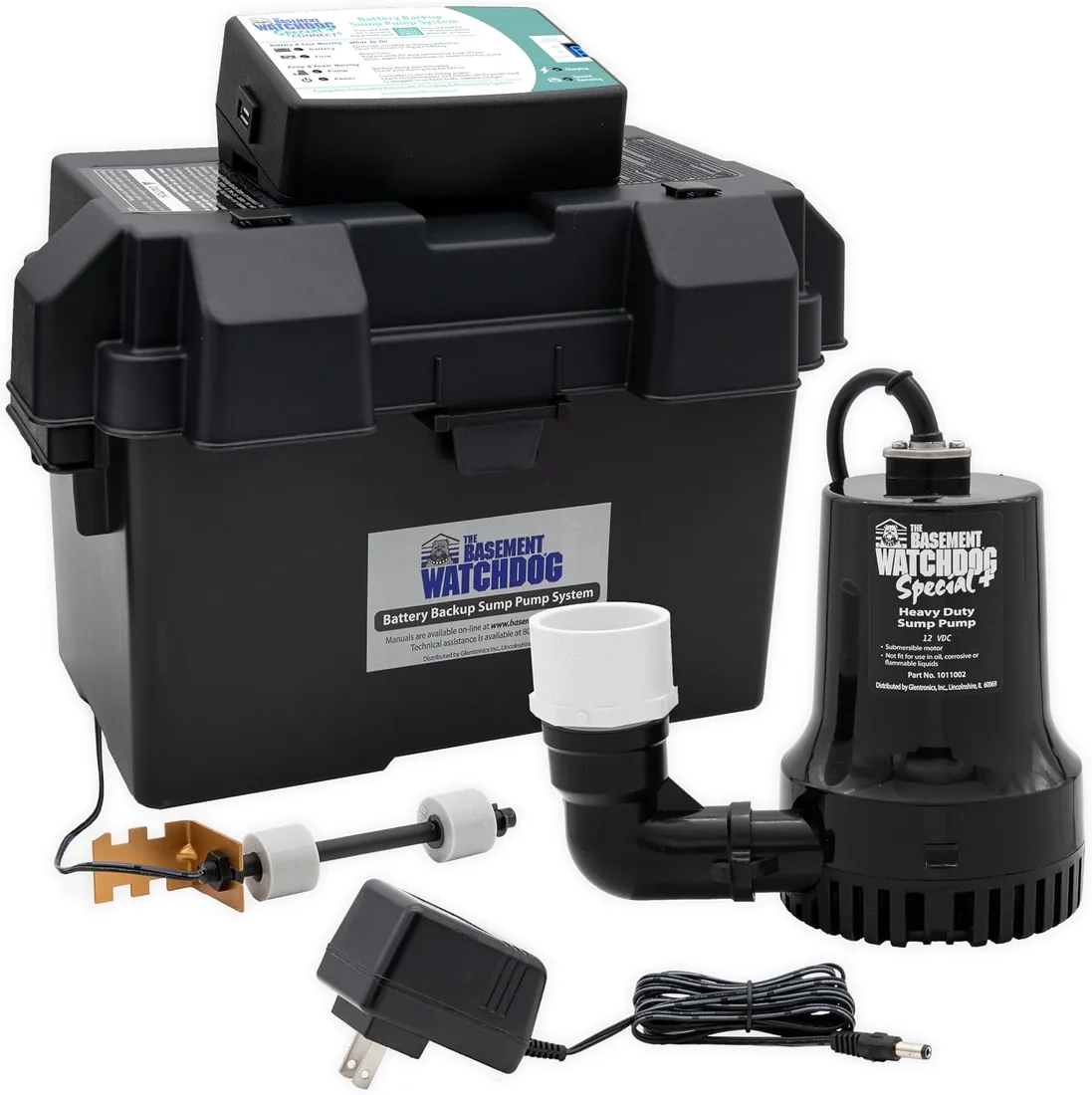
Compared with and featured in
Final verdict
The CITS-50 earns its place in pits too narrow for most combo systems, and its dual floats and built-in check valves cut the usual failure points. If your pit is wide and your lift is high, a combo with a published shut-off head and a longer warranty is the better fit.
Where to buy
Each button opens this exact model's listing. We may earn a commission on tracked links; it never changes what we publish. Disclosure
Questions buyers ask
Does the CITS-50 need a separate check valve?
No. Glentronics builds check valves into both pumps, a 1-1/2 in valve for the primary and a 1-1/4 in valve with a weep hole for the backup, and tells you to discard the old valve. Spares are listed by part number if they ever need replacing.
How small a sump pit will the CITS-50 fit?
The manual says the system fits a pit as small as 12 in wide and 15 in high, about the size of a five-gallon bucket. It stands 19-1/2 in from the pump base to the top of the wye, and the house discharge must end 20-1/2 in above the pit floor.
Will the battery run the primary pump during an outage?
No. The manual states that the battery does not run the primary. During a power cut the 12 V backup takes over on its own float, and Glentronics rates its battery at 60 hours of runtime at a 10% duty cycle.
Can I get phone alerts from the CITS-50?
Yes, with an add-on. The backup controller has a USB port for the separately sold BW-WiFi2 module, which sends emails, texts or app alerts. A terminal with normally open and normally closed contacts also lets a home security system pick up the alarm.