A combo system pairs a 1/3 or 1/2 HP AC primary pump with a 12 V DC backup on one manifold, with check valves and a controller. Wayne's WSS30VN moves 3,840 GPH at 10 ft on AC and 1,500 GPH on battery; Basement Watchdog's CITS-50 is rated at 3,540 and 1,850 GPH at 10 ft. Check the minimum pit size first.
What a combo system is
A combination system is a primary sump pump and a battery backup pump, joined at the factory to a single discharge pipe. Each pump has its own check valve below the junction so neither pumps water back through the other. The backup comes with a charger and controller that watch the battery and sound an alarm, and the whole assembly drops into the pit as one unit.
The primary runs whenever it has AC power. If the power fails, the primary breaks down, or water arrives faster than the primary can move it, the level rises to the backup float and the DC pump starts. Basement Watchdog describes exactly that behaviour for its CITS-50 and adds a second float on each switch, so if one float sticks the other still starts the pump.
Three combo systems compared
The figures below come from each maker's manual or sales sheet. Flow at 10 ft is the fairest single comparison because most basements lift water somewhere near that height. The backup figures assume a charged battery; DC pump output falls as the battery voltage drops.
The Wayne WSS30VN uses the same 1/2 HP motor and vertical float as Wayne's CDU800. The Basement Watchdog CITS-50 pairs a 1/2 HP cast iron primary with the backup from its Special system. Liberty's PC442 series lets you choose the primary; the PC257-442 uses the cast iron 257.
| System | Primary pump | AC flow at 10 ft | Battery flow at 10 ft | Minimum pit |
|---|---|---|---|---|
| Wayne WSS30VN | 1/2 HP coated steel | 3,840 GPH | 1,500 GPH | 15 in diameter (manual) |
| Basement Watchdog CITS-50 | 1/2 HP cast iron | 3,540 GPH | 1,850 GPH | Not stated in the text we hold |
| Liberty PC257-442 | 1/3 HP cast iron 257 | Curve is a graphic | Curve is a graphic | 18 in diameter, 18 in deep |
Figures: Wayne WSS30VN operating instructions and parts manual 670006W-001 I; Basement Watchdog Big Combo CONNECT (CITS-50) US instruction manual; Liberty Pumps PC442-Series sales literature LLIT006747.
Combo or separate backup?
A combo's main advantage is that the hard part is done. Pump heights, float levels, check valves and the tie-in are set at the factory, so there is no risk of a backup float set below the primary or a missing check valve on one branch, both common faults in owner-built setups. It also replaces an old primary at the same time.
The disadvantages are flexibility and fit. You get the maker's primary pump, which may be smaller than you need: Liberty offers 1/3 HP primaries in the PC257 and PC237 and a 1/2 HP version only in a model not covered here. The assembly is taller and wider than a single pump, so a narrow pit may not take it. And when one pump fails, you replace that pump within the system rather than swapping in any brand. If you already own a good primary, a separate backup such as the Basement Watchdog Special often makes more sense.
Batteries and run time
None of these systems ships with a battery. Wayne recommends its 75 amp-hour WSB1275 for the WSS30VN. Liberty's PC442 battery box takes a Group 27 or 31 deep-cycle battery and works with AGM, wet-cell or gel types, with its own StormCell batteries recommended. Basement Watchdog supplies a cable kit for connecting two batteries for longer run time.
Run time depends on how often the backup has to start, which depends on your inflow and pit size, not on the system alone. The battery backup runtime calculator estimates it for your pit. A second battery roughly doubles the energy available, if the controller supports it.
Installing a combo system
The install is mostly a primary pump replacement. Clear the pit, set the assembly level on a solid base, connect the single discharge to the existing pipe, and plug the primary and the controller into separate outlets as the manual directs. Wayne asks for a 15 A minimum circuit for both the AC and DC sides of the WSS30VN, and its usual rule of a GFCI-protected outlet and no extension cords applies.
Then run both pumps. Fill the pit until the primary cycles, unplug the primary, and fill again until the backup runs and the alarm sounds. Wayne's WSS30VN backup starts at 10 to 12 in, above the primary's 9 in on level, which is the order every combo depends on.
- Measure the pit diameter and depth against the maker minimum.
- Remove the old pump and clean the pit.
- Set the system level and connect the discharge with a union.
- Connect the battery, then plug in the primary and charger.
- Run the primary, then the backup, through full cycles.
Which combo to choose
For a standard basement with an 11 to 15 in pit and a lift near 10 ft, the WSS30VN offers the strongest primary of the three at that lift. Where the battery backup's own output matters most, the CITS-50's backup is rated higher at 10 ft. Liberty's PC257-442 makes sense if you want Liberty's cast iron primary and its alarm and charger features, and your pit is at least 18 in across.
The battery backup sump pump list ranks the standalone backups, and the power outage guide compares batteries with water-powered and generator options.
Common mistakes
- Buying a combo without measuring the pit diameter and depth.
- Choosing a combo whose fixed primary is smaller than the old pump.
- Forgetting the battery, which none of these systems includes.
- Plugging the charger into a shared circuit or extension cord.
- Never unplugging the primary to confirm the backup actually runs.
Products that fit
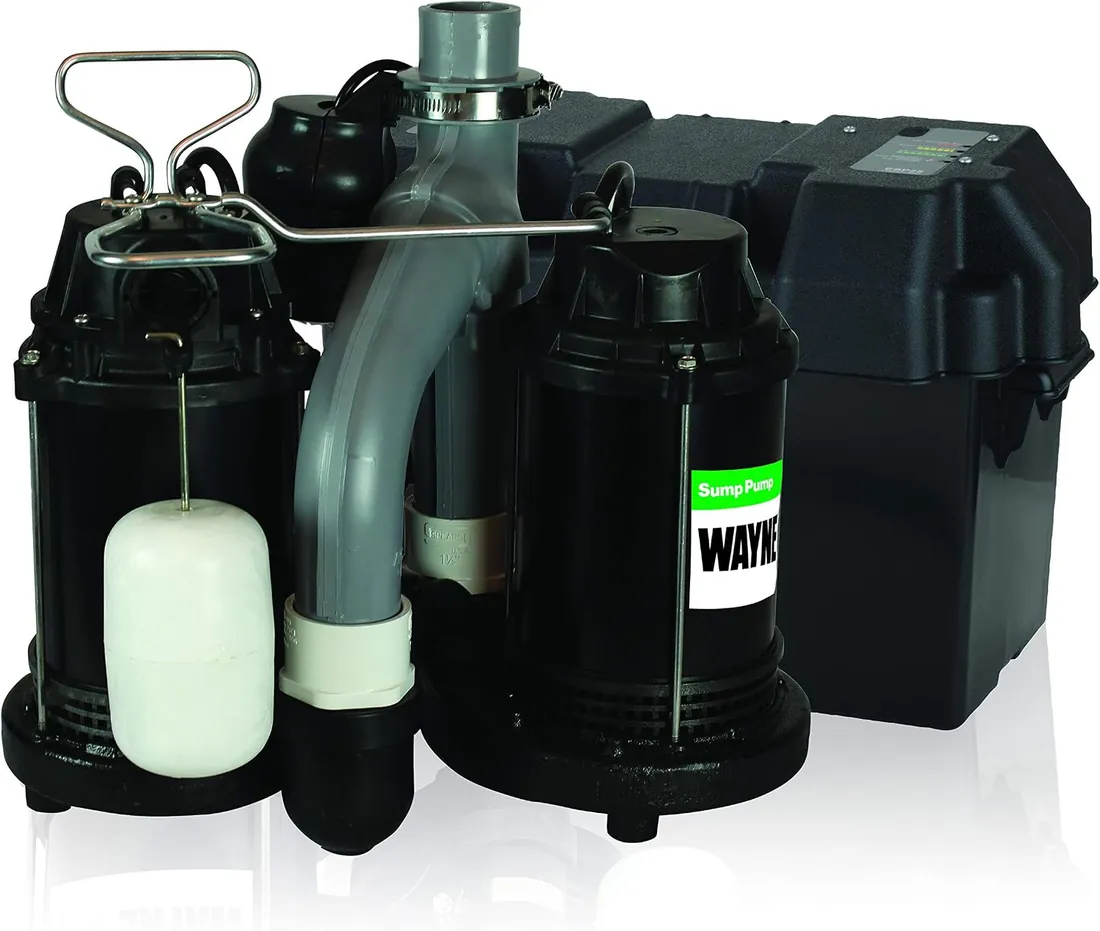
Wayne WSS30VN Primary and Battery Backup Sump Pump System
1/2 HP primary and 12 V backup, 3,840 and 1,500 GPH at 10 ft.
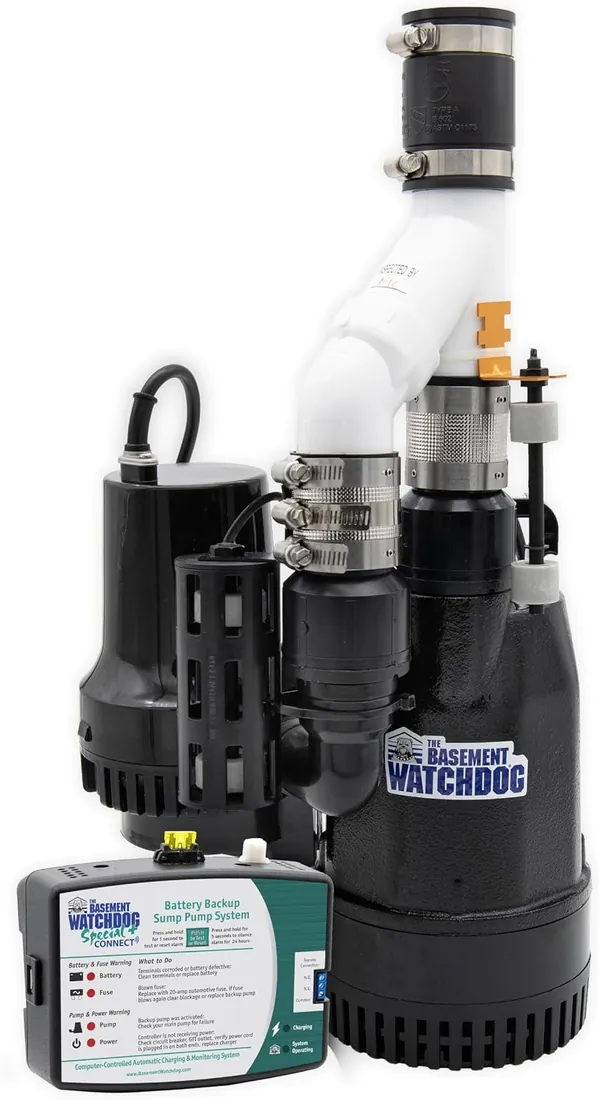
Basement Watchdog CITS-50 Combination Primary and Backup Sump Pump
1/2 HP cast iron primary with dual-float switches on both pumps.
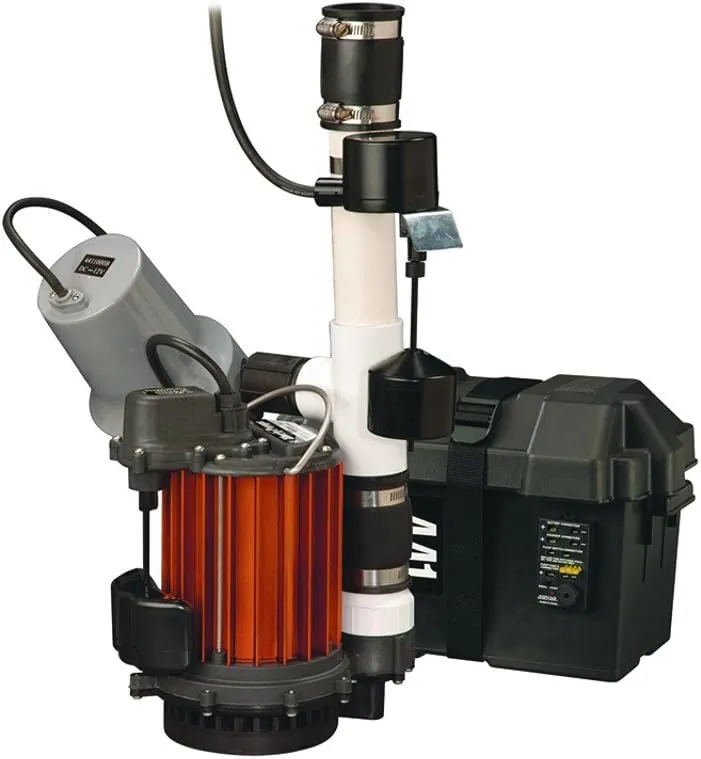
Liberty Pumps PC257-442 Combo Sump Pump System
Liberty 257 primary with the 442 backup, for pits 18 in across or more.
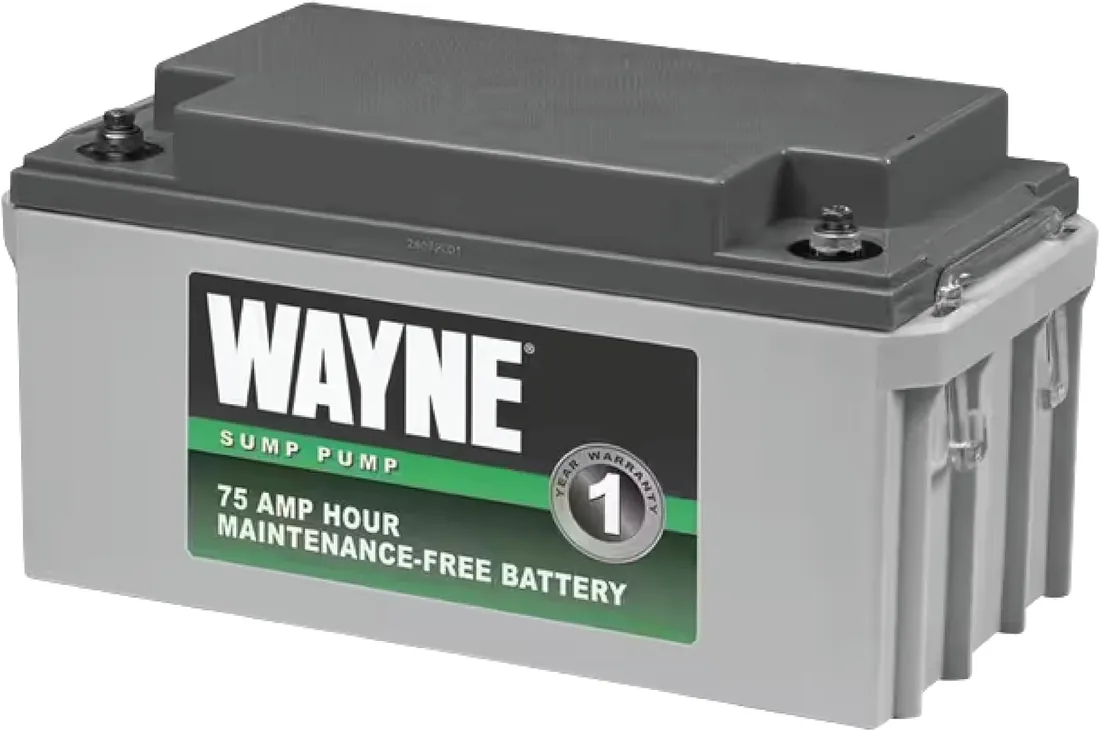
Wayne WSB1275 Standby Battery
The 75 amp-hour battery Wayne recommends for its combo and backups.
Questions readers ask
Is a 1/2 HP sump pump with battery backup worth it?
If losing the pump would flood a finished basement, yes. A combo gives a 1/2 HP primary for heavy inflow and a backup that covers both power cuts and primary failure. Wayne's WSS30VN still moves 1,500 GPH at 10 ft on battery.
Can I use my existing sump pump with a backup?
Yes. If your current primary is in good shape, add a standalone battery backup with its own check valve on the discharge instead of a combo. Combos make most sense when the primary also needs replacing.
Do combo systems come with a battery?
No. Wayne, Basement Watchdog and Liberty all sell the battery separately. Wayne recommends its 75 amp-hour WSB1275, and Liberty's battery box takes Group 27 or 31 deep-cycle batteries in AGM, wet-cell or gel form.
What size pit does a combo sump pump need?
It varies by system. Wayne's WSS30VN manual says a 15 in basin or larger, while its sell sheet says 16 in. Liberty's PC442 systems need at least 18 in across and 18 in deep. Measure before you buy.