On one charge, a backup runs from several hours of nonstop pumping to a few days of on-and-off use: Basement Watchdog rates its systems at 40 to 80 hours at a 10% duty cycle, and Zoeller about 7 hours of continuous running. The battery itself usually lasts three to five years. The pump often outlives two or three batteries if it is exercised every month.
Runtime during a power outage
How long a backup keeps going depends on battery size, how full it is, the lift and above all how often the pump has to run. Makers quote figures under very different assumptions, so read the footnotes. Basement Watchdog bases its runtimes on a 10% duty cycle, meaning the pump runs six minutes in every hour. Zoeller quotes continuous running at an 8 ft head. Wayne states volume instead: up to 10,000 gallons on one charge for the ESP25n.
Continuous figures are the worst case, when water pours in and the pump never rests. Duty-cycle figures reflect a more typical storm, where the pump runs in short bursts. If your pit fills every few minutes in heavy rain, expect the lower end. The battery backup runtime calculator works it out for your pit.
| System | Rated runtime | Basis |
|---|---|---|
| Basement Watchdog Big Dog CONNECT | 40 hours | 10% duty cycle |
| Basement Watchdog Special CONNECT | 48 hours | 10% duty cycle |
| Basement Watchdog Emergency (BWE) | 80 hours | 10% duty cycle, BW-27AGM battery |
| Zoeller DC backup | About 7 hours | Continuous at 8 ft head |
| Wayne ESP25n | Up to 10,000 gallons | One battery charge |
Figures: Basement Watchdog product FAQs; Basement Watchdog Emergency (BWE) US instruction manual; Zoeller product support FAQ; Wayne ESP25n sell sheet.
Getting more hours from a charge
A bigger or second battery is the direct route. Basement Watchdog says connecting two batteries in parallel on its Big Dog CONNECT, Special CONNECT or Big Combo doubles pumping time, using batteries of the same size and age. Not every system allows it; Wayne says the ESP25n is meant for one battery and batteries are not to be wired in parallel.
Cutting the work also helps. A working check valve stops pumped water from falling back into the pit, and a discharge line that leaves the house by the shortest route with few turns lets each run move more water. Keeping the battery fully charged before storm season matters most of all, because a half-charged battery gives half the hours.
How many years the battery lasts
The battery is the part that wears out first. Liberty says most backup batteries last three to five years depending on use, maintenance and conditions. Wayne's battery manual gives a technical rule: replace the battery when its capacity has dropped to half of new, and expect that point to come sooner in warm rooms, since life is cut in half for every 10 °C above 77 °F in standby use.
Warranties are shorter still. Wayne covers its WSB1275 battery for one year, and Basement Watchdog gives its BW-27AGM one year of free replacement with a receipt. Liberty warrants its StormCell batteries for one year. Treat those dates as a floor, not a forecast, and test the battery monthly rather than waiting for it to fail during a storm.
How many years the backup pump lasts
A backup pump runs far less than a primary, so its motor sees little wear. What shortens its life is neglect: a float that sticks after years without moving, a strainer clogged with silt, or a controller damaged by moisture or power surges. Wayne's ESP25n manual pairs its two-year warranty with an expected life of about three years when the unit is installed and maintained as written, and gives longer expected lives for pumps with longer warranties.
Basement Watchdog recommends plugging its controllers into a surge protector of at least 1,500 joules to protect the electronics. Pumps such as the Wayne ESP25n and Basement Watchdog BWE that are exercised monthly tend to be ready when needed.
How long recharging takes after an outage
Once power returns, the controller has to refill the battery, and a slow charger leaves you exposed if another storm follows. Basement Watchdog says a depleted battery on its Emergency system may need 24 to 48 hours to recharge, its Special system up to three days, and its Big Dog about six hours with a 20 A charger. Liberty says its 442 needs at least 12 hours from a dead battery.
If a long outage drained the battery and more rain is forecast, an automotive charger can speed things up. Basement Watchdog says to disconnect its control unit before using one, or the controller may be damaged.
- Restore power and confirm the charger lights come on.
- Check the battery terminals for corrosion and clean them.
- Allow the charging time your manual lists before relying on it.
- Run a test with the main pump unplugged once charging finishes.
Choosing for longer protection
If your area sees long outages, choose a system with a strong charger, room for a second battery and a monitoring alarm that warns of battery trouble. If outages are short but storms are heavy, flow at your lift matters more than hours. A water-powered backup avoids the battery question entirely where city water pressure allows it. The battery backup sump pump list compares systems on these points.
Common mistakes
- Comparing a continuous runtime figure with a duty-cycle figure as if they were the same.
- Relying on a battery older than five years without a load test.
- Wiring a second battery into a system whose maker forbids it.
- Leaving a drained battery to recharge slowly when more rain is forecast.
- Keeping the battery in a hot furnace room where it ages faster.
Products that fit
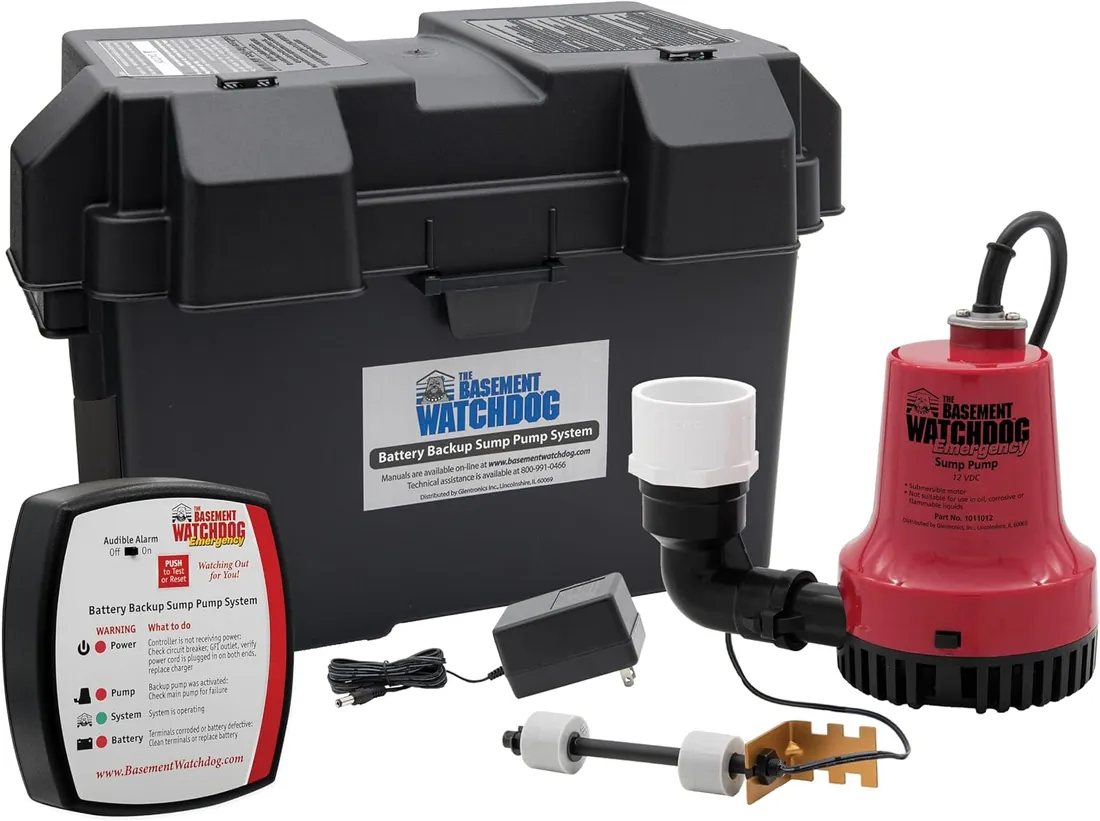
Basement Watchdog Emergency (BWE) Battery Backup Sump Pump
Low-draw backup rated for 80 hours at a 10% duty cycle on its matching battery.
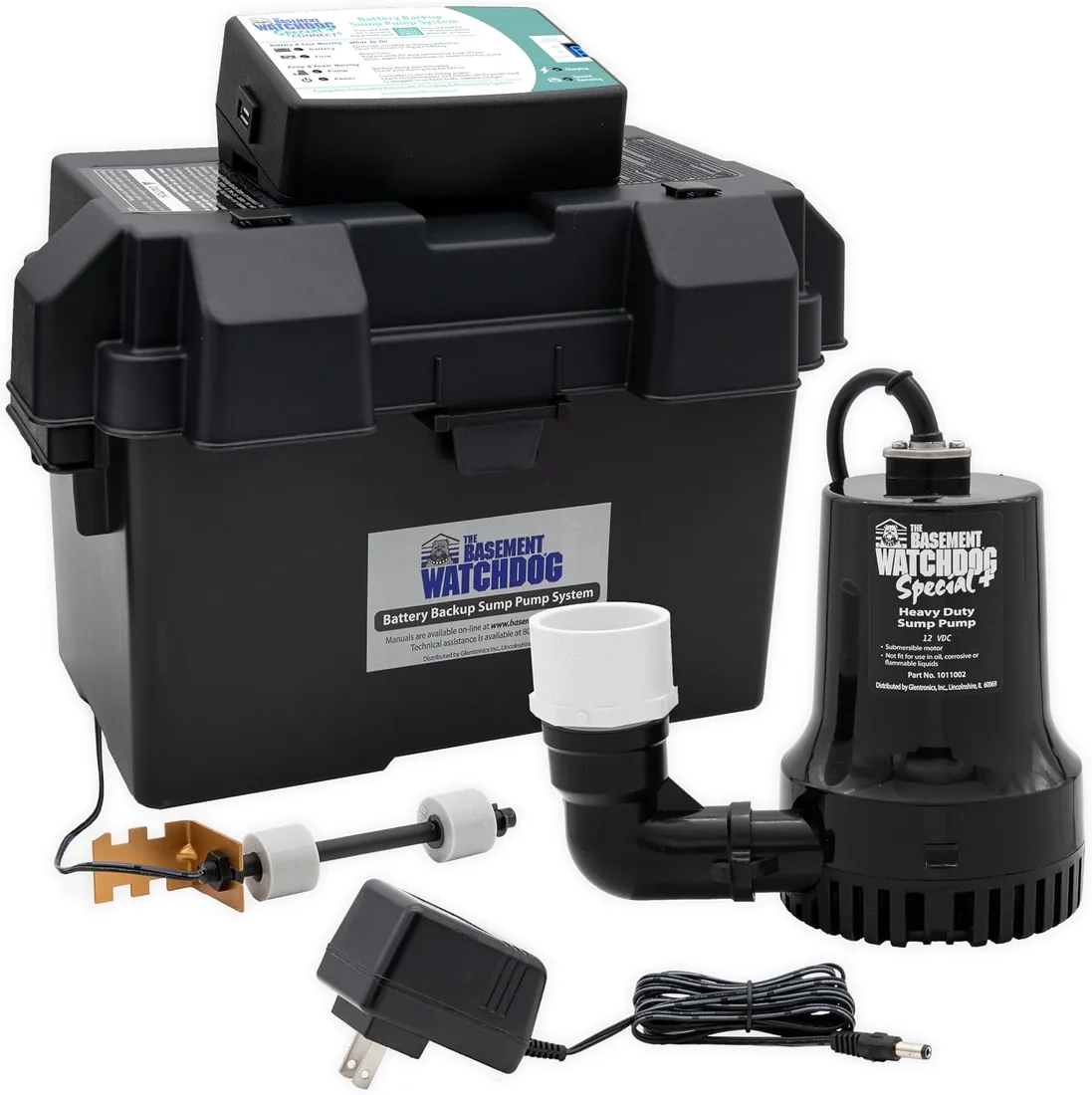
Basement Watchdog Special CONNECT (BWSP) Battery Backup Sump Pump
Backup that accepts a second battery in parallel to double pumping time.
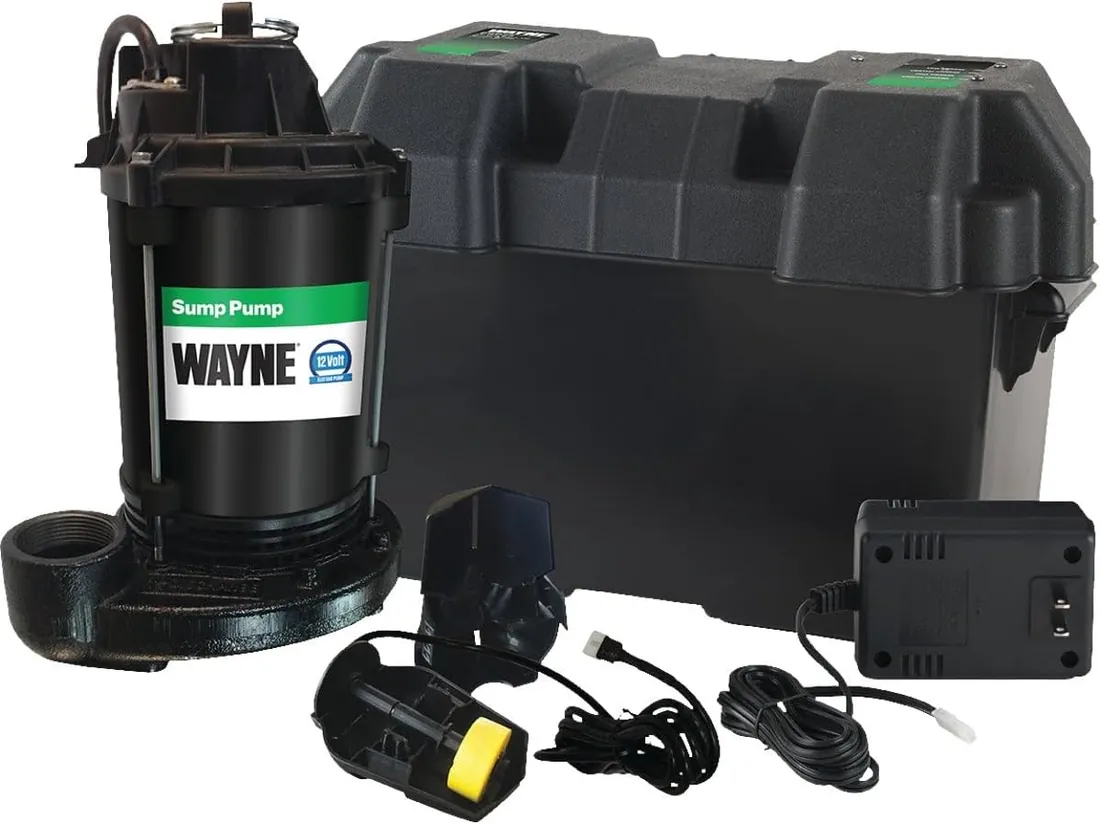
Wayne ESP25n Battery Backup Sump Pump
Wayne rates it to remove up to 10,000 gallons on one charge.
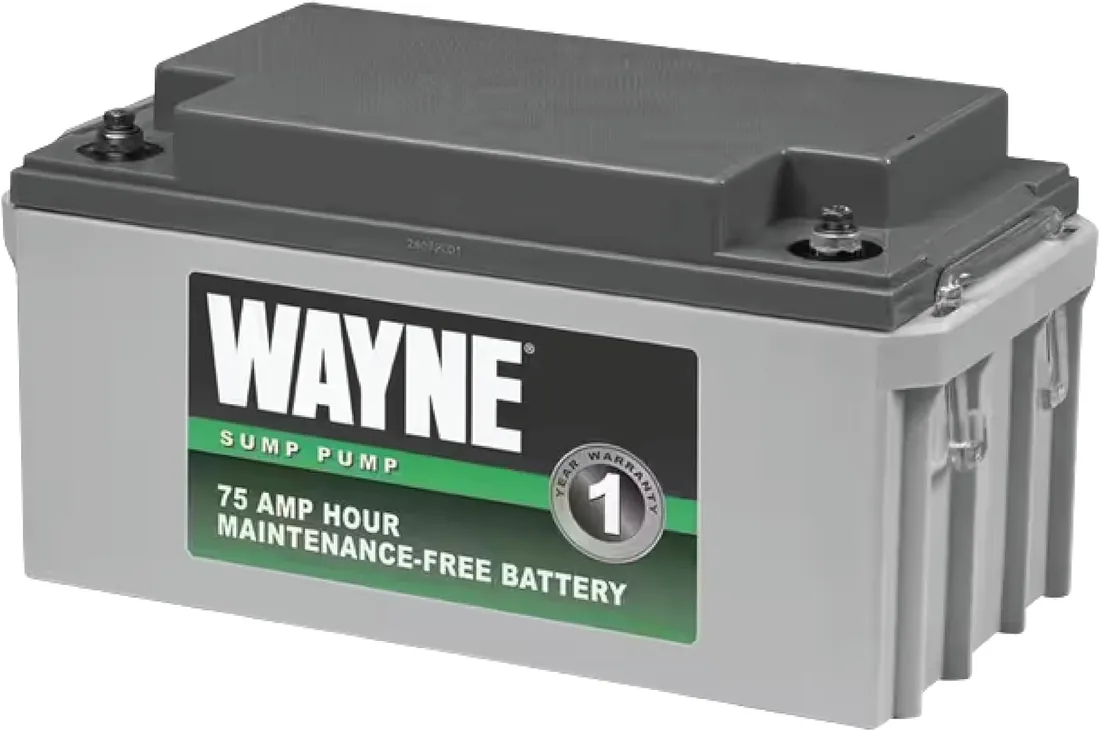
Wayne WSB1275 Standby Battery
Replacement battery once the old one falls to half its original capacity.
Questions readers ask
How long will a sump pump run on battery backup?
From several hours of nonstop pumping to a few days of intermittent running. Zoeller quotes about 7 hours continuous at 8 ft, and Basement Watchdog 40 to 80 hours at a 10% duty cycle. Heavy inflow pushes you toward the lower end.
How often should I replace a sump pump backup battery?
Every three to five years is typical, according to Liberty, or sooner if a monthly test shows short runtimes or a status light flags trouble. Heat and deep discharges shorten battery life.
Does a backup sump pump wear out if it rarely runs?
Its motor sees little wear, but floats can stick and strainers clog from sitting idle. Monthly tests keep the parts moving and catch problems before a storm. Clean the strainer at the same time.
How long does it take to recharge after an outage?
Anywhere from about six hours to several days, depending on the charger. Basement Watchdog lists six hours for its Big Dog and up to three days for its Special system.