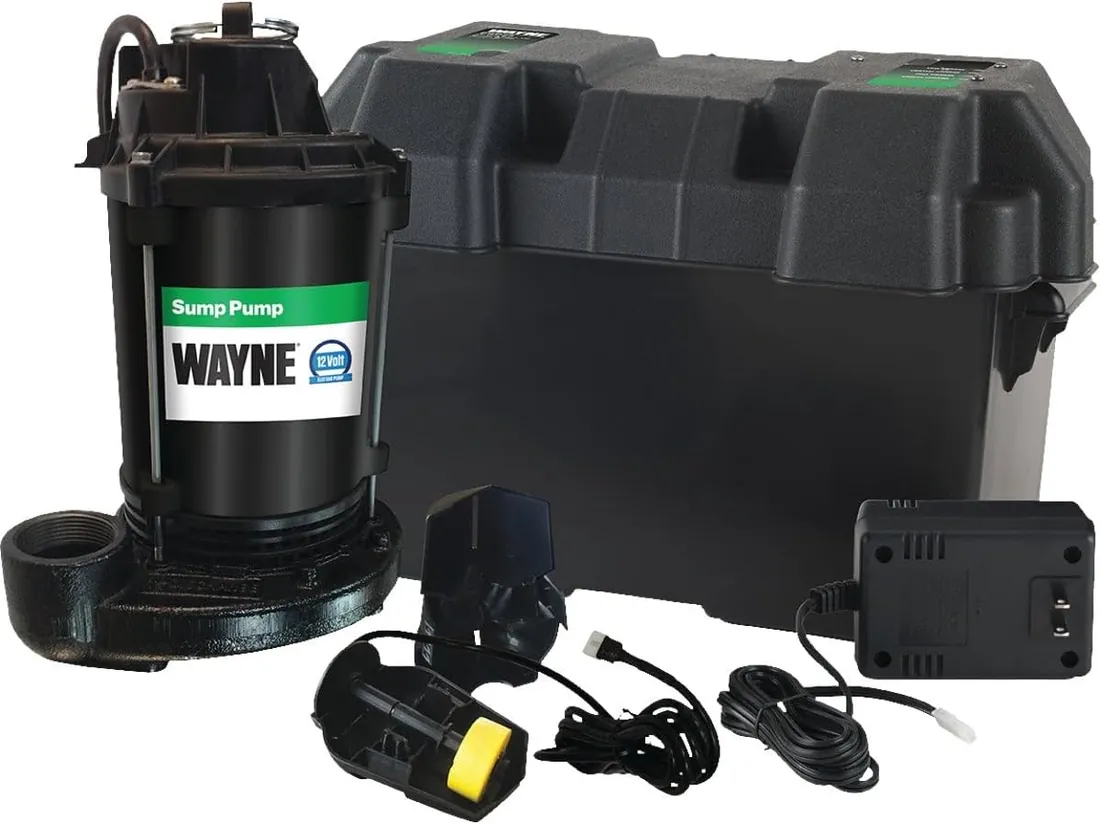
Quick verdict
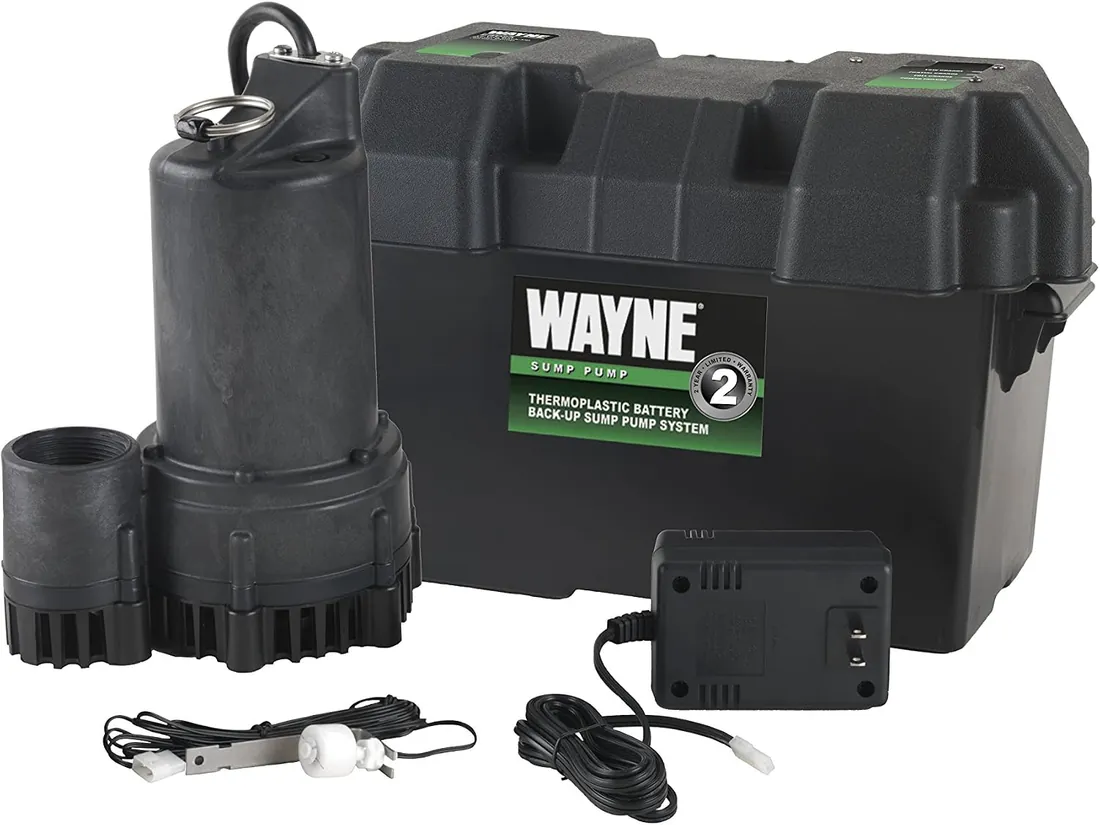
The ESP25n suits a home with a working primary pump that needs a second line of defence for outages and pump failures. It goes into the same pit and either gets its own discharge or tees into the existing one. Its curve drops hard above 10 ft, so treat it as a holdover, not a match for a 1/2 HP main pump.
Who it fits, and who should skip it
A good fit if
- Your primary sump pump is sound and you want outage cover beside it.
- Your basin is at least 14 in across.
- Your discharge climbs about 10 ft or less.
- You want a metal-bodied backup rather than an all-plastic one.
Look elsewhere if
- You also need a new primary pump; a combo system saves plumbing.
- Your lift is near 15 ft, where flow falls to 660 GPH.
- You need a Wi-Fi alert out of the box.
Specifications
Motor
| Voltage | 12 V DC from one battery; charger runs on 120 V AC |
|---|---|
| Motor | 100 W permanent magnet DC |
| Horsepower | Not stated on the data sheet (rated in watts) |
Figures: Wayne ESP25n operating instructions and parts manual 600005W-001 J; Wayne ESP25n sell sheet.
Performance
| Max flow | 2,700 GPH at 0 ft |
|---|---|
| Flow at 5 / 10 / 15 ft | 2,100 / 1,500 / 660 GPH |
| Max head | Not stated; the maker's table ends at 15 ft |
Figures: Wayne ESP25n operating instructions and parts manual 600005W-001 J.
Switch
| Switch type | Reed float with float cage, clamped to the discharge pipe |
|---|---|
| Float position | At least 10 to 12 in above the pit floor |
| Run-on timer | Keeps running 20 to 25 seconds after the float drops |
Figures: Wayne ESP25n sell sheet; Wayne ESP25n operating instructions and parts manual 600005W-001 J.
Battery and alarm
| Battery | One 12 V battery, not included; WSB1275 75 Ah AGM recommended; case fits up to group 27 |
|---|---|
| Runtime claim | Up to 10,000 gallons on a single charge |
| Alarms | 30-second tone on power loss, 3-second tone at each start, chirp with red light |
Figures: Wayne ESP25n operating instructions and parts manual 600005W-001 J; Wayne ESP25n sell sheet.
Build
| Discharge | 1-1/2 in NPT |
|---|---|
| Construction | Coated steel housing, cast iron volute, thermoplastic impeller, stainless steel shaft |
| Intake | Top suction |
| Minimum basin | 14 in diameter |
| Size and weight | 9 in L x 6-1/2 in W x 11 in H; 24 lb |
| Warranty | 2-year limited |
Figures: Wayne ESP25n operating instructions and parts manual 600005W-001 J; Wayne ESP25n sell sheet.
Installation and setup
Wayne gives two layouts. The preferred one runs the backup through its own rigid line to an outside wall, which keeps it independent of anything wrong with the main pump's pipe. The other joins the backup to the existing discharge with a wye, and then both lines need their own check valve or water simply circulates back into the pit.
Either way, the pump sits on a solid, level surface rather than loose stone, with a 4 ft length of 1-1/2 or 1-1/4 in rigid PVC on its outlet; the smaller size needs an adapter and costs flow. Wayne prohibits flex hose for a permanent install. Fit the rubber check valve above the pit so the pump can come out without cutting pipe. The control box and battery go within six feet of the sump, beside a separately fused GFCI outlet, somewhere dry and ventilated, with red to positive and black to negative.
Switch and sizing notes
Clamp the float to the discharge pipe at least 10 to 12 in above the pit floor, which puts it above the main pump's normal start level. That way the backup stays idle on a routine cycle and only runs when water climbs higher than it should. Wayne also says the pump must not run dry, so keep wires clear of the float and intake.
The flow table is where the ESP25n shows its limits: 2,100 GPH at 5 ft and 1,500 GPH at 10 ft, then 660 GPH at 15 ft. Work out your own total head before relying on it during a storm. The sizing calculator covers the pipe run, and the battery runtime calculator helps you judge how long one charge lasts.
Ownership and maintenance
Once a month, unplug the transformer, clean and tighten the battery terminals, then unplug the main pump and fill the pit until the backup starts, two times in a row. The charge lights only tell the truth after a self-test: with the main pump and transformer unplugged, press the test button and read the light when the pump stops. Green means full, yellow partly charged, red flat or defective, and blinking red means the controller has locked the motor out until the battery recovers.
Wayne recommends AGM batteries and says they should not be wired in parallel on this unit. Keep the box dry; moisture damage to the electronics voids the 2-year limited warranty, and so does reversing the battery cables.
Pros and cons
Pros
- Coated steel and cast iron, not all plastic.
- Top suction intake helps keep debris out.
- Run-on timer limits short cycling.
- Adds next to the pump you already own.
Cons
- Battery is sold separately.
- Flow falls to 660 GPH at 15 ft.
- No built-in remote alert.
Alternatives worth comparing
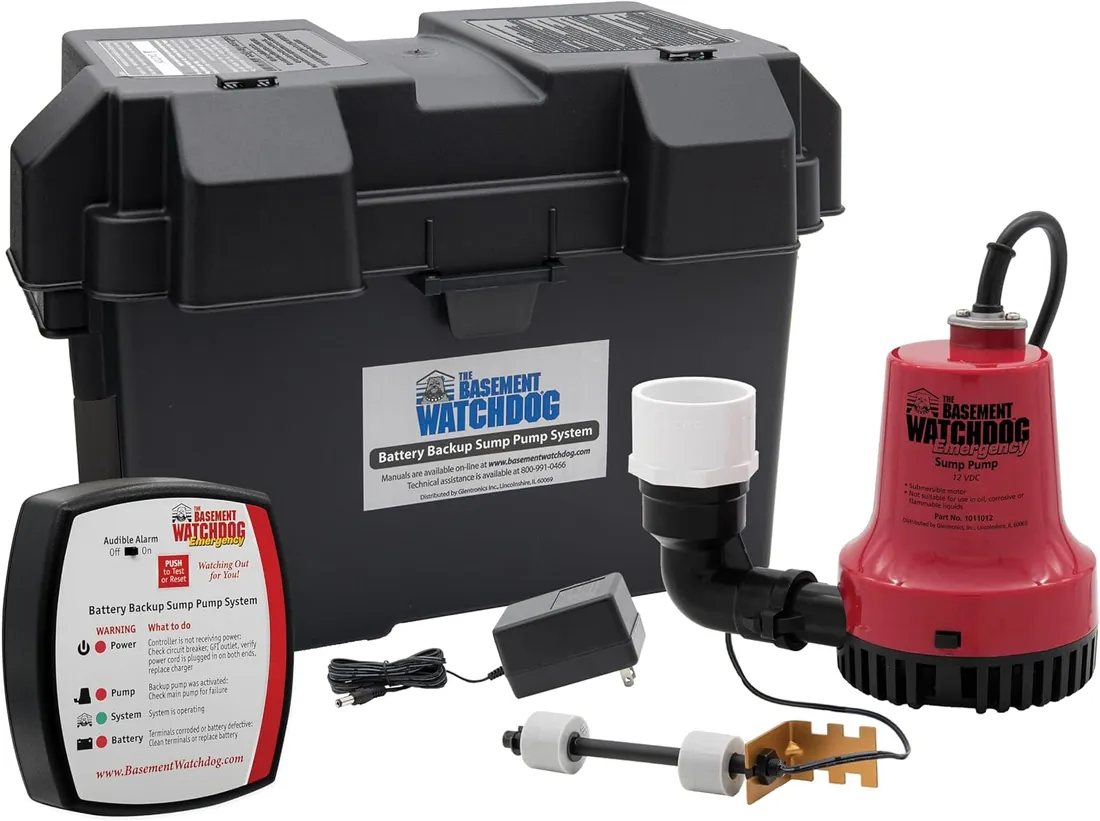
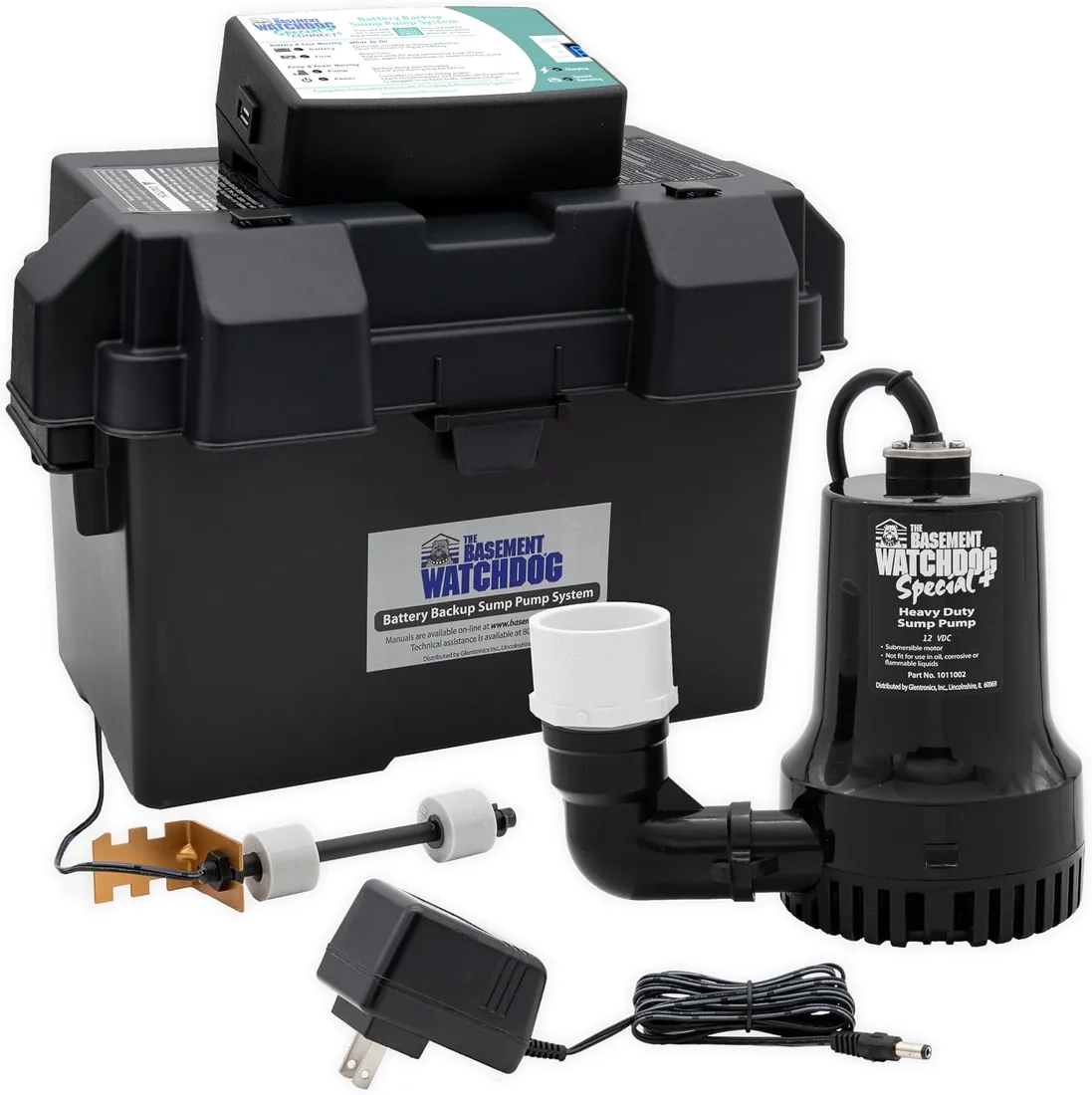
Compared with and featured in
Final verdict
Pick the ESP25n to add metal-bodied outage cover beside a primary pump you trust, and pair it with a fresh 75 Ah AGM battery. If your lift is high or your main pump is also aging, a combo system or a higher-output backup is the better spend.
Where to buy
Each button opens this exact model's listing. We may earn a commission on tracked links; it never changes what we publish. Disclosure
Questions buyers ask
How much water does the Wayne ESP25n pump at 10 ft?
Wayne's own manual lists 1,500 GPH at 10 ft of lift. Some retail copy quotes a higher figure for the same height, so plan around the maker's number. With no lift the pump reaches 2,700 GPH, and at 15 ft it slows to 660 GPH.
Which battery should I buy for the ESP25n?
Wayne recommends its WSB1275, a 75 amp-hour maintenance-free AGM battery, and notes AGM types tend to last longer. The supplied case holds a 12 V battery up to the group 27 frame size. The manual also says not to wire two batteries in parallel on this model.
Can the ESP25n share a discharge pipe with my main pump?
Yes. Wayne's second method joins the two with a wye fitting, but a check valve is then required on both the main pump line and the backup line. A separate pipe to the outside is still the maker's preferred layout because a blockage in one line cannot stop both pumps.
What does the blinking red light on the ESP25n box mean?
It means the battery has run down below the point where the pump can work, and the controller has locked out the motor until the battery recharges. A steady red light means the battery is fully discharged or defective, and a chirp from the box signals it may need replacing.