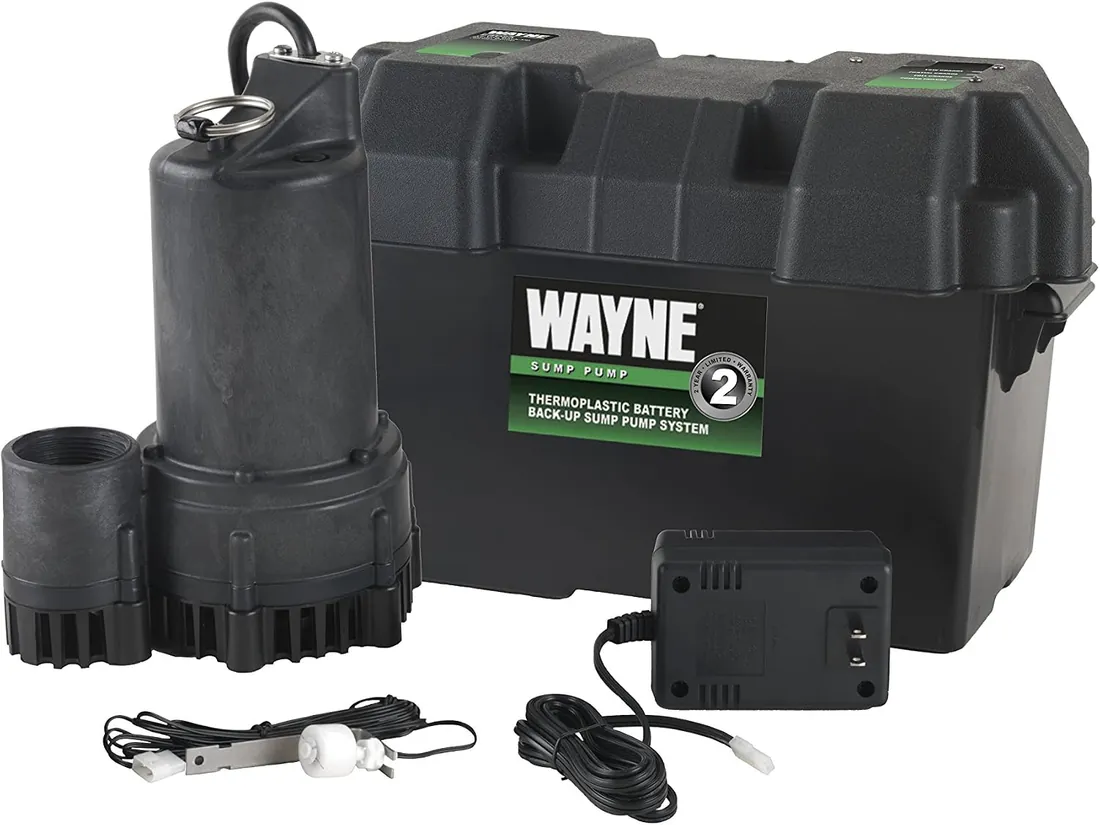
Quick verdict
The ESP25 is the older, plastic-bodied sibling of the ESP25n, listed by its seller as the old-style system. It protects a basement through outages and primary failures when it sits beside a working main pump. The catch is documentation: Wayne's manual for it prints no flow table, so its capacity figures rest on the retail listing alone.
Who it fits, and who should skip it
A good fit if
- You already have a dependable primary pump and want outage cover.
- You prefer a corrosion-resistant thermoplastic pump body.
- You are matching or replacing an existing ESP25 install.
- Your pit has room for a second pump beside the first.
Look elsewhere if
- You want maker-published flow figures at every height.
- You need a metal housing; the ESP25n has one.
- You want remote alerts on a phone.
Specifications
Motor
| Voltage | 12 V DC from a battery; charger needs a 115 VAC GFCI outlet |
|---|---|
| Horsepower | Not stated on the data sheet |
Figures: Wayne ESP25 operating instructions and parts manual 352207-001.
Performance
| Max flow | Not stated in the maker's manual |
|---|---|
| Flow at 10 ft | 2,300 GPH (listing figure) |
| Max head | 20 ft (listing figure) |
Figures: Wayne ESP25 operating instructions and parts manual 352207-001; Amazon listing B000HOQZDU.
Switch
| Switch type | Separate float switch fixed to the discharge pipe with wire ties |
|---|---|
| Float height | At least 10 to 12 in above the pit floor |
| Run-on timer | Runs 20 to 25 seconds after the float switch turns off |
Figures: Wayne ESP25 operating instructions and parts manual 352207-001.
Battery and alarm
| Battery | 12 V sealed lead acid recommended, up to 27-frame size; not included |
|---|---|
| Alarms | 30-second power-loss tone, 3-second tone at each start, chirp with red light |
| Fuse | 20 A automotive-type fuse inside the control box |
Figures: Wayne ESP25 operating instructions and parts manual 352207-001.
Build
| Discharge | 1-1/2 in NPT; 1-1/4 in pipe needs an adapter |
|---|---|
| Construction | Corrosion-resistant thermoplastic |
| Size and weight | 7.25 in L x 5 in W x 10 in H; 12.9 lb (listing) |
| Parts | Pump 58324-001, float switch 30033-001, control box 10133-001, transformer 30221-001 |
| Warranty | 2 years from purchase (maker manual) |
Figures: Wayne ESP25 operating instructions and parts manual 352207-001; Amazon listing B000HOQZDU.
Installation and setup
The ESP25 manual describes the same two layouts Wayne uses across its backups. A dedicated line through the wall is preferred, and the outdoor run should slope down so it cannot hold water that freezes. If that is impractical, the backup can tie into the main pump's pipe with a wye, but the manual is blunt that the system will not function without two check valves, one on each pump's line.
Set the pump on firm ground in the pit, never loose sand or stones, with a 4 ft piece of rigid PVC cemented to a threaded fitting on its outlet. Wayne does not recommend flex hose and wants rigid PVC or metal pipe for a permanent job. Turn off the main pump first and have a way to bail the pit, since the work can take several hours.
Switch and sizing notes
Fix the float with the supplied wire ties at least 10 to 12 in above the floor of the pit, so the backup only starts once water rises past the depth where the primary should already be running. Keep the cords away from the float, the intake and the main pump. Once triggered, the controller holds the motor on for an extra 20 to 25 seconds, which stops it from chattering on and off at the switch point.
Wayne's ESP25 manual does not print a flow curve, so the only capacity number is the retail listing's 2,300 GPH at 10 ft. Treat that as a guide and measure your own lift with the sizing calculator. The Wayne models guide sets the two generations side by side.
Ownership and maintenance
This manual predates the AGM advice in newer Wayne sheets and talks about sealed lead acid and flooded batteries. If yours has removable caps, check the electrolyte monthly and test each cell with a hydrometer: a specific gravity of 1.265 means full charge, and a spread of more than .050 between cells means replace the battery. Also clean the terminals and run the pump twice by filling the pit with the main pump unplugged.
If the power-failure light stays on while mains power is present, the transformer, the plug at the lid or a branch breaker is the usual cause. A pump that hums without spinning may have a jammed impeller; seven screws on the bottom release the housing. Wayne covers parts for two years, and the listing's one-year line conflicts with that.
Pros and cons
Pros
- Thermoplastic body will not rust.
- Charge lights and distinct alarm tones.
- Run-on timer limits short cycling.
- Replacement parts listed by number.
Cons
- No maker flow table in its manual.
- The battery is sold separately.
- No remote alert connection.
Alternatives worth comparing
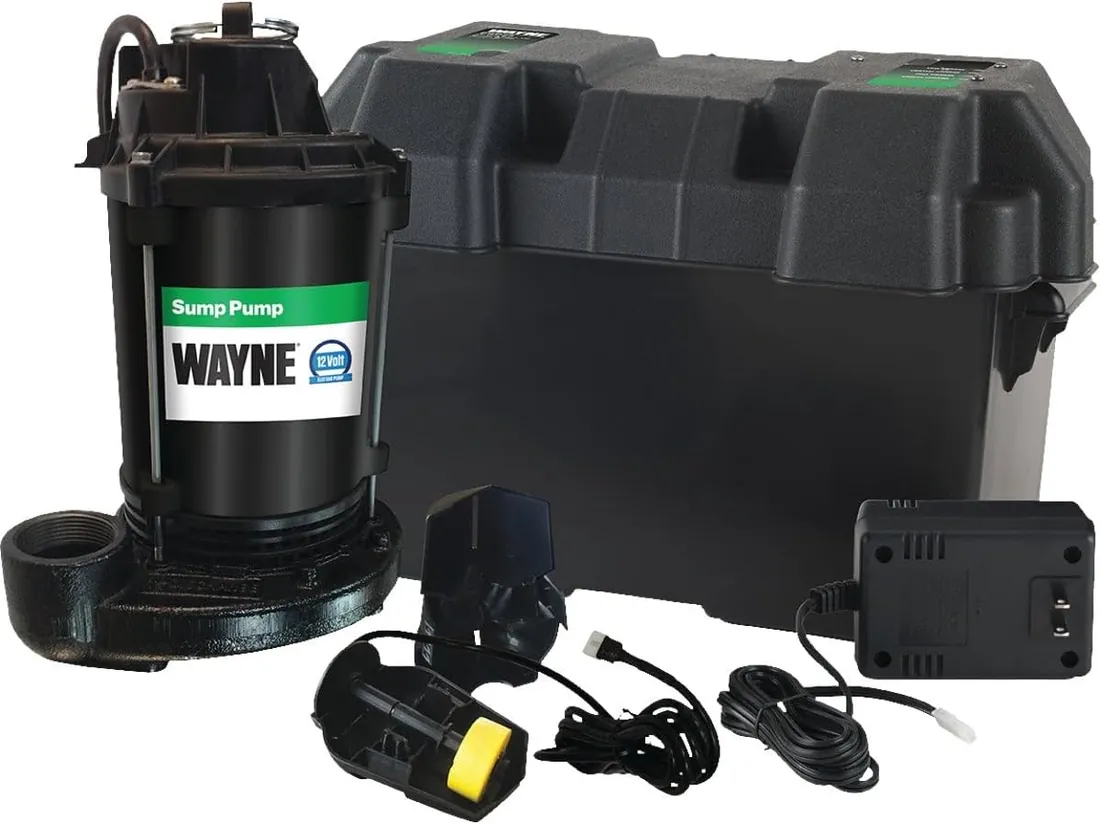
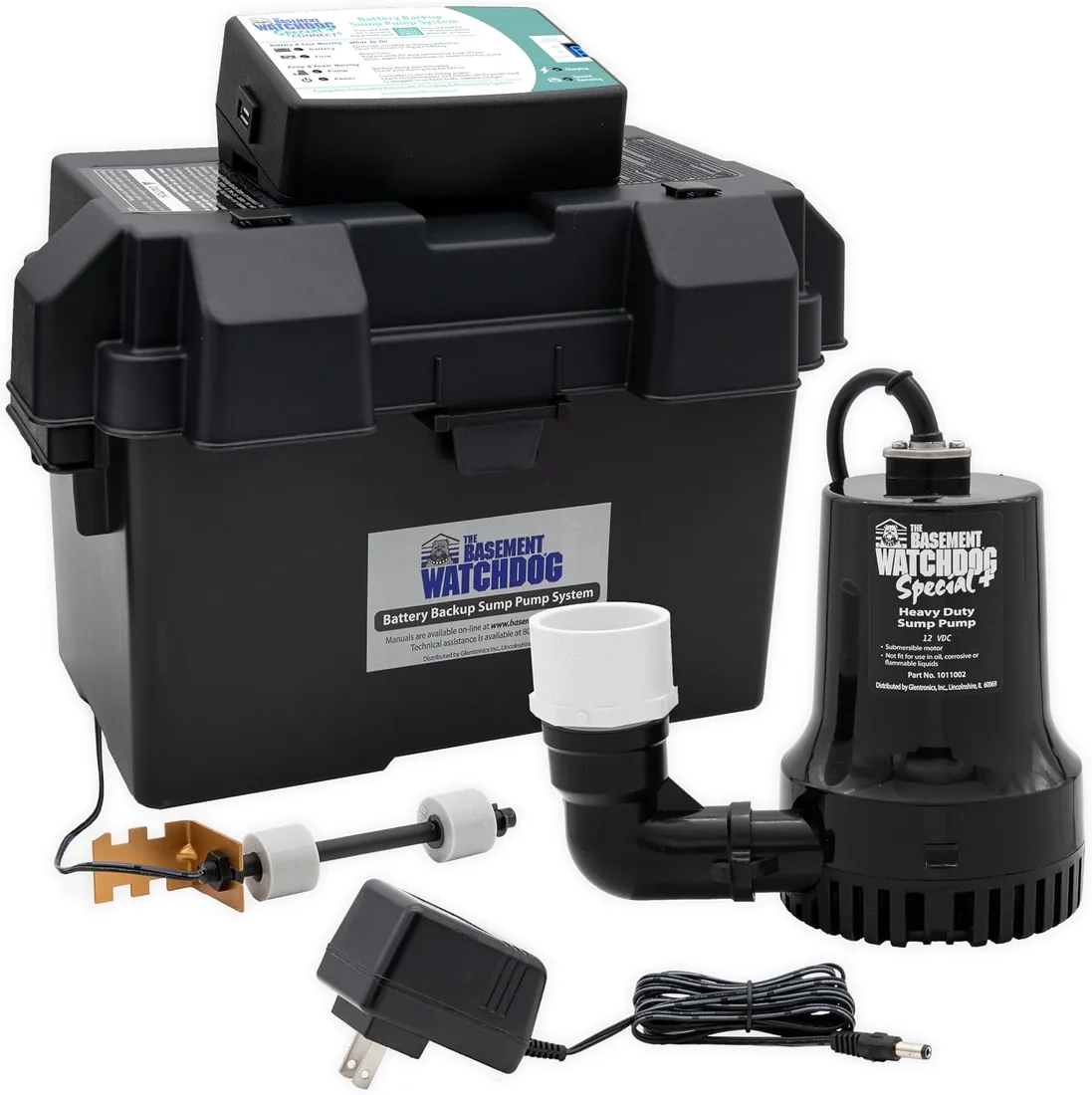
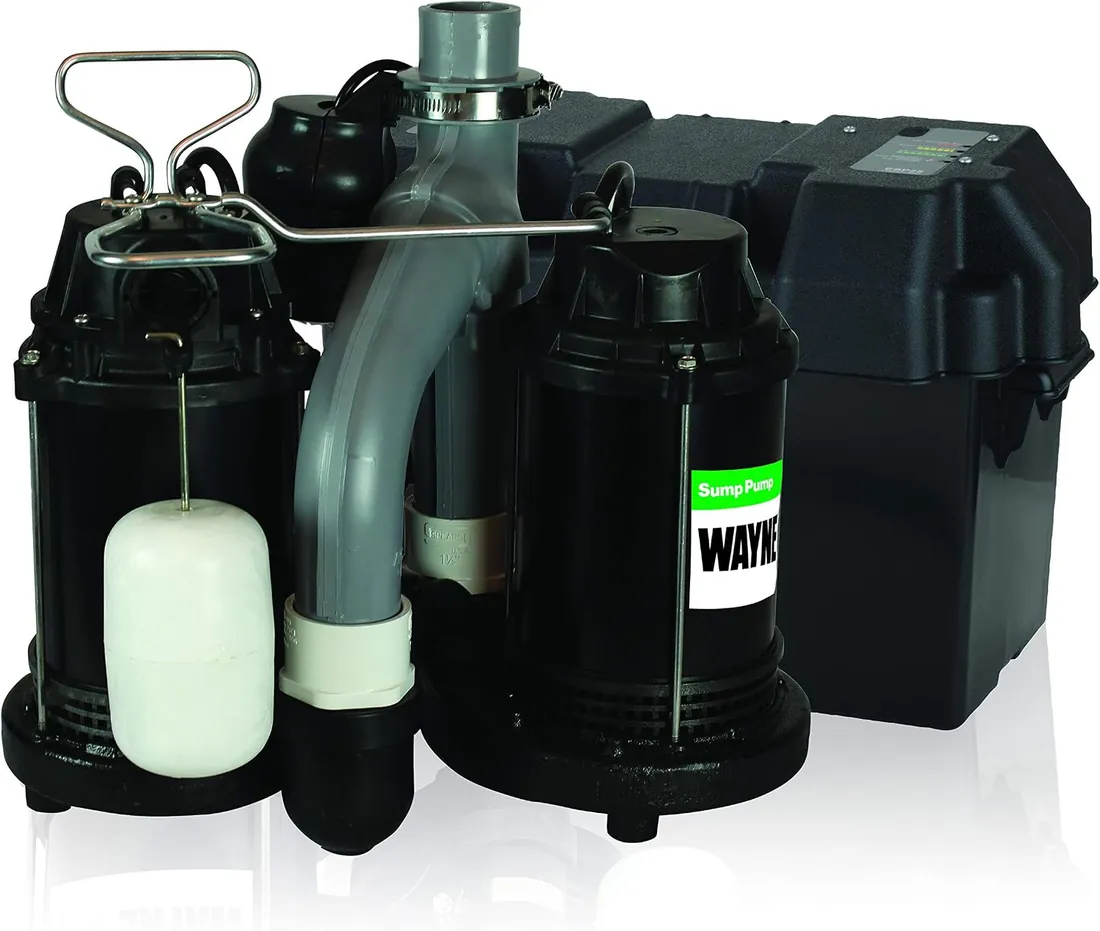
Final verdict
The ESP25 is a reasonable outage backup if you value a plastic body or are matching an existing install, but buy it knowing its capacity numbers come from the seller, not Wayne. If you want maker figures and a metal body, the ESP25n is the safer choice.
Where to buy
Each button opens this exact model's listing. We may earn a commission on tracked links; it never changes what we publish. Disclosure
Questions buyers ask
What is the difference between the Wayne ESP25 and ESP25n?
The ESP25 is the older thermoplastic pump, listed by its seller as the old style. The ESP25n has a coated steel housing and cast iron volute, top suction, and a published table of 1,500 GPH at 10 ft. Both use a charger box with the same light colours and alarm tones.
Does the Wayne ESP25 come with a battery?
No. The box includes the pump, float switch, control box, transformer and an oversize battery case that holds a 12 V battery up to the 27-frame size. The manual favours sealed lead acid batteries because they last longer, and warns against reversing the red and black cables.
Why does my ESP25 hum but not pump?
Wayne's troubleshooting chart gives two causes: a weak or defective battery, or a locked impeller. Unplug the unit, take off the screen and see whether the impeller turns; if it is stuck, removing the seven bottom screws frees the housing so the obstruction can be cleared.
What fuse does the ESP25 control box use?
It uses a 20 A automotive-type fuse inside the control box. Pull the transformer from the wall before checking it. A blown fuse is one of the listed reasons the pump will not run, along with loose connections, a stuck float and a battery drained below the lockout point.