Cast iron pumps weigh about twice as much, shed motor heat into the water better, and usually carry longer warranties, which suits a pit that runs often. Fiberglass-reinforced thermoplastic pumps are light, corrosion-proof and fine for occasional use or tight budgets. Compare flow at your lift, switch type and warranty, not just the housing material.
What the housing material actually changes
A submersible sump pump is an oil-filled motor sitting on top of a pump volute. The housing around that motor does two jobs: it keeps water out, and it carries heat from the windings into the surrounding water. Cast iron is dense and conducts heat well, so a cast iron motor housing runs cooler during long cycles. Thermoplastic insulates rather than conducts, so plastic pumps rely more on the oil and on short duty.
The material also sets weight. Superior's cast iron 92341 weighs 19.3 lb, while its thermoplastic 1/3 HP 92372 weighs 10.8 lb. Heavy pumps sit still in the pit, which matters because a pump that walks or tips can pin its own float. Light pumps are easier to lift out for cleaning and are the usual choice for portable utility work.
| Spec | 92341 cast iron | 92372 thermoplastic |
|---|---|---|
| Horsepower | 1/3 HP | 1/3 HP |
| Flow at 0 ft | 2,760 GPH | 2,880 GPH |
| Flow at 10 ft | 1,800 GPH | 2,400 GPH |
| Weight | 19.3 lb | 10.8 lb |
| Solids | 3/8 in | 3/8 in |
| Warranty | 3 years | 1 year |
Figures: Superior Pump 92341 product page; Superior Pump 92372 product page.
Material does not decide flow
Look again at that table. The plastic 92372 out-pumps its cast iron sibling at a 10 ft lift, because flow comes from the impeller and motor design, not the housing. Buyers often assume cast iron means more water moved, and maker data says otherwise. Always compare flow at your own lift, which you can work out with the sump pump sizing calculator.
What cast iron offers is staying power. Zoeller rates its cast iron M53 and M63 for water up to 130 °F, and Liberty rates its cast iron 250 and 280 series for 104 °F continuous duty and 140 °F intermittent. Superior lists 35 °F to 120 °F for intermittent use across both its cast iron and thermoplastic pumps. Continuous duty ratings and heat ratings are where heavier pumps tend to earn their keep.
Look past the housing: impellers, bases and switches
“Cast iron pump” rarely means every part is iron. Zoeller's M53 has a cast iron switch case, motor and pump housing but a plastic impeller and base, while its M57 is all cast iron with a cast iron impeller. The M63 uses a cast iron impeller and base. Wayne's CDU790 and CDU800 pair a coated steel motor housing with a cast iron volute. Superior's 92341 product page lists the impeller as thermoplastic in its specification table, even though its feature text mentions stainless steel, so check the manual if the impeller matters to you.
Switch choice often matters more than housing. A pump with a weak or snag-prone float fails long before its housing wears out. Liberty sells the same 1/3 HP motor with a vertical magnetic float, a wide-angle float or no switch at all.
Warranty is the clearest signal
Makers back what they expect to last. Superior gives its cast iron 92341 three years against one year for the thermoplastic 92250 and 92372, though its 1/2 HP thermoplastic 92572 also gets three. Wayne's warranty runs three years on the coated steel CDU790 and CDU800 and five years on its stainless and cast iron variants. Zoeller's M63 carries a five year warranty, and Liberty covers its wholesale pumps for three years.
A longer warranty does not guarantee a longer life, but it tells you how the maker rates the pump's duty, and it is the easiest number to compare on the box.
| Pump | Housing | Warranty |
|---|---|---|
| Superior 92250 | Thermoplastic | 1 year |
| Superior 92372 | Thermoplastic | 1 year |
| Superior 92572 | Thermoplastic | 3 years |
| Superior 92341 | Cast iron | 3 years |
| Wayne CDU790 | Coated steel, cast iron volute | 3 years |
| Liberty 257 | Cast iron | 3 years |
| Zoeller M63 | Cast iron | 5 years |
Figures: Superior Pump 92250 product page; Superior Pump 92372 product page; Superior Pump 92572 product page; Superior Pump 92341 product page; Wayne submersible sump pump manual 600002W-001 J; Liberty Pumps 250-Series sales literature LLIT002500; Zoeller technical data sheet FM2899, Model 63; Zoeller Model 63 product page; Liberty Pumps installation manual 7035000R with wholesale warranty.
The in-between options: aluminum and stainless
Not every pump is iron or plastic. Liberty's 237 uses a deep-finned, powder-coated aluminum motor housing that Liberty says provides far more cooling than cast iron, at 11 lb. It also fits a 10 in sump, where Liberty asks for 14 in on most of its other floats. Wayne's CDU980E and CDU1000 use stainless steel housings and carry five year warranties. These materials aim to get cast iron's heat handling without its weight or rust.
For a pit with iron-rich water or a tight diameter, the Liberty 237 is worth a look. For an everyday basement that runs often, the cast iron sump pump list narrows the field.
Which one to choose
Choose cast iron when the pump is your main line of defence in a basement that takes on water every wet season, when it runs long cycles, or when you want the longer warranty. The Zoeller M53 and Liberty 257 are the classic examples.
Choose thermoplastic for a backup-duty pit, a pump that rarely runs, a spare to keep on the shelf, or when light weight matters for removal. Either way, match the switch to the pit diameter and size the pump for your lift first.
Common mistakes
- Assuming cast iron always pumps more water than plastic at the same horsepower.
- Ignoring the switch, which often fails long before either housing.
- Comparing flow at 0 ft instead of at your real lift.
- Buying a heavy cast iron pump for a pit you will lift out often for portable use.
- Overlooking a plastic impeller inside a pump sold as cast iron.
Products that fit
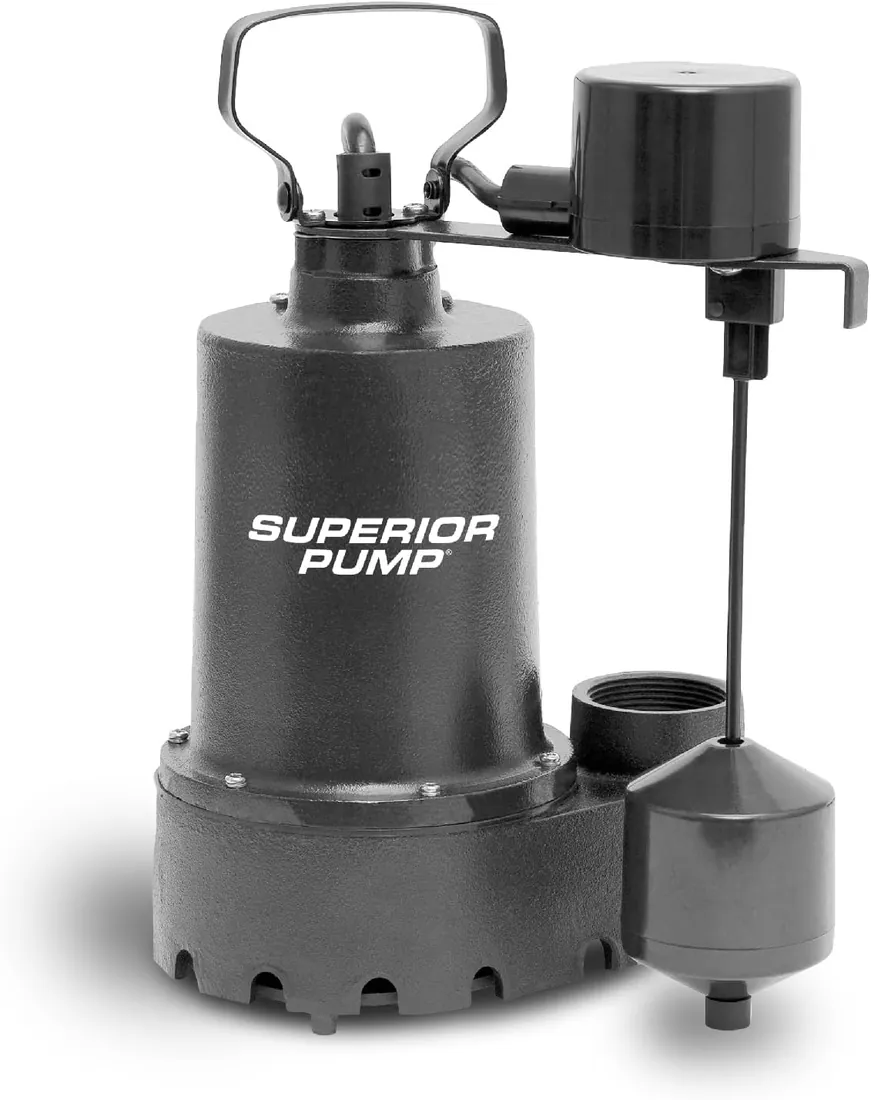
Superior Pump 92341 Cast Iron Sump Pump
Cast iron 1/3 HP pump with a three year warranty.
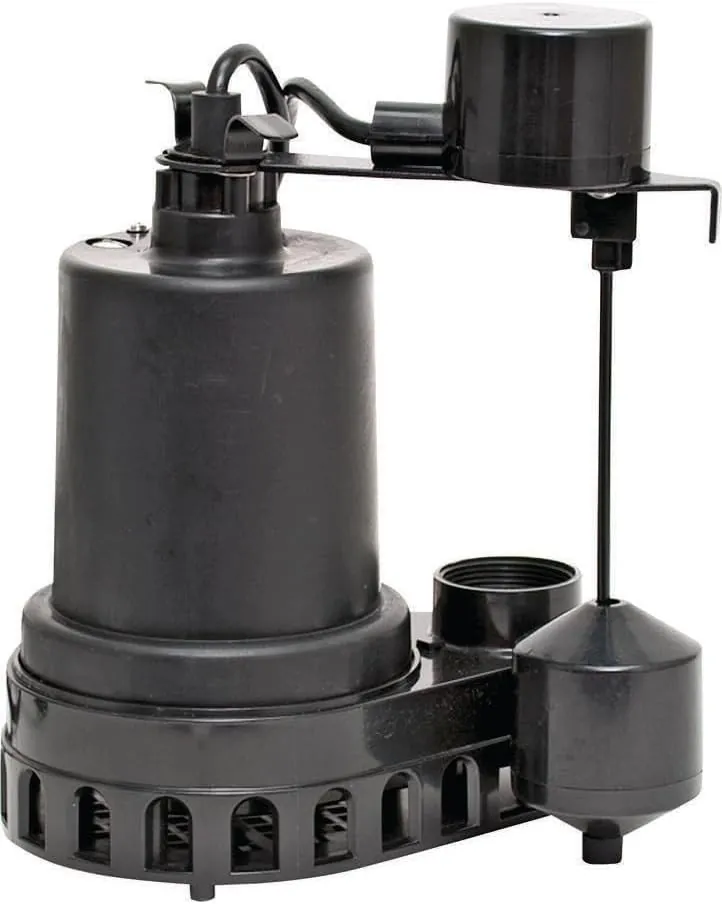
Superior Pump 92372 Thermoplastic Sump Pump
Thermoplastic 1/3 HP pump that is lighter and moves more water at 10 ft.
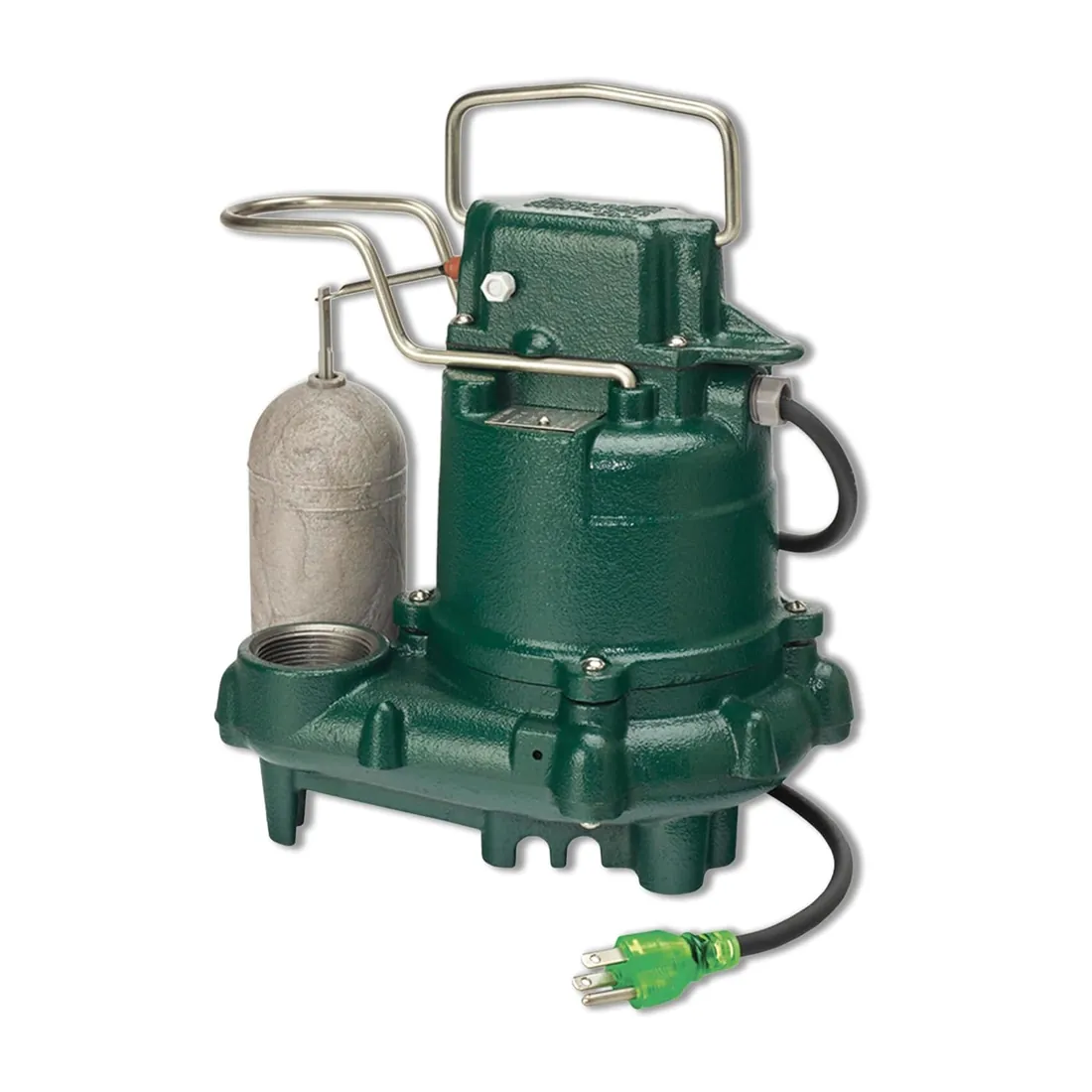
Zoeller M63 Premium Sump Pump
All cast iron including the impeller and base, with a five year warranty.
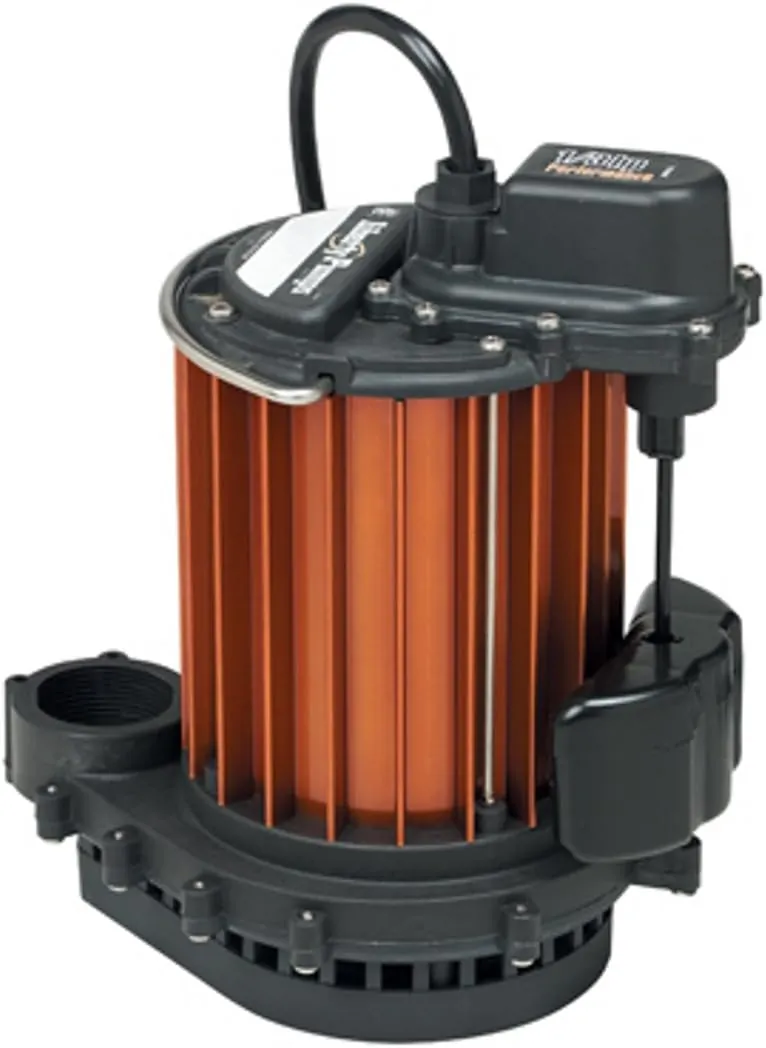
Liberty Pumps 237 Sump Pump
Powder-coated aluminum housing on a pump that fits a 10 in sump.
Questions readers ask
Are cast iron sump pumps better than plastic?
For a pit that runs often, usually yes: they shed heat better, sit steadier and carry longer warranties. They are not automatically stronger, though. Compare flow at your lift and the switch design before deciding on housing alone.
Do plastic sump pumps overheat?
Thermoplastic pumps have thermal overload protection like cast iron ones, and makers rate them for intermittent sump duty. They are less suited to very long continuous runs, where cast iron's heat transfer helps the motor.
Does cast iron rust in a sump pit?
Cast iron pumps are epoxy or powder coated to slow corrosion. The coating can wear over many years, and aggressive water speeds that up. Stainless or aluminum housings are alternatives where corrosion is a known problem.
Is a 1/2 HP plastic pump better than a 1/3 HP cast iron one?
It may move more water, but that alone does not make it better. If your lift is modest, a 1/3 HP cast iron pump can handle the flow with a sturdier build. Size for flow first, then choose the housing.