For a narrow or crowded pit, a vertical float or a switch built into the pump is the safer choice, because it needs little side room and cannot snag. A tethered float suits a wide basin where longer, less frequent cycles help the motor. Piggyback switches let you change pumps or levels without opening the pump.
What the switch actually does
Every automatic sump pump has two set points. The on level is the water height that starts the motor, and the off level is where it stops. The gap between them is the amount of water removed on each cycle, and together with the size of the pit it sets how often the pump starts during a storm.
That matters more than it sounds. A pump that starts and stops every few seconds wears its switch and motor quickly, while one that waits too long can let water reach the floor. Makers publish both levels for their automatic models, so you can compare pumps on how they will actually behave in your pit rather than on the switch name alone.
The off level has a second job: it must leave enough water over the intake to keep the impeller covered. Liberty, for example, warns that a non-standard differential still has to leave the minimum depth listed in its manual.
Vertical floats and built-in switches
A vertical float rides up and down a short rod or inside a guard on the pump body, so it needs only a few inches of clearance. Zoeller's automatic M53 goes a step further with a float-operated switch that works inside an integrated guard. Wayne's CDU790 and Liberty's 257 use exposed vertical floats beside the motor. Because the travel is short, these pumps cycle more often than tethered ones in the same pit, but they are far less likely to jam against a wall or a backup pump.
The levels below come from each maker's own documents. Most fixed vertical switches cannot be adjusted; Liberty states plainly that the 257 float is preset, and longer cycles need a different control.
| Pump | Switch | On level | Off level |
|---|---|---|---|
| Zoeller M53 | Built-in snap-action float | 7-1/4 in | 3 in |
| Zoeller M98 | Built-in float switch | 9-1/2 in | 3 in |
| Wayne CDU790 | Vertical float | About 9 in | About 4 in |
| Liberty 257 | Vertical magnetic float | 7 in | 4 in |
| Zoeller BN53 | Piggyback vertical float | 6.5 in | 0.75 in |
Figures: Zoeller technical data sheet FM2778, Mighty-Mate series; Zoeller switch comparison FM3247; Zoeller technical data sheet FM2779, Model 98; Wayne submersible sump pump manual 600002W-001; Liberty Pumps installation manual 7035000.
Tethered floats: longer cycles, more room
A tethered float hangs from a short length of cord clipped to the discharge pipe or pump. As water rises it tips upward and closes the switch; as the pit drains it drops and opens it. The swing gives a wider pumping range than a vertical float, so the motor starts less often and each run lasts longer.
The cost is space. The float needs a clear arc, and in a tight pit it can hang up on the wall, the inlet pipe or a second pump, which leaves the main pump either stuck on or never starting. Wayne lists its tether models at roughly 13 in on and 7 in off, compared with about 9 in and 4 in for its vertical models, and asks owners to replace a tether switch every two years.
Piggyback and external switches
A piggyback switch plugs into the wall outlet and the pump plugs into the back of the switch plug. The switch simply passes power through when the float rises. That design lets you replace a pump without replacing the switch, add a separate switch to a non-automatic pump such as Zoeller's N53, or bypass the switch to run the pump by hand during a cleanout.
It also makes faults easier to trace: plug the pump straight into the outlet, and if it runs, the switch is the problem. Zoeller's BN53 pairs the M53 motor with a piggyback vertical float whose levels can be set, which suits pits where the factory levels on the automatic M53 do not fit.
- Unplug both plugs before you touch the pump or float.
- Plug the pump cord into the back of the piggyback plug, then plug the piggyback plug into a grounded outlet.
- Clip the float so it moves freely without touching the wall or the pump body.
- Pour water into the pit and watch the pump start and stop at the levels you expect.
Electronic and pressure switches
Electronic switches have no moving float. Probes or a sensor detect water and a small control turns the pump on and off, often with an alarm built in. Pressure or diaphragm switches sense the weight of water above them through a flexible membrane. Both suit pits where floats keep catching on debris, but they depend on clean sensors, and silt or iron deposits can upset them.
If you choose one, keep the manual's cleaning interval and fit a separate high-water alarm, so a fouled sensor is noticed before the floor gets wet.
Matching the switch to your pit
Start with the diameter of the pit and what else lives in it. Liberty allows its vertical-float 257 in a sump as small as 10 in across, while it recommends at least 14 in for ordinary groundwater use with its other floats. Wayne asks for at least 1 in of clearance between the switch and the basin wall. If a backup pump shares the pit, a vertical or built-in switch avoids two floats fighting for space.
Then look at how often the pump will cycle. The basin cycle calculator uses your pit size and the switch levels to estimate run and rest times. Short cycles are a sign to choose a wider pumping range, such as a piggyback switch, rather than a smaller pump.
For a typical basement with a modest lift, the Zoeller M53 and the Wayne CDU790 cover the two common vertical designs, and the cast iron sump pump list compares them with stronger options.
Common mistakes
- Installing a tethered float in a narrow pit where it rubs the wall or a second pump and sticks.
- Shortening a tether to stop short cycling, which narrows the range and makes the cycling worse.
- Forgetting the minimum water depth over the intake when setting a lower off level.
- Leaving gravel or string in the pit, where it can jam even a guarded float.
- Blaming the pump before plugging it straight into the outlet to rule out a failed piggyback switch.
Products that fit
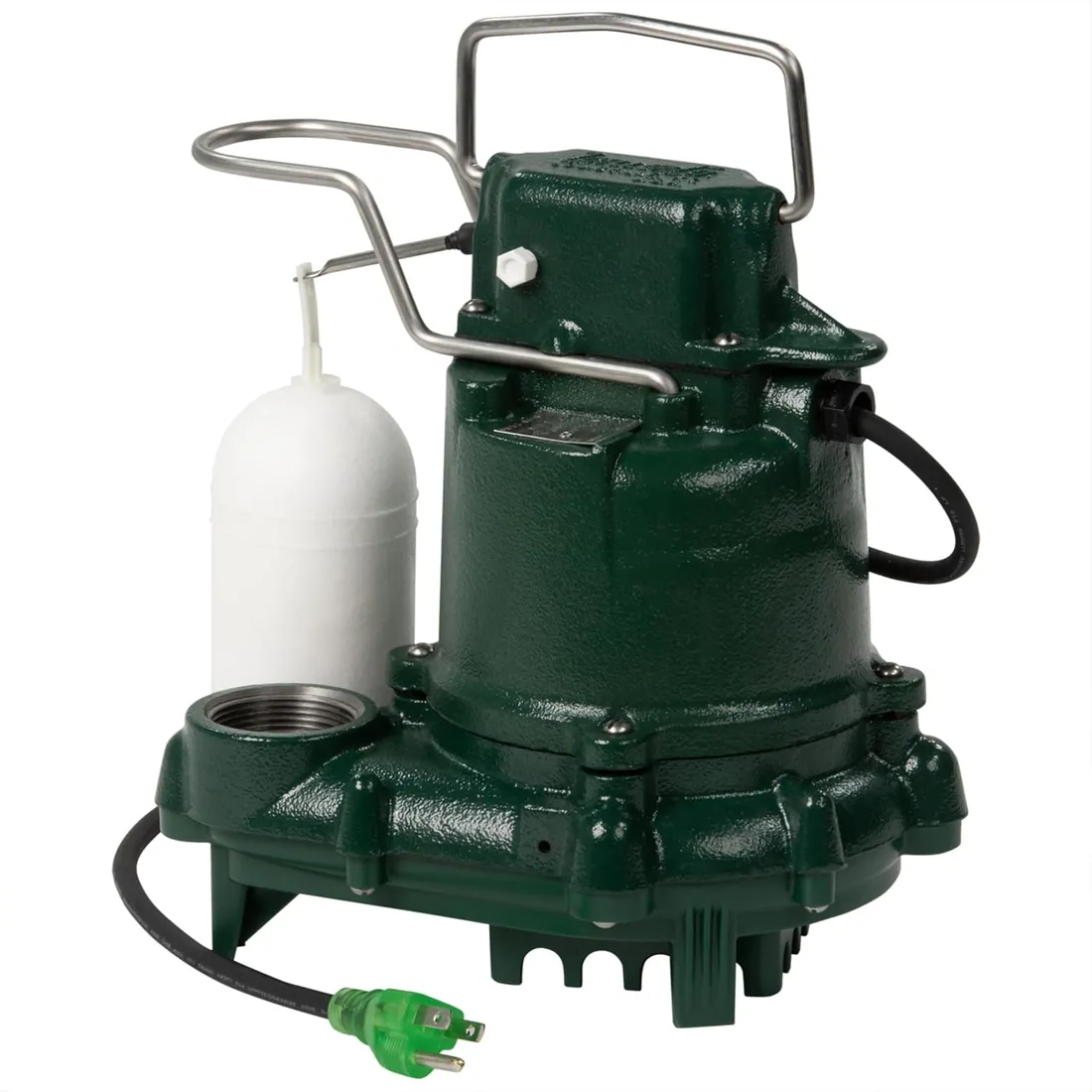
Zoeller M53 Mighty-Mate Sump Pump
Built-in snap-action float inside an integrated guard, with fixed levels and little side clearance needed.
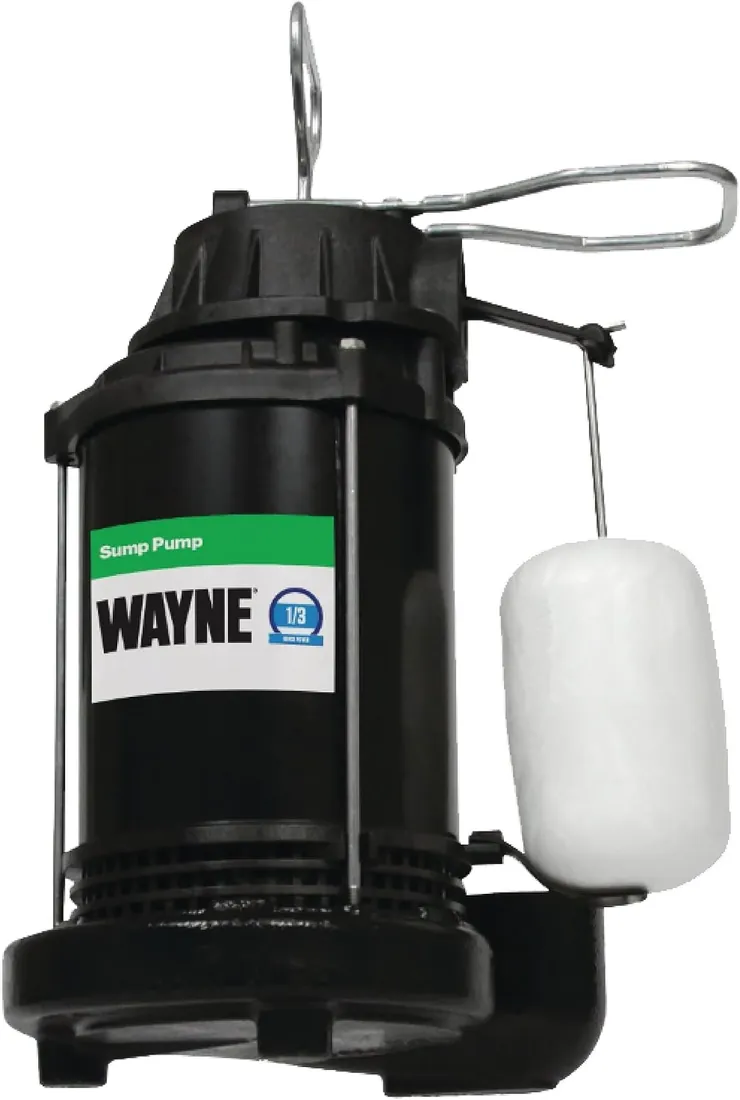
Wayne CDU790 Sump Pump
Exposed vertical float with a float guard, beside a top-suction intake that keeps bottom debris away.
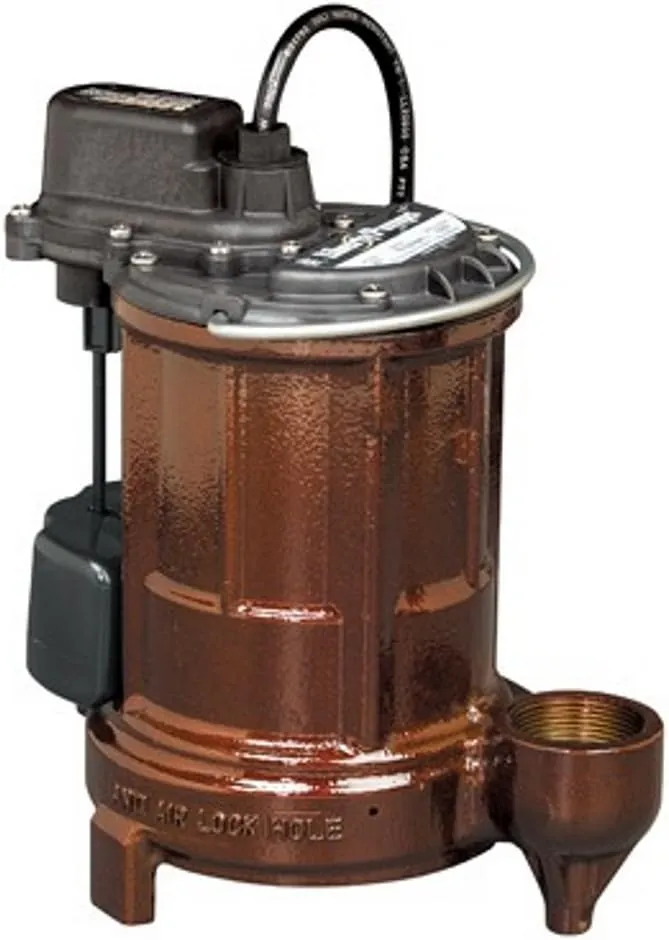
Liberty Pumps 257 Sump Pump
Vertical magnetic float that Liberty allows in a pit as narrow as 10 in across.
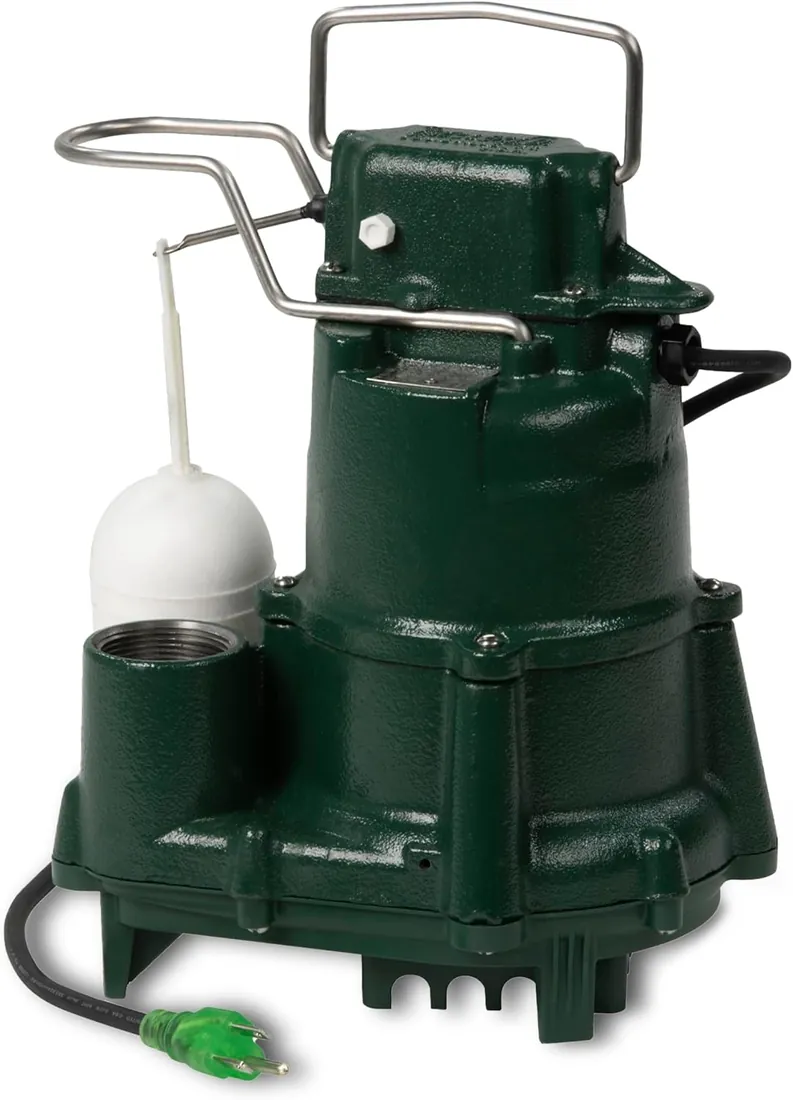
Zoeller M98 Flow-Mate Sump Pump
Built-in float on a larger 1/2 HP pump for pits that fill quickly.
Questions readers ask
Which sump pump switch lasts longest?
Makers do not publish switch life in a comparable way, so judge by exposure instead. Switches inside a guard or riding a short rod are protected from snagging, while tethered floats need room and regular replacement; Wayne, for one, asks for a new tether switch every two years.
Can I change the switch on my existing pump?
If the pump has a separate piggyback plug, yes: unplug the old switch and plug in a new one. A switch built into the pump body is usually a factory part, so follow the maker's replacement kit or parts list rather than wiring in a different type.
Why does my pump run for a few seconds and stop?
That short cycling usually means the gap between the on and off levels is small for the amount of water coming in, or that water falls back from the discharge pipe. Check the check valve first, then consider a switch with a wider range or a larger basin.