A wider basin holds more water between the switch-on and switch-off levels, so the pump runs longer and starts less often. Makers ask for at least 11 to 14 in across for ordinary sump pumps,, and larger is better. If your pump starts every minute or so in normal rain, the pit is too small for the inflow or the check valve is leaking.
Why basin size controls cycle time
Every automatic sump pump empties the pit between two levels: the height at which the switch turns it on and the height at which it turns off. The volume between those levels is the water removed per cycle. In a narrow pit that slice is small, so the pump starts again soon after it stops. In a wide pit the same switch range holds far more water and each run lasts longer.
Zoeller puts it directly: short cycling is a function of the basin diameter and the on-off pumping range. Liberty makes the same point in its sizing advice, saying a larger diameter basin is preferred because it allows a longer pump cycle and reduces float switch cycling. Fewer starts mean less wear on the switch, which Zoeller notes can shorten switch life when cycling is frequent.
The basin cycle calculator works out run time and rest time from your pit diameter, switch levels and pump flow, which is the quickest way to see whether your setup is borderline.
Minimum basin sizes from the makers
These are minimums, not targets. Each maker adds that a bigger pit is better. Notice the jump for sewage and effluent basins, which must also be sealed and vented. Depth matters as much as width: the basin must be tall enough for the pump plus its full switch travel, with the inlet pipe entering above the switch-on level so incoming water does not land on the float.
| Application | Minimum diameter | Minimum depth | Source |
|---|---|---|---|
| Wayne vertical-float sump pumps | 11 in | 22 in | Wayne sump manual |
| Wayne tethered-float sump pumps | 14 in | 22 in | Wayne sump manual |
| Liberty sump, ordinary groundwater | 14 in recommended | 18 in | Liberty 7035000R |
| Liberty vertical magnetic float models | 10 in | 18 in | Liberty 7035000R |
| Liberty effluent basin | 18 in | 24 in | Liberty 7035000R |
| Zoeller M267 sewage, simplex | 18 in | 30 in | Zoeller FM2789 |
Figures: Wayne submersible sump pump manual 600002W-001 J; Liberty Pumps installation manual 7035000R; Zoeller technical data sheet FM2789, Model 267.
How often should a sump pump run?
There is no single correct number, because it depends on the weather and the water table. During a heavy storm a pump may cycle constantly and that is normal. What matters is the pattern. A pump that starts every minute or two in ordinary rain is short cycling. A pump that runs for many minutes and barely lowers the level is undersized or blocked. A pump that never runs, even in wet seasons, may have a stuck float, so test it.
To judge your own pit, watch one full cycle in typical rain. Note how long the pump runs and how long it rests. If the rest is very short compared with the run, either water is falling back from the discharge pipe, which a working check valve prevents, or the inflow is high for the size of the pit.
Fixes when the pit is too small
Since a basin set in a concrete floor is hard to enlarge, Zoeller's advice is to change the switch range instead. It suggests a long-cycle kit for an automatic pump, or a non-automatic pump with a piggyback variable level switch to widen the pumping range. A model with a higher on level helps too: Zoeller's M98 switches on at 9-1/2 in against 7-1/4 in for the M53 in the same pit.
Do not solve short cycling by buying a much bigger pump. A larger pump empties the same small slice of water faster and starts just as often. And never set a lower off level than the maker allows; Liberty warns that its turn-off level is the minimum water depth that keeps the motor cool and the impeller covered.
- Confirm the check valve closes and holds water in the riser.
- Time one run and one rest in typical rain.
- Compare your pit diameter with the maker's minimum.
- Widen the switch range with a variable level or long-cycle switch.
- Consider a pump with a higher factory switch-on level.
When the pit keeps filling with no rain
A pit that fills on dry days usually means one of three things. The most common is a high water table: groundwater keeps feeding the drain tile long after a storm, especially in spring. The second is the discharge water itself: if the pipe ends too close to the house, the water soaks back down to the footing drains. Wayne asks that discharge reach at least 3 ft from the foundation. The third is a check valve that leaks, letting the riser drain back after every run.
Liberty's troubleshooting table adds a fourth cause for sealed drain pits: a pump that runs when no fixtures are in use often points to leaking fixtures or a leaking check valve. If the pit fills from a pipe you did not expect, trace it before assuming groundwater.
Choosing or upgrading a basin
Groundwater basins usually have holes or slots in the sides so water from the surrounding gravel can enter; sealed basins without holes are for sewage, effluent and radon-sealed systems. Either way, set the basin on a hard, level bottom. Liberty asks for bricks or concrete under an open-bottom basin so the pump never sits on soil or gravel.
Cover the pit. Wayne, Zoeller and Liberty all require a securable lid to keep out debris and prevent injury, and a slotted cover such as the Jackel SF1850S fits standard basins. Where a full pit is not practical, a preassembled system like the Little Giant Compact Sump Pump Basin System combines a small basin and pump, at the cost of shorter cycles.
Common mistakes
- Buying a bigger pump to fix short cycling in a small pit.
- Setting the off level lower than the maker's minimum water depth.
- Ending the discharge pipe near the foundation so water cycles back in.
- Placing an open-bottom basin straight on gravel or soil.
- Leaving the pit uncovered, where debris jams the float.
Products that fit
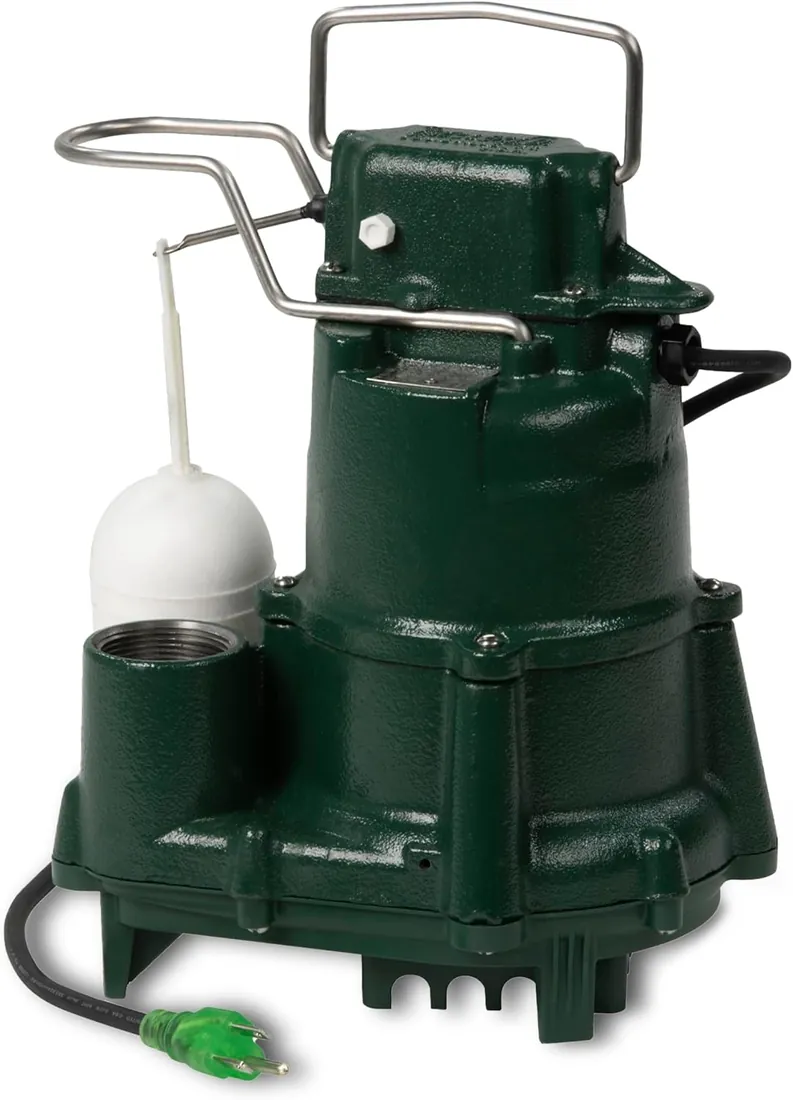
Zoeller M98 Flow-Mate Sump Pump
Higher 9-1/2 in switch-on point holds more water per cycle in the same pit.
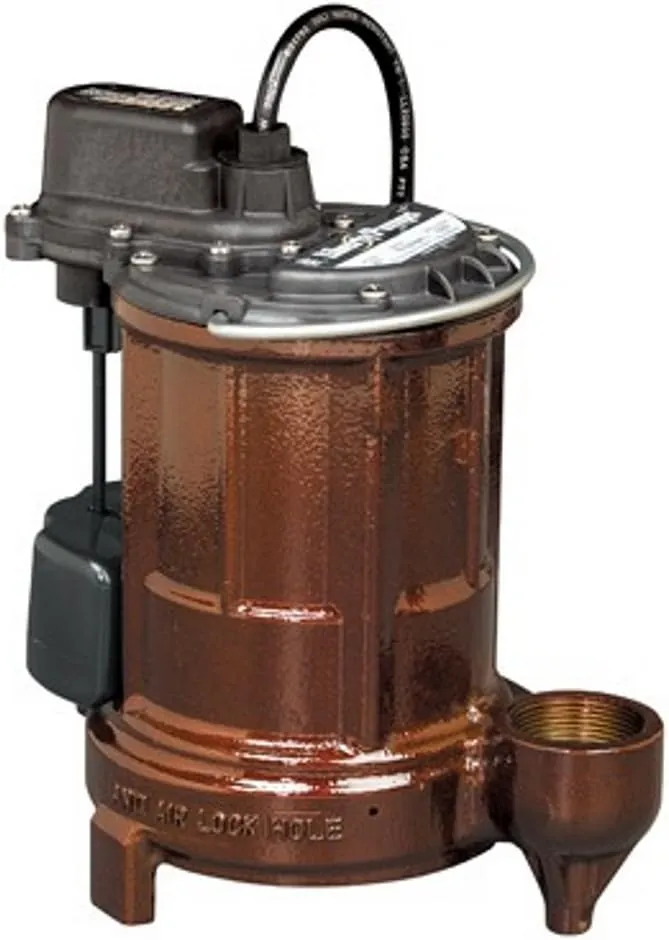
Liberty Pumps 257 Sump Pump
Vertical magnetic float allowed in a basin as narrow as 10 in.
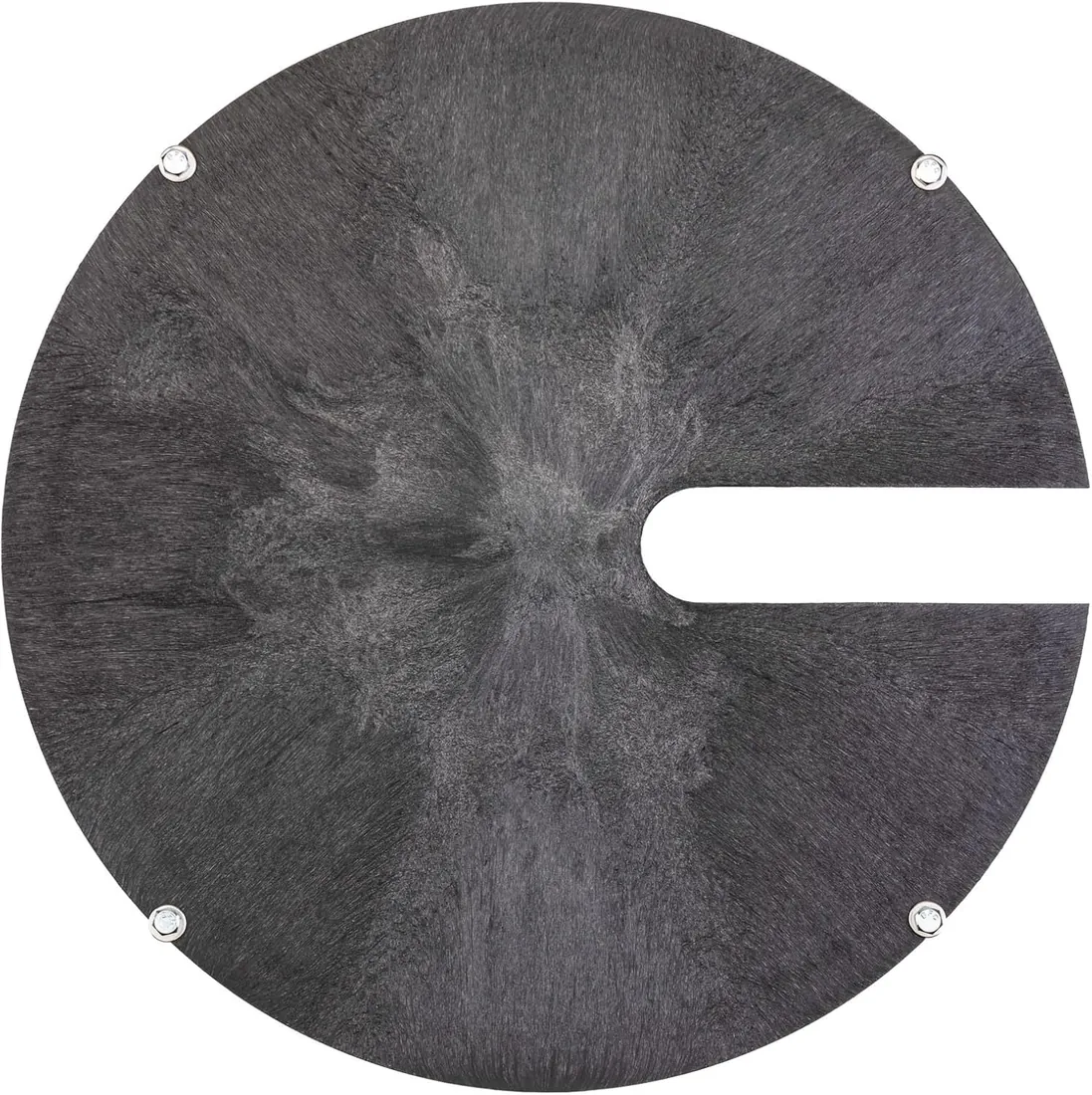
Jackel SF1850S Slotted Sump Basin Cover
Slotted lid for a standard sump basin to keep debris out of the pit.
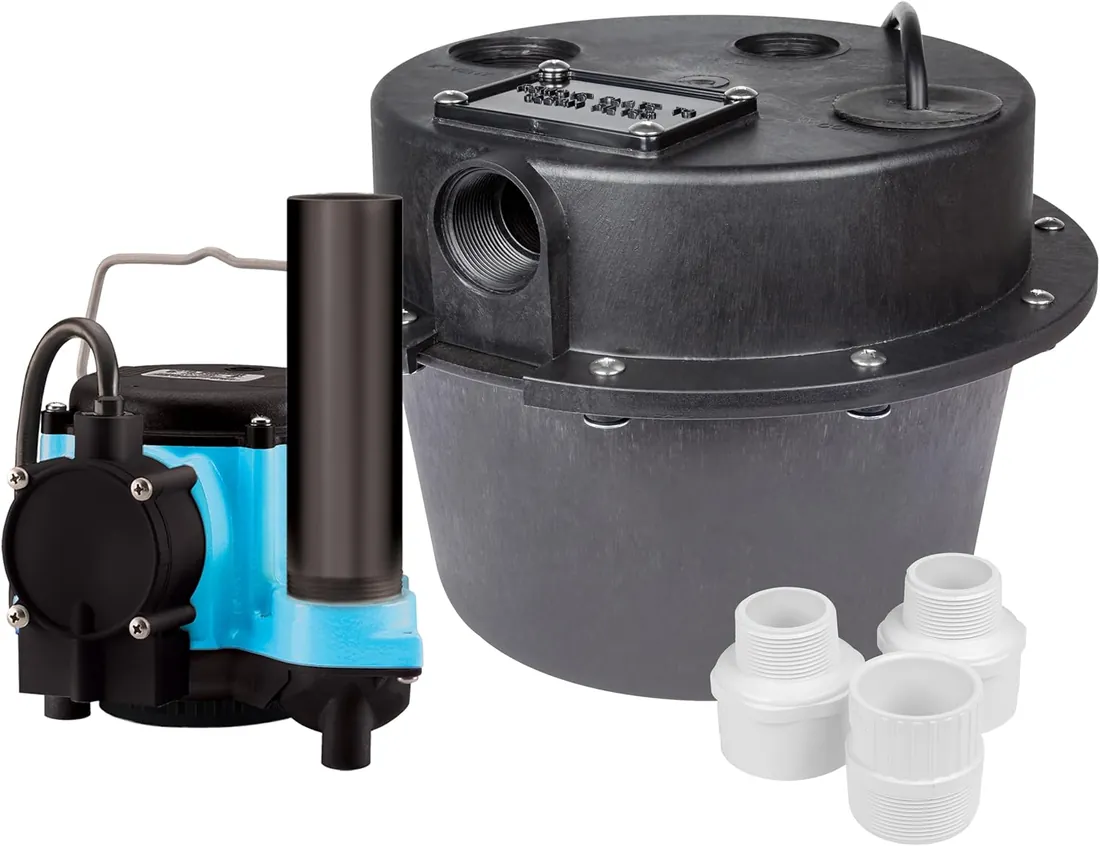
Little Giant WRSC-6 Compact Sump Pump Basin System
Small preassembled basin and pump where a full pit cannot be dug.
Questions readers ask
What size should a sump pump basin be?
Makers ask for at least 11 to 14 in across and 18 to 22 in deep for ordinary sump pumps, depending on the switch. Liberty and Wayne both prefer larger basins, which give longer pump cycles and longer switch life.
Should a sump basin have holes?
For groundwater, perforated or slotted basins let water from the surrounding gravel enter the pit. Sewage and effluent basins must be sealed and vented, and Liberty requires a sealed basin for those uses.
Can you install a sump pump without a pit?
Not for permanent groundwater control. Wayne and Liberty require a basin large enough for the pump and its switch, set on a solid bottom. For occasional water removal, a portable utility pump on a hose is the better tool.