A sump pump check valve is a one-way valve in the discharge pipe. It lets water leave the pit and blocks the column of water in the pipe from draining back when the pump stops, which would refill the pit and restart the pump. Wayne and Liberty call it required; Zoeller recommends it for sump systems and requires it for sewage.
What a check valve does for a sump pump
When a sump pump stops, everything standing in the vertical discharge pipe wants to run straight back down into the pit. Without a valve to hold it, that water lands on top of the float, the level climbs, and the pump starts again to move the same water a second time. In a deep basement with a long riser this can turn every cycle into two or three.
A check valve breaks that loop. A flapper or a spring-loaded disc swings open when the pump pushes water upward and closes as soon as flow stops. The makers treat it as basic equipment: Wayne's sump manual lists installing a check valve as the first fix for a pump that starts and stops too often, and Liberty's troubleshooting matrix gives the same remedy for frequent cycling and for a pump that runs when no fixtures are being used.
Zoeller is slightly softer for groundwater work. Its support page says a check valve is required in a sewage system and usually recommended for other submersible systems, while still noting that one in the discharge line helps cut short cycling.
Where the valve goes and which way it faces
Every maker document in this guide puts the valve in the vertical discharge pipe, a short distance above the pump, and usually just above the top of the basin so it can be reached. Wayne suggests its own valve can sit just above the basin to make pulling the pump for cleaning easier. Zoeller's installation sheet places its Unicheck, a combined union and check valve, preferably just above the basin for the same reason. Liberty asks for a union just above the floor with the check valve just above or in place of it, followed by a gate valve so the check valve can be cleaned or the pump removed.
Direction matters more than height. The valve body carries an arrow, and it must point the way water flows: up and away from the pump. Liberty's troubleshooting table lists a check valve installed backward or stuck closed as a cause of a pump that runs or hums but does not move water.
- Unplug the pump before cutting into the discharge pipe.
- Fit a union or union-style valve low enough to separate the pipe when you lift the pump.
- Install the check valve with its flow arrow pointing up, away from the pump.
- Add a gate or ball valve above it if your code or the maker calls for one.
- Drill the anti-airlock hole the pump maker specifies, below the valve and below the pit cover.
- Run the pump through several cycles and watch the valve close cleanly.
The small hole that prevents airlock
A check valve traps whatever sits between it and the impeller, and if that pocket is air the impeller can spin without pushing water. The pump hums, the motor warms up, and the pit keeps filling. Both makers in this guide answer this with a small hole drilled in the discharge pipe below the valve.
The sizes and positions differ, so follow the document for your pump. Zoeller asks for a hole of roughly 3/16 in, below the check valve and below the pit cover, and its installation sketch puts it even with the top of the pump. Liberty specifies a 1/8 in anti-airlock hole just above the pump's discharge outlet whenever a check valve is used. Both warn that a stream of water from the hole while the pump runs is normal, and Zoeller asks owners to check it periodically for clogging.
| Maker document | Check valve | Anti-airlock hole | Valve position |
|---|---|---|---|
| Wayne sump manual | Required | Not stated in this manual | May sit just above the basin |
| Liberty 250-Series manual | Required | 1/8 in, just above the pump outlet | Just above the floor union, gate valve after it |
| Zoeller installation sheet | Recommended for sump, required for sewage | About 3/16 in, below valve and cover | Preferably just above the basin |
Figures: Wayne submersible sump pump manual 600002W-001 J; Liberty Pumps installation manual 7035000R; Zoeller installation instructions FM2676, 3-year warranty pumps; Zoeller product support FAQ.
Swing, spring and quiet valves
Most sump check valves are one of two designs. A swing valve has a hinged flapper that drops shut when flow stops. It is simple and lets debris through easily, but the flapper can slam as the water column reverses. A spring-loaded valve closes before the water gains speed, which is why makers sell them as quiet valves.
That slam has a name. Zoeller's support page describes the loud bang when a pump stops as water hammer from the check valve closing, says it is more annoying than harmful, and points owners toward its quiet design. In the catalog, the Zoeller 30-0040 Quiet Check Valve is listed for 1-1/2 in PVC, and the PumpSpy CV-150 is a spring-loaded flapper valve that installs with rubber couplings and clamps. The Zoeller 30-0238 is a compact inline valve for owners who want a short body between pipe sections.
Whatever you buy, match it to the pump's discharge size. Zoeller's install checklist tells owners never to use a pipe smaller than the pump outlet, and a valve that necks the line down does the same damage.
Signs a check valve has failed
A valve can fail open or closed, and the symptoms point in opposite directions. If it leaks or sticks open, water drains back after each cycle and the pump runs much more often than the weather explains. You may hear water rushing back into the pit just after the motor stops. Wayne and Liberty both send owners to remove the valve, inspect it for free movement and correct orientation, and replace it if it does not seal.
A valve stuck shut or fitted backward gives the opposite picture: the motor runs or hums but little or no water leaves. Liberty adds a third case, a partly clogged valve that cuts capacity, and suggests raising and lowering the water level to clear it before taking the valve apart. Zoeller lists a clogged check valve among the reasons a pump loses head and flow after a period of use.
Replacing one is mostly plumbing: unplug the pump, support the pipe, loosen the couplings and fit the new valve with the arrow pointing up. Then drill or clear the anti-airlock hole before you plug the pump back in.
Sewage and duplex systems
On a sewage ejector the valve is not optional. Zoeller says plainly that a sewage system needs a check valve to keep waste from draining back into the basin. Liberty adds a rule for two-pump pits: each pump needs its own check valve before the lines join, or one pump will simply circulate water back through the other. If you are working on an ejector, the sewage ejector pump list shows the pumps these rules apply to.
Common mistakes
- Installing the valve with the flow arrow pointing down toward the pump.
- Skipping the anti-airlock hole, then finding the pump humming without moving water.
- Drilling the vent hole above the pit cover, where it sprays into the room.
- Fitting a valve or coupling smaller than the pump's discharge outlet.
- Sharing one check valve between two pumps that feed a common line.
- Leaving the old valve in place for years without checking that it still seals.
Products that fit
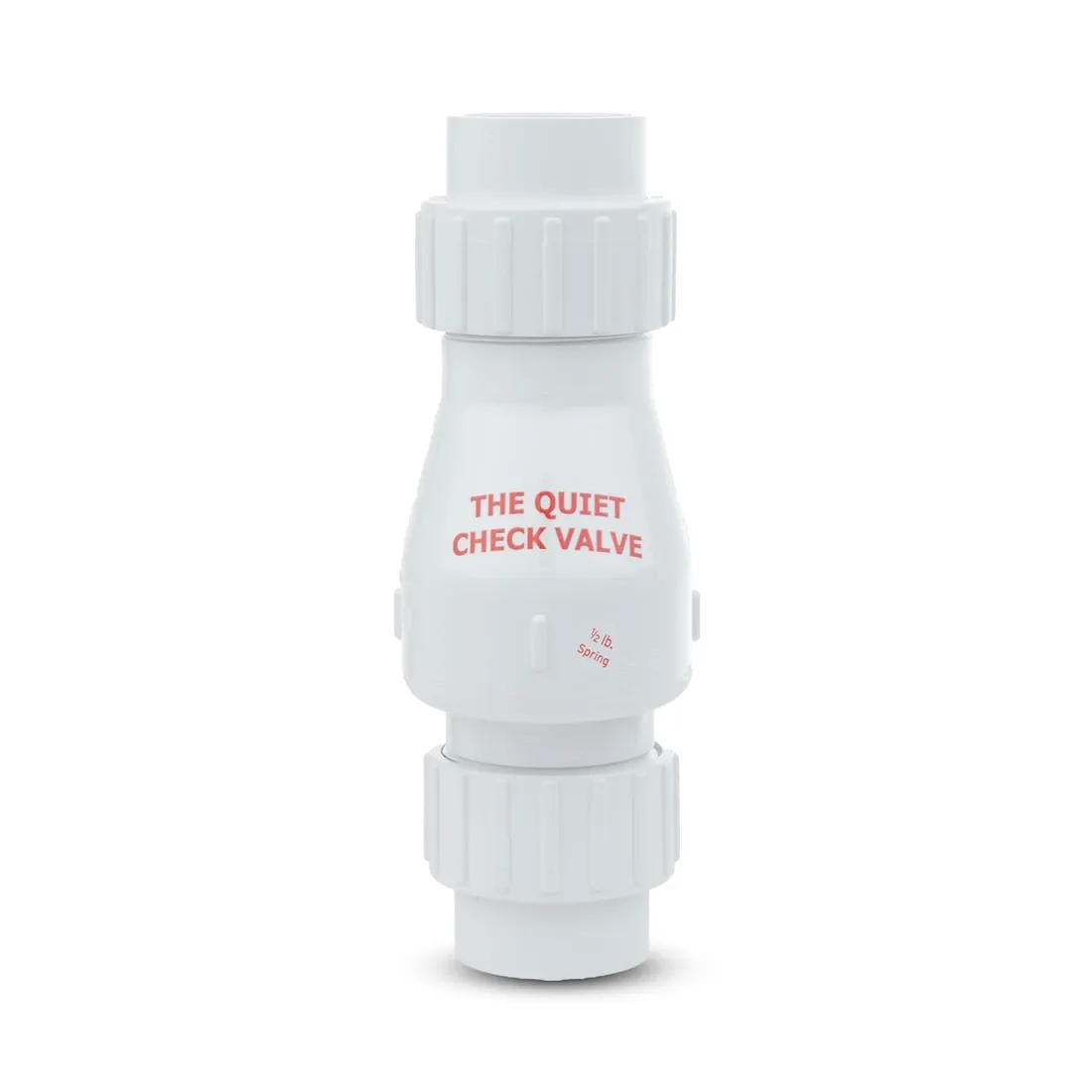
Zoeller 30-0040 Quiet Check Valve
Quiet-closing check valve listed for 1-1/2 in PVC discharge pipe, aimed at water hammer noise.
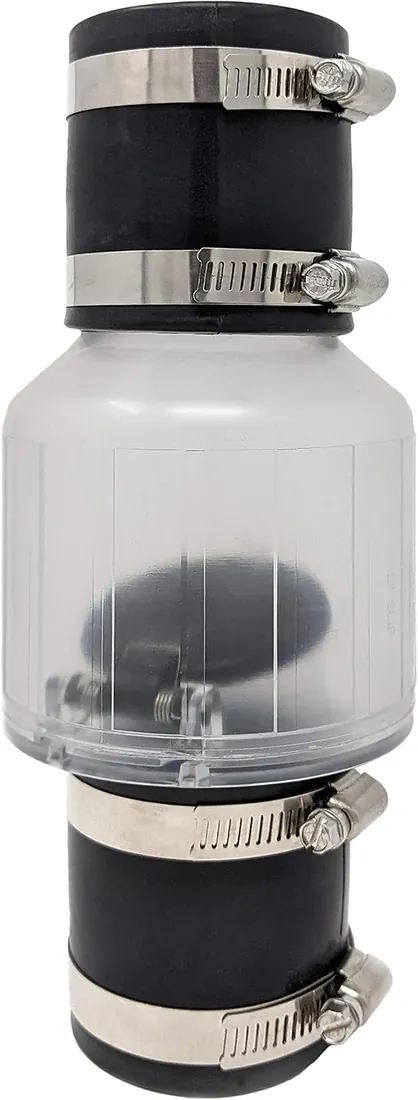
PumpSpy CV-150 Silent Check Valve
Spring-loaded flapper valve with rubber couplings and steel clamps for a quiet, slip-on fit.
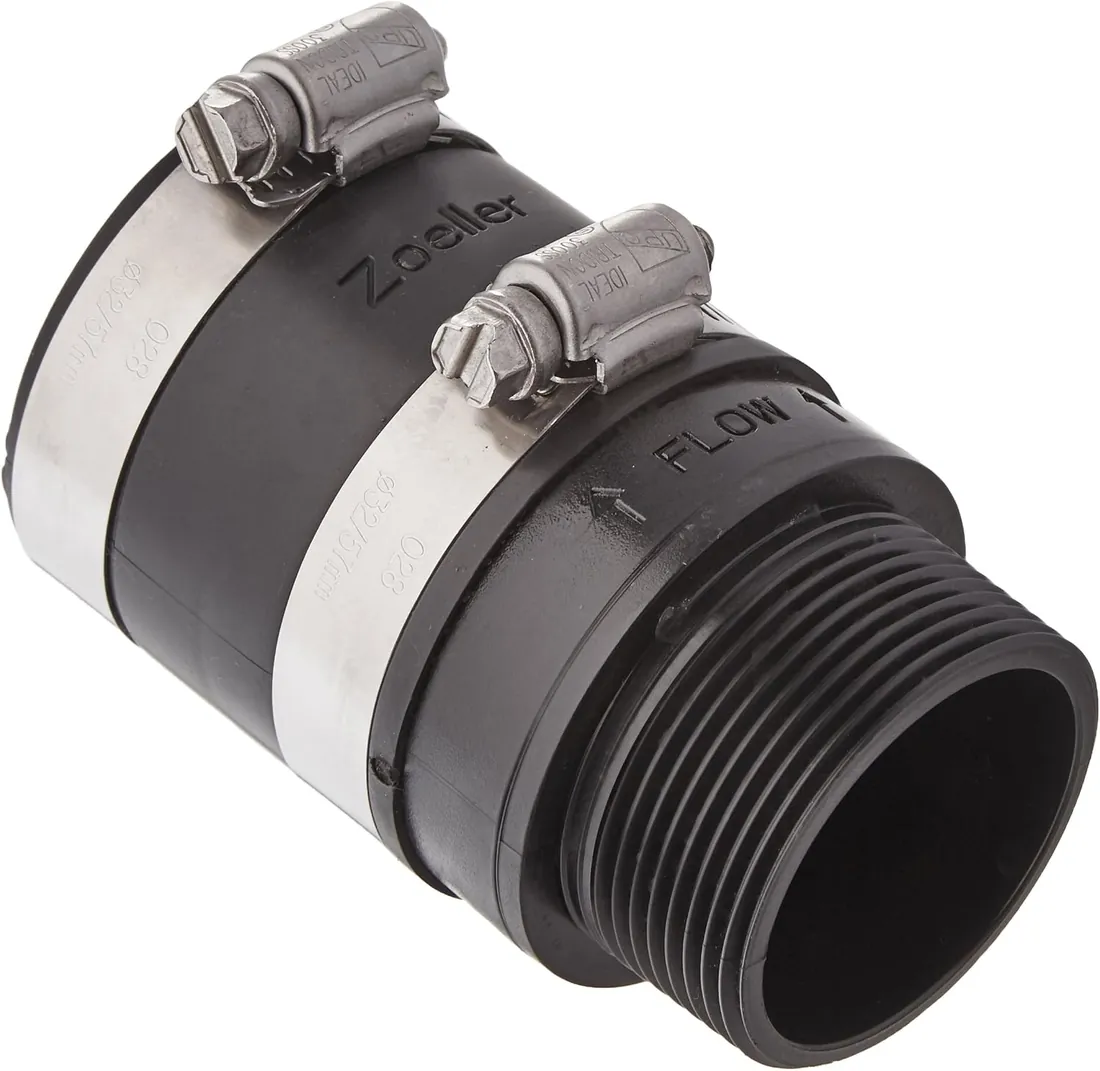
Zoeller 30-0238 Inline Check Valve
Compact inline valve for short runs where a long valve body will not fit.
Questions readers ask
Does a sump pump need a check valve?
Wayne and Liberty both state that their sump pumps require one to stop backflow after each cycle. Zoeller recommends one for sump and dewatering systems and requires it for sewage. Without it, water in the riser drains back and restarts the pump.
How far above the pump should the check valve be?
The makers place it in the vertical pipe, usually just above the basin or just above the floor union, so the pump can be lifted out. The exact height matters less than having the anti-airlock hole below the valve and below the pit cover.
Why does my sump pump bang when it shuts off?
Zoeller explains that the bang is the check valve slamming as the water column reverses, known as water hammer. It is more annoying than harmful, and a quiet or spring-loaded check valve is the usual fix.
Can a check valve be installed horizontally?
The maker documents here show the valve in the vertical discharge pipe above the pump. If your piping forces another position, use a valve whose instructions allow it and keep the flow arrow pointing away from the pump.