For a permanent sump pump, run rigid PVC pipe at least as large as the pump's outlet, with a check valve, out through the wall and away from the foundation. Wayne requires rigid pipe and asks for water to land at least 3 ft from the house. Flexible hose kits suit temporary pumping, utility pumps and outdoor extensions, not the main line from the pit.
Rigid pipe for the permanent line
Inside the house the makers agree: use rigid pipe. Wayne's sump manual requires rigid PVC and tells owners not to use flexible hosing in a permanent installation, explaining that rigid piping secures the pump and that pump movement can stop the switch working. Liberty recommends Schedule 40 PVC pressure pipe on its 1-1/2 in threaded discharge and asks installers to hand-tighten the first fitting, since over-tightening can crack the pump housing.
Keep the run short and simple. Liberty asks for as few turns as possible to limit friction loss and a union just above the floor so the pump can be removed. A check valve belongs in the vertical section above the pump, with the small anti-airlock hole the pump maker specifies drilled below it.
What size the discharge should be
Match or exceed the pump outlet. Most house sump pumps, including the Zoeller M53 and M98, the Liberty 257 and the Wayne CDU790, have a 1-1/2 in NPT discharge. Zoeller's installation checklist says never to use a discharge pipe smaller than the pump's outlet, and Liberty adds that larger pipe may be needed on long runs to keep friction head down.
This is where many hose kits fall short. Little Giant's SPDK kit pairs a 1-1/4 in flexible hose with adapters for 1-1/4 in or 1-1/2 in pump outlets. That is fine for a utility pump or a short temporary run, but on a 1-1/2 in sump pump it narrows the line below the outlet, which the makers advise against for a permanent setup.
| Kit | Hose | Length | Fittings included |
|---|---|---|---|
| Little Giant SPDK | 1-1/4 in flexible drain hose | 24 ft | 1-1/4 in and 1-1/2 in NPT barbed adapters, steel clamp |
| Superior 99621 | Reinforced PVC lay-flat hose, listed as 2 in by the maker | 25 ft | 1-1/2 in MPT and 2 in MPT to 2 in barb adapters, clamp |
| PumpSpy Dual Pump Install Kit | Not a hose: PVC connector | Not stated | Joins two pumps to one 1-1/2 in line |
Figures: Little Giant sump pump discharge kit SPDK product page; Superior Pump 99621 lay-flat hose kit product page; PumpSpy Dual Pump Install Kit listing.
Where the water should go outside
Water dropped beside the foundation soaks straight back to the footing drains and returns to the pit, so the pump lifts the same water again. Wayne asks owners to confirm the discharge carries water at least 3 ft from the foundation. Further is better if your yard slopes toward the house; a splash block, a buried line to a lower part of the yard or a downspout-style extension all work.
Check local rules before connecting to anything. Many towns forbid sending sump water into the sanitary sewer, and some limit discharge onto sidewalks or neighboring lots. Wayne's manual also tells installers to follow local, regional and state codes for discharge plumbing and to add a gate or ball valve if code requires one.
Stopping the outside line from freezing
A frozen outdoor line is a common winter failure. Ice blocks the pipe, the pump runs against it, and the pit overflows. Wayne's rule is that any discharge exposed to freezing must slope downward away from the foundation so it drains completely between cycles. Liberty lists ice in the discharge line as a cause of a pump that runs but does not pump, and suggests placing plumbing below the frost line where possible.
This is the one place a hose earns its keep. Many owners leave the rigid pipe ending just outside the wall and attach a short lay-flat or flexible hose in winter, which drains flat and can be moved or lifted if it freezes. A lay-flat hose such as the Superior 99621 rolls up for storage between seasons.
- Slope the outdoor pipe downward away from the house over its whole length.
- Avoid low spots or loops where water can sit and freeze.
- End the line where it can drain freely, not into a buried dead end.
- In hard freezes, check the outlet after each long cold spell.
- Keep a short hose or extension ready in case the main outlet ices over.
When a hose kit is the right tool
Hose kits are made for portable work. Little Giant describes the SPDK as a sump pump discharge kit with barbed adapters and a rust-resistant clamp: screw the adapter into the pump, slide the hose cuff over it and tighten the clamp. That makes it ideal for draining a flooded room with a utility pump, emptying a window well or running a temporary pump while the main one is serviced.
For a second pump in the same pit, the PumpSpy Dual Pump Install Kit joins two pumps into a single line. If you do this, give each pump its own check valve before the lines meet, as Liberty requires for two-pump pits, or one pump will push water back through the other.
Extension cords and a noisy discharge
People who extend a discharge line often want to extend the power cord too. Every sump manual in this guide forbids extension cords on sump pumps; Wayne says to have an electrician add an outlet within reach instead. For noise, Wayne's chart blames vibration on pipe fastened too rigidly or too loosely to the house and suggests a rubber coupling to isolate it, while Zoeller points to a quiet check valve for the bang at shut-off.
Common mistakes
- Using flexible hose for the permanent line out of the pit.
- Necking a 1-1/2 in pump outlet down to a smaller hose for good.
- Ending the discharge right beside the foundation, where it soaks back in.
- Letting the outdoor pipe sag so water sits and freezes in it.
- Joining two pumps to one line without a check valve on each.
- Plugging the pump into an extension cord to reach a distant outlet.
Products that fit
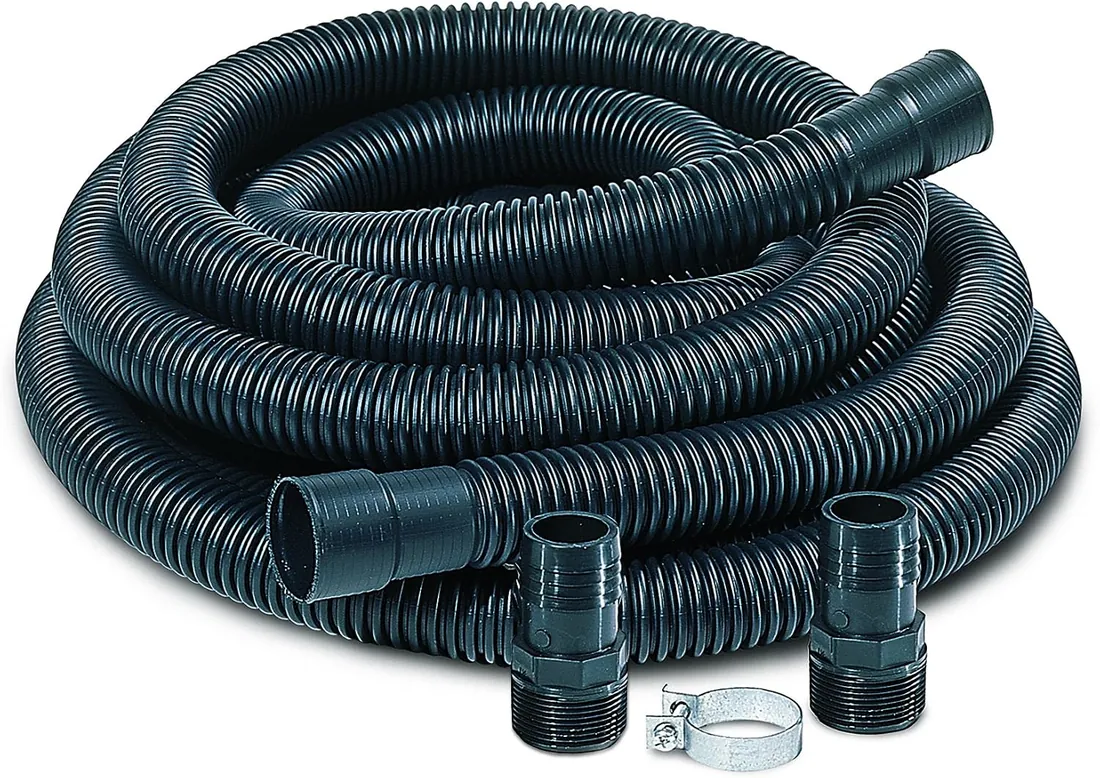
Little Giant SPDK Discharge Hose Kit
Flexible hose with 1-1/4 in and 1-1/2 in barbed adapters for portable pumping.
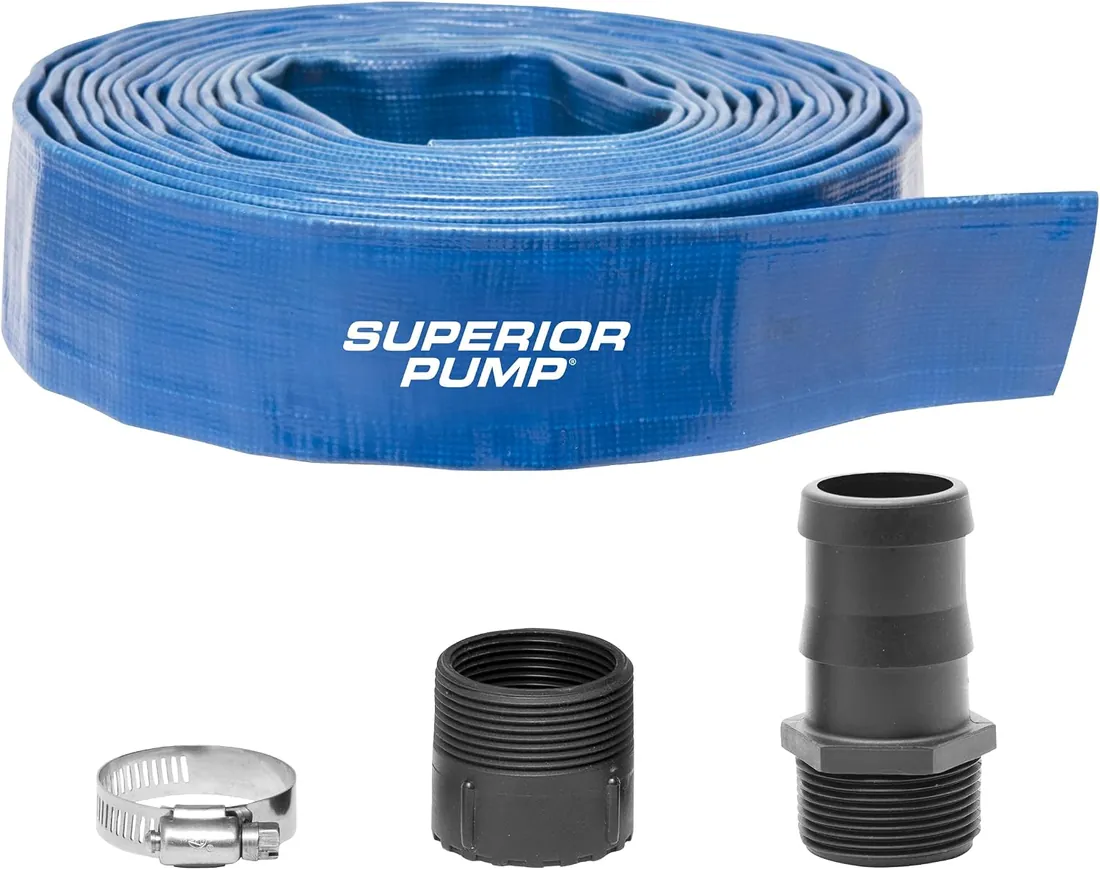
Superior Pump 99621 Lay-Flat Hose Kit
Lay-flat PVC hose that drains flat and rolls up between seasons.
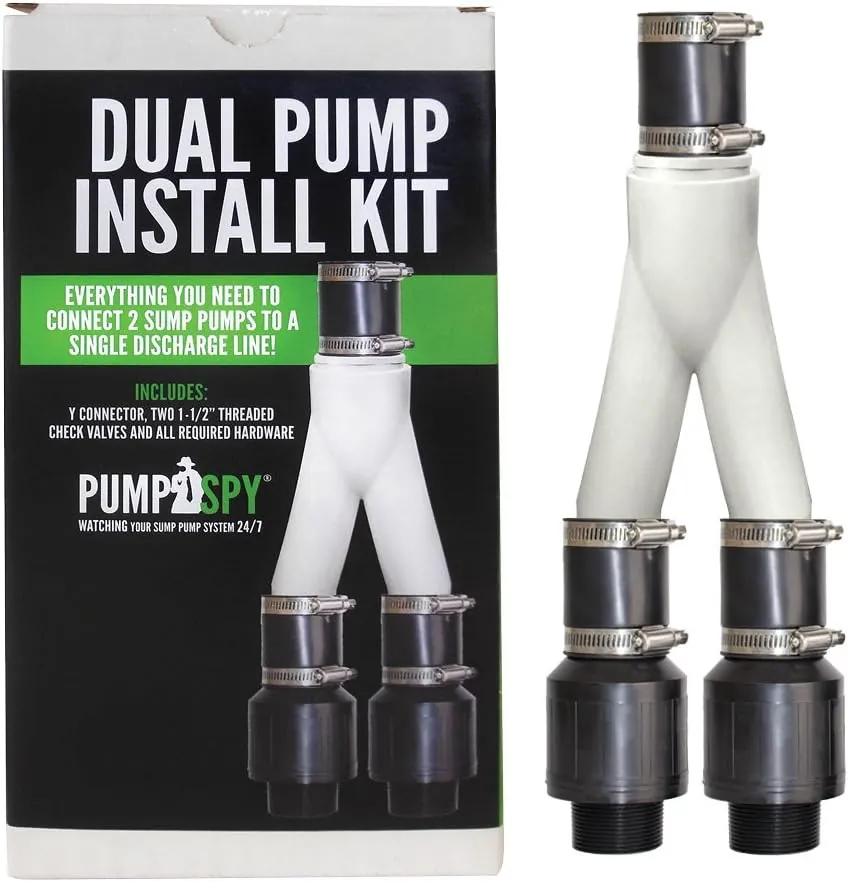
PumpSpy PSDPKIT1 Dual Pump Install Kit
Connector that joins a primary and a backup pump into one discharge line.
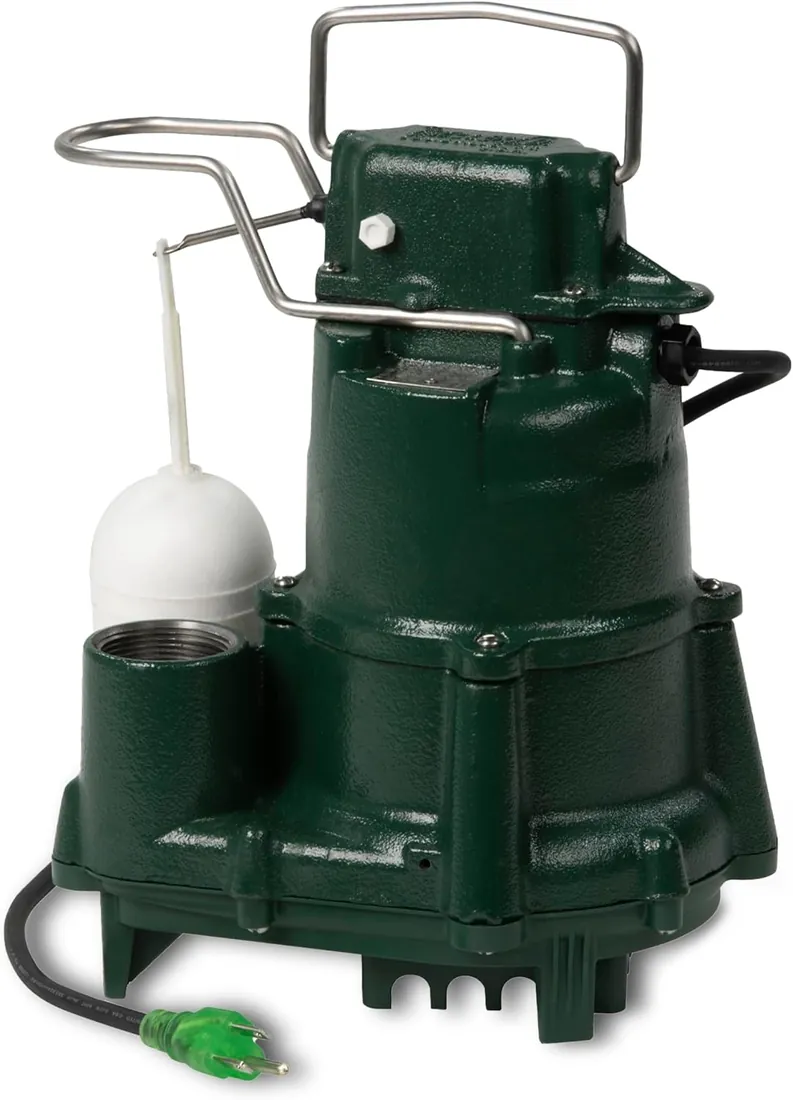
Zoeller M98 Flow-Mate Sump Pump
Typical 1-1/2 in NPT discharge pump that needs a full-size line.
Questions readers ask
Can I use a hose for my sump pump discharge?
Not for the permanent line out of the pit. Wayne requires rigid PVC and says not to use flexible hosing, because hose lets the pump move and upsets the switch. A hose is fine outside as a seasonal extension or with a portable pump.
How far should sump pump discharge be from the house?
Wayne asks for at least 3 ft from the foundation, and further is better if the ground slopes toward the house. The aim is to keep the water from soaking back to the footing drains and returning to the pit.
What size hose fits a sump pump?
Use hose no smaller than the pump outlet, usually 1-1/2 in. Little Giant's SPDK uses 1-1/4 in hose with adapters for both sizes, which suits utility pumps and temporary runs better than a permanent sump line.