Turn off power to the basement before stepping into the water; if the panel is down there, call an electrician. Then lower a submersible utility pump into the deepest spot, run a hose well away from the house, and plug the pump into a GFCI outlet above the water. A high-flow pump moves the bulk; a low-level pump like the WaterBUG finishes to within 1/16 in.
Electrical safety before anything else
Standing water and live circuits are the real danger in a flooded basement. Wayne's sump pump manual puts it plainly: do not walk on the floor while water is present until all power is turned off, and if the electrical panel is in the basement, call an electrician. Appliances, extension cords and outlets below the waterline can all energize the water.
Once the power is safely off, every pump you bring in should run from a grounded GFCI outlet above the flood level, reached by its own cord. Wayne's utility pump manuals require GFCI protection, and Wayne's WaterBUG manual warns against extension cords for permanent use and says to keep the plug connection dry. Wayne also warns that its pumps are not for use while people are in, or in contact with, the water being pumped.
- Shut off power to the basement at the panel, or call an electrician.
- Find out why the water came in: a failed sump pump, a burst pipe or surface water.
- Put on boots and gloves; floodwater can carry sewage and chemicals.
- Run pump cords to a GFCI outlet above the waterline.
Choosing a pump for the job
For a flooded floor, a portable submersible utility pump is the right tool. It sits in the water, needs no priming, and connects to a garden hose or a larger discharge. Flow varies widely. Superior's cast iron 91501 is rated at 4,200 GPH with no lift and 3,480 GPH at 10 ft, through a 1-1/2 in NPT outlet with a garden hose adapter. Wayne's RUP160 moves 3,100 GPH at no lift but only 1,600 GPH at 10 ft. Lift matters, because the water has to climb out of the basement.
A clear-water utility pump will clog on mud, leaves and gravel. For floodwater carrying debris, a trash pump such as Tsurumi's HS2.4S, whose maker lists sand-carrying water among its fluids, is the better fit. If you already have a working sump pump, it can help, but a sump pump is designed to sit in a pit, not on a flat floor where its switch may never trigger.
| Pump | Flow at 0 ft | Flow at 10 ft | Drains down to |
|---|---|---|---|
| Superior 91501 | 4,200 GPH | 3,480 GPH | Stated as 1/8 in and as 1 in on the same page |
| Wayne RUP160 | 3,100 GPH | 1,600 GPH | Not stated in the manual |
| Liberty 260 | 17 GPM | 14 GPM | 1/8 in |
| Wayne WaterBUG | Not compared here | Not compared here | Within 1/16 in of the surface |
Figures: Superior Pump 91501 product page; Wayne RUP160 operating instructions 620004-001 E; Liberty Pumps Model 260-2 sales literature LLIT004700; Wayne WaterBUG operating instructions 620009W-001 E.
Setting up the pump and hose
Set the pump in the lowest spot, on a hard surface rather than in mud, and away from loose debris. A brick under it helps keep silt out of the intake. Use the largest discharge you can: a 1-1/2 in hose or pipe carries far more than a 3/4 in garden hose, and Liberty warns against reducing a pump's discharge below its outlet size. Keep the hose run short and free of kinks and loops.
Run the discharge well away from the house and downhill. Wayne asks for sump discharge to leave the line at least 3 ft from the foundation; for floodwater, further is better, because water dumped next to the wall soaks straight back toward the basement. Do not pump into a septic system, which can be overwhelmed.
Getting the last of the water out
High-flow pumps stop picking up water while there is still a film on the floor, because their intake needs to stay covered. That is when a low-level pump earns its place. Wayne says its WaterBUG removes water to within 1/16 in of the surface, and Liberty's 260 pumps down to 1/8 in. A wet vacuum or mop handles what is left.
Do not let any pump run dry while you wait. Wayne's WaterBUG manual says its shaft seal depends on water for cooling and lubrication, and running dry damages it. Unplug the pump as soon as it starts sucking air.
How fast to pump out deep water
When the ground outside is still saturated, emptying a deeply flooded basement all at once can let the soil pressure push on the walls with nothing inside to balance it. Pump deep water in stages over a few days if the surrounding ground is waterlogged, and watch for new cracks or bowing. Shallow water from a burst pipe or a failed sump pump can be removed straight away.
If the water returns as fast as you remove it, the basement is taking in groundwater and the fix is a working sump system, not a portable pump. The sump sizing guide and the sizing calculator help choose a permanent pump.
If the sump pump failed
A failed sump pump is the most common cause of a flooded basement. Once the water is out, find why it stopped: power loss, a tripped GFCI, a stuck float, a clogged inlet or a dead motor. The breaker and GFCI guide and the replacement guide cover diagnosis. Wayne recommends an independent high-water alarm or a backup pump wherever flooding would cause damage, and the battery backup list compares backups.
Common mistakes
- Wading into a flooded basement with the power still on.
- Running a pump through an extension cord lying in the water.
- Discharging the water right next to the foundation.
- Using a clear-water pump on muddy, debris-filled floodwater.
- Letting the pump run dry once the water is gone.
Products that fit
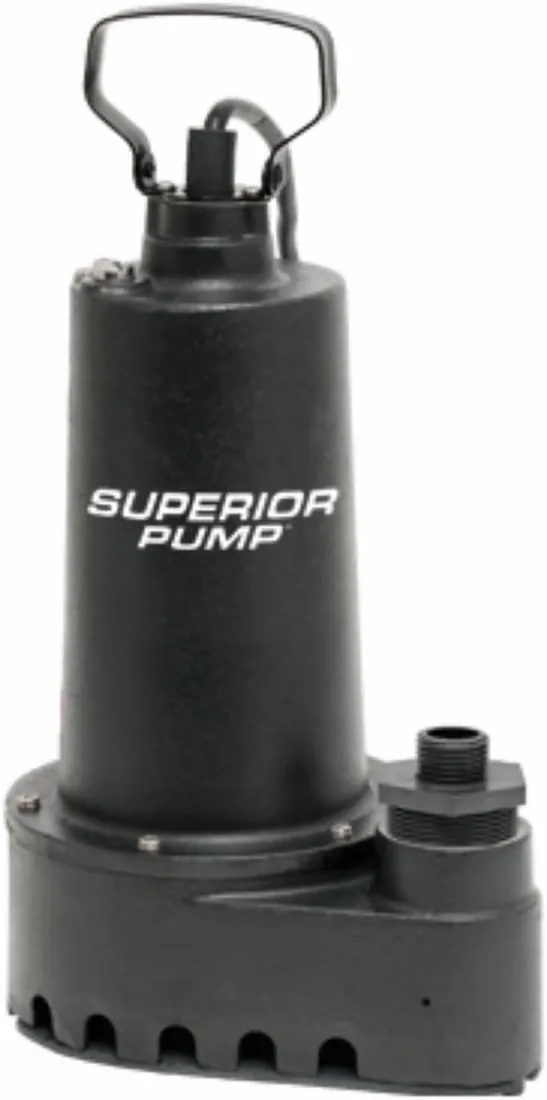
Superior Pump 91501 Cast Iron Utility Pump
Cast iron utility pump rated 4,200 GPH, with a garden hose adapter.
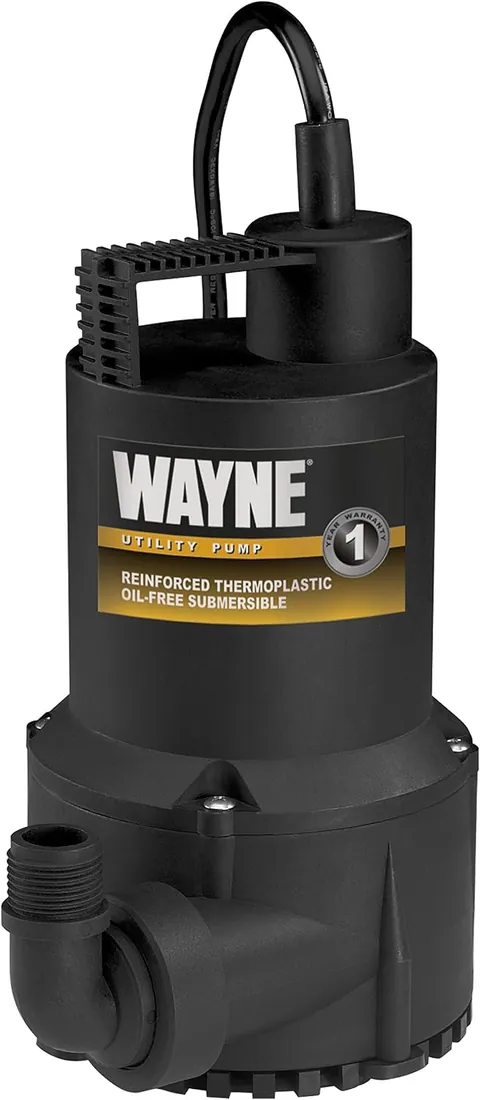
Wayne RUP160 Submersible Multi-Use Pump
Portable utility pump with 1,600 GPH at a 10 ft lift.
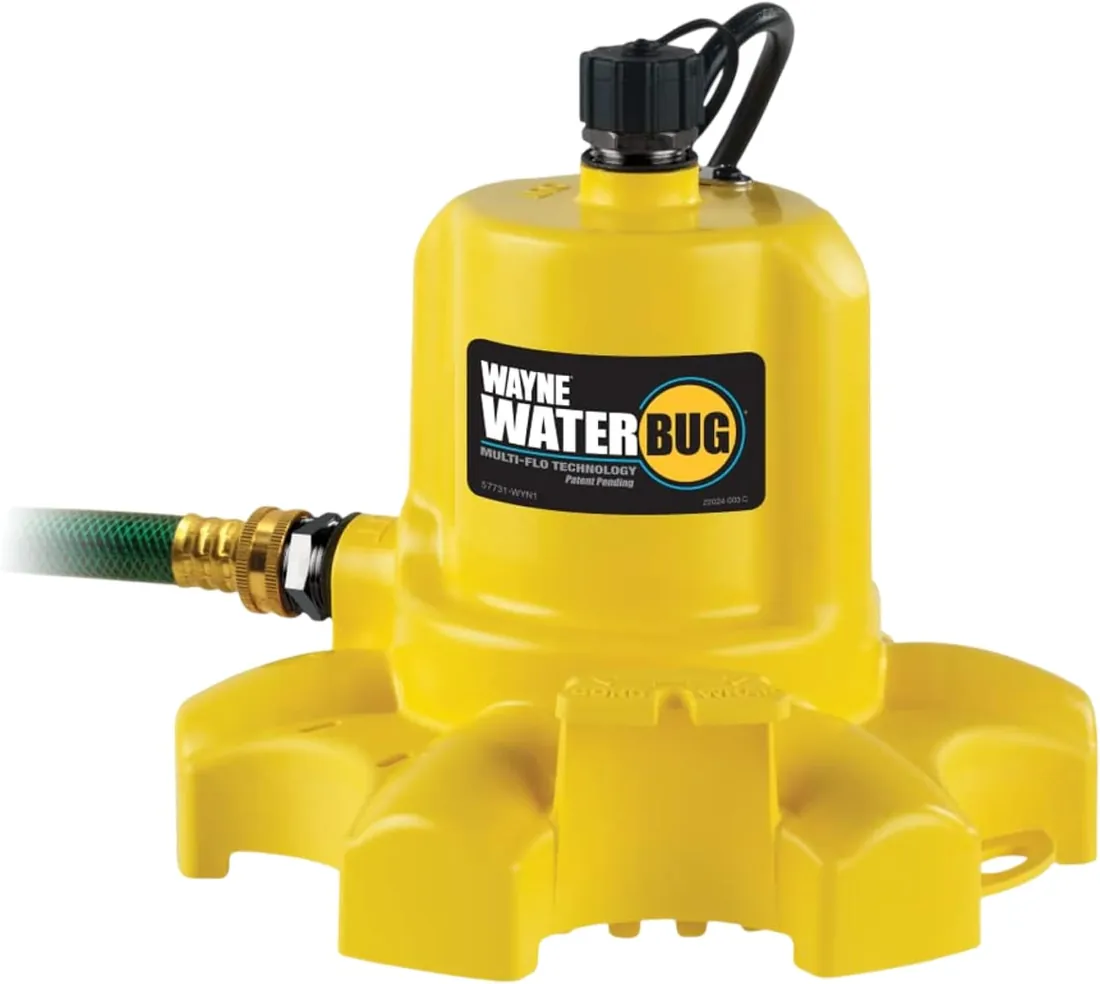
Wayne WaterBUG WWB Multi-Use Pump
Wayne low-level pump that removes floor water to within 1/16 in of the surface.
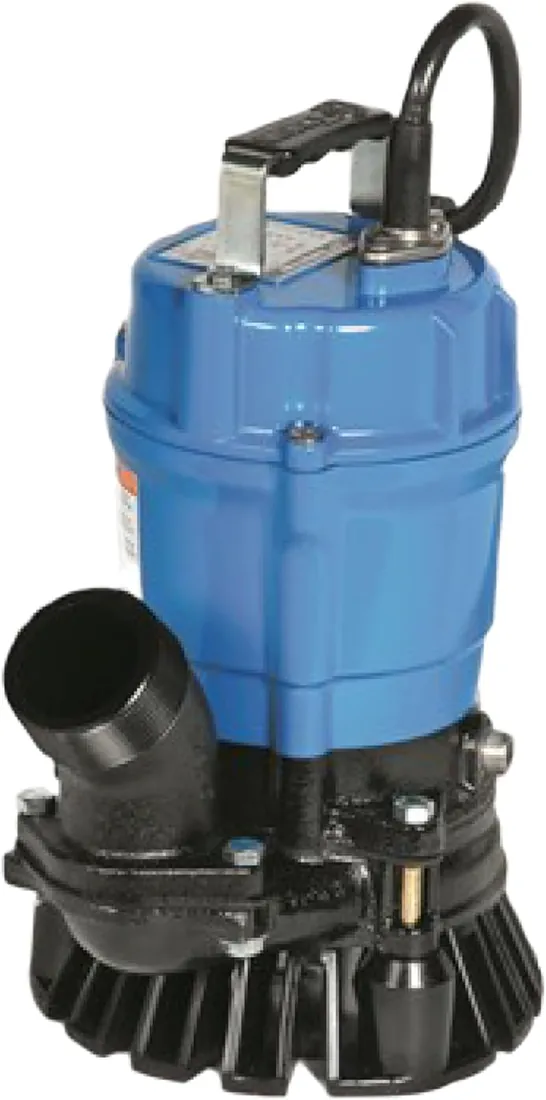
Tsurumi HS2.4S Submersible Trash Pump
Trash pump rated for water that carries sand and debris.
Questions readers ask
What kind of pump do I need for a flooded basement?
A portable submersible utility pump for clear water, or a trash pump if the water carries mud and debris. Pick one with good flow at the height the water must climb, then finish with a low-level pump or wet vacuum.
What size discharge hose should I use?
As large as the pump's outlet allows. Many utility pumps have a 1-1/2 in outlet with a 3/4 in garden hose adapter; the larger hose moves much more water. Liberty warns against reducing the discharge below the pump's outlet size.
Can I use my sump pump to pump out a flooded basement?
It can help if it is working and can be placed in deep water, but sump pumps are built to sit in a pit with a float switch. On a flat floor the switch may not trigger, so a portable utility pump is usually better.
Why does water keep coming back after I pump it out?
If it returns quickly, groundwater is entering the basement. A portable pump only treats the symptom; the long-term fix is a working sump pump system, ideally with a backup or alarm.