A sump pump is installed permanently in a pit, runs automatically from a float switch and pushes water through rigid pipe with a check valve. A utility pump is portable, usually switched by hand, connects to a garden hose and can pull water down to a thin film. Use a sump pump for groundwater protection and a utility pump for draining tubs, flat roofs, flooded floors and similar jobs.
What a utility pump is built to do
A utility pump is a small submersible pump you carry to the water: a flooded floor, a water heater, a hot tub, a window well or a pool cover. Superior lists exactly those jobs for its 91250, along with ponds, boats and job sites. Most are manual, meaning the motor runs whenever the pump is plugged in, and the owner unplugs it when the water is gone.
Because they are meant to clean up surfaces, utility pumps pull water much lower than sump pumps. Superior rates the 91250 to remove water down to 1/8 in, and Little Giant says its 5-MSP reaches 1/8 in with the screen fitted and 1/16 in without it. Their outlets suit hoses: the 91250 has a 1-1/4 in discharge with a 3/4 in garden hose adapter, and the 5-MSP a 1 in outlet with a hose adapter included.
What a sump pump is built to do
A sump pump lives in a pit and protects a basement from groundwater with no one watching. It has a float switch that starts it at a set level and stops it before the intake runs dry, a larger outlet for rigid pipe, and a housing designed to sit submerged for years. Wayne's manual calls for rigid piping to hold the pump in place, forbids flexible hose in a permanent installation, and makes a check valve mandatory.
Sump pumps leave more water behind on purpose. Wayne's vertical-float models stop at about 4 in, which keeps the impeller covered and the motor cool. A standard sump outlet is 1-1/2 in, and sump pumps pass larger debris than most utility pumps: Superior's cast iron 92341 handles 3/8 in solids against 1/8 in for its utility 91250.
| Spec | Superior 92341 sump | Superior 91250 utility | Little Giant 5-MSP utility |
|---|---|---|---|
| Horsepower | 1/3 HP | 1/4 HP | 1/6 HP |
| Switch | Piggyback vertical float | Manual | Manual |
| Discharge | 1-1/2 in NPT | 1-1/4 in NPT, 3/4 in hose adapter | 1 in FNPT, hose adapter |
| Pumps down to | Switch off level 2 in | 1/8 in | 1/8 in with screen |
| Solids | 3/8 in | 1/8 in | Not stated on the data sheet |
| Warranty | 3 years | 1 year | See maker warranty |
Figures: Superior Pump 92341 product page; Superior Pump 91250 product page; Little Giant 5 Series spec sheet 996573.
Duty, heat and how long they run
A sump pump runs in short bursts and rests while the pit refills, and its oil-filled motor is cooled by the water around it. A utility pump is often run for an hour or more to empty a pool cover or a tub, so the better ones are rated for continuous duty. Little Giant rates the 5-MSP for continuous duty with liquid up to 86 °F, while Superior gives a liquid range of 35 °F to 120 °F for the 91250.
The biggest risk with a utility pump is running it dry. A manual pump keeps spinning after the water is gone unless someone unplugs it. Automatic utility pumps solve that: Wayne's EEAUP250 uses an electronic switch to start and stop on its own, and Little Giant's 5-ASP adds a piggyback diaphragm switch. Those make a utility pump safe to leave unattended for a while, though they are still not a substitute for a permanent sump installation.
Can one stand in for the other?
A sump pump can do some utility work in an emergency. It will drain a flooded room or a pool cover if you feed it a short length of rigid pipe or a large hose, but it will stop at its off level and leave several inches behind, and it is heavy to carry.
A utility pump is a poor permanent sump pump. Most have no switch, so they either run dry or depend on someone being home. Their small outlets and garden hoses cannot carry the volume a storm delivers to a pit, and Wayne's sump manual specifically bans flexible hose in permanent installations. Keep a utility pump as the spare you grab when the sump pump fails, not as the pump in the pit. If you need a dependable pit pump, start with the basement sump pump list.
Choosing the right utility pump
For draining appliances, water heaters and small flooded areas, a compact manual pump such as the Little Giant 5-MSP is light enough to carry anywhere and rated for long runs. For larger volumes, a 1/4 HP pump like the Superior 91250 moves more water through a hose. If the pump will sit on a pool cover or in a window well while you are away, choose an automatic model such as the Wayne EEAUP250.
Think about hose length and lift as you would for a sump pump. Flow drops as the lift rises and as the hose gets longer, so a pump that drains a tub in minutes at floor level may crawl when it has to push water up a stairwell. The submersible utility pump list compares the common choices.
Common mistakes
- Leaving a manual utility pump running in a pit with no switch to stop it.
- Using a garden hose as a permanent sump discharge line.
- Expecting a sump pump to dry a floor down to a film of water.
- Running a utility pump in hot water beyond its rated temperature.
- Forgetting that every foot of lift and hose length cuts a small pump's flow.
Products that fit
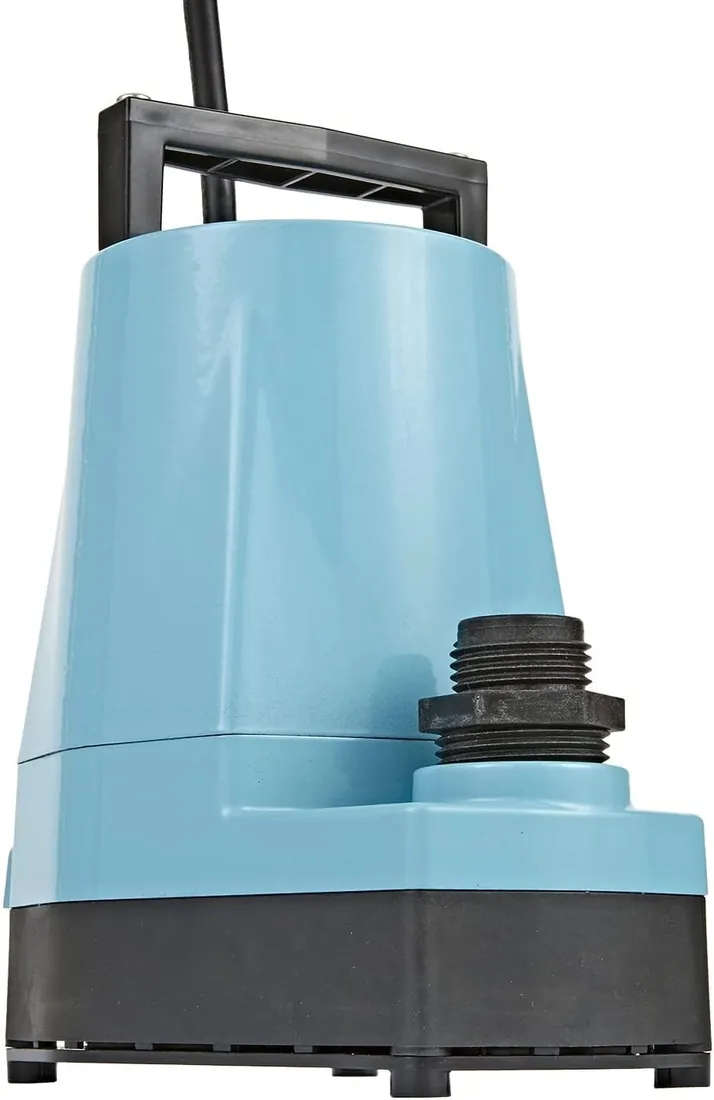
Little Giant 5-MSP Manual Utility Pump
Compact manual utility pump rated for continuous duty and very low suction.
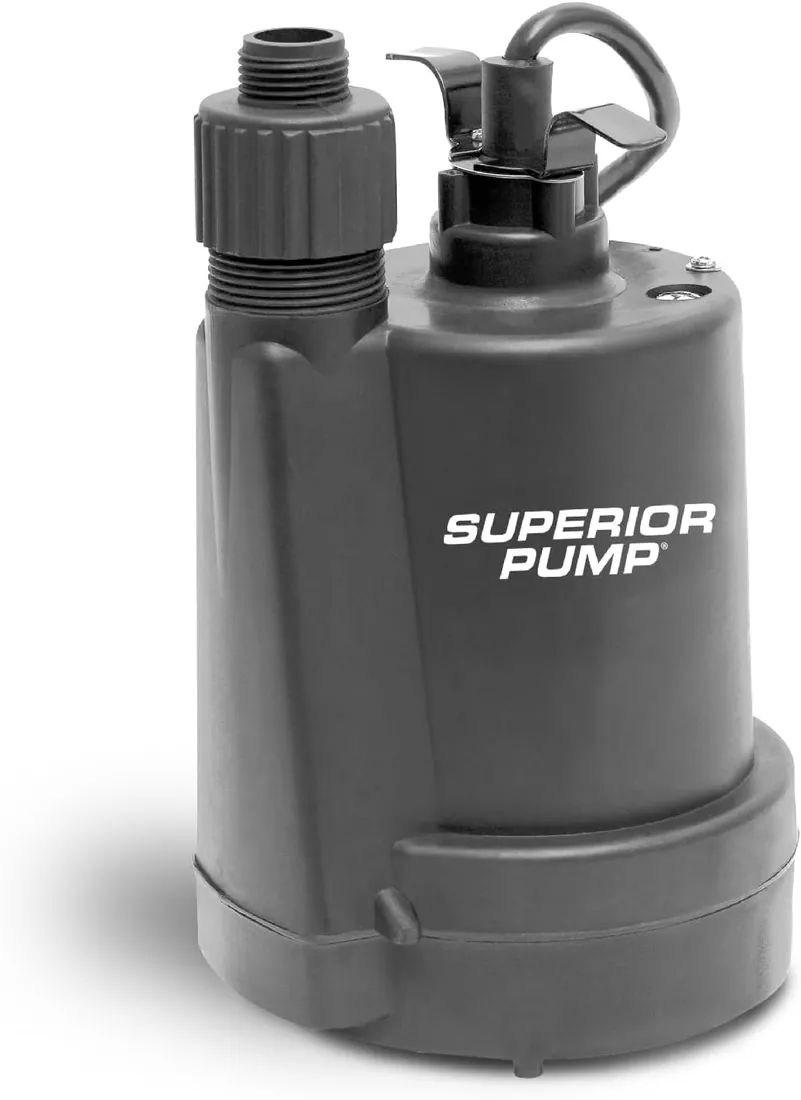
Superior Pump 91250 Thermoplastic Utility Pump
Thermoplastic 1/4 HP utility pump with a garden hose adapter.
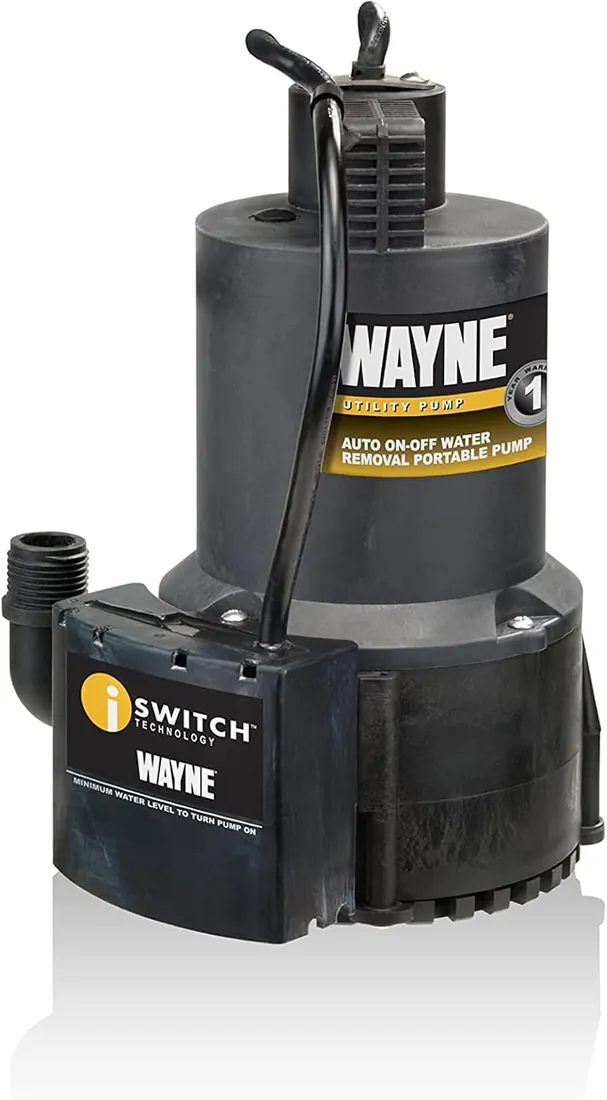
Wayne EEAUP250 Auto On/Off Multi-Use Pump
Automatic utility pump that starts and stops on its own.
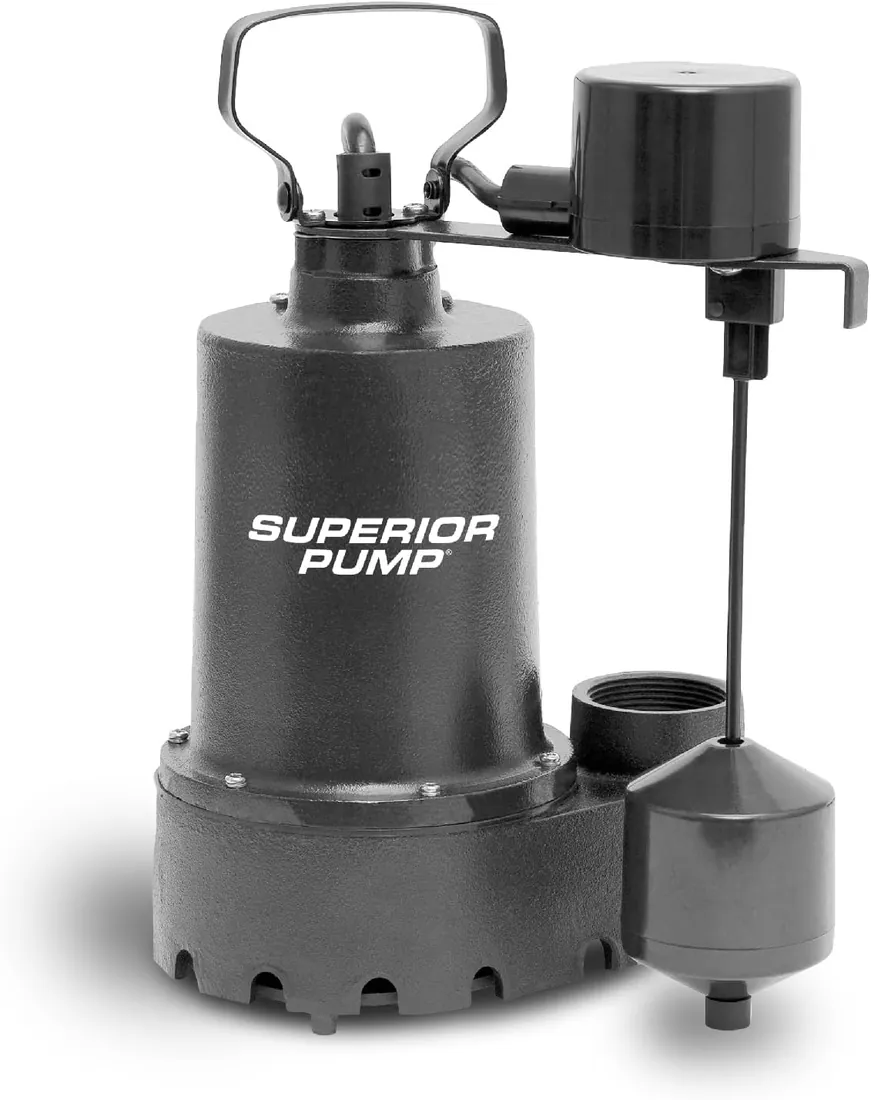
Superior Pump 92341 Cast Iron Sump Pump
Cast iron sump pump with a float switch for permanent pit use.
Questions readers ask
Can I use a utility pump as a sump pump?
Only as a stopgap. Most utility pumps have no float switch, small outlets and hose fittings. Permanent sump service needs an automatic switch, rigid pipe and a check valve, which sump pumps are designed around.
Which pumps out more water, a sump pump or a utility pump?
Usually the sump pump, because it has a larger motor and outlet. Utility pumps trade volume for portability and the ability to pump down to a thin film, which suits cleanup work rather than storm inflow.
Is a utility pump the same as a transfer pump?
No. A utility pump is submersible and sits in the water. A transfer pump sits outside the water and draws it through an inlet hose, which suits moving water between containers but limits suction lift.
Do utility pumps need a check valve?
Not for temporary use with a hose, since you drain the hose when you finish. A check valve matters in a permanent installation where water would otherwise fall back into a pit after each cycle.