Use a submersible utility pump when the pump can sit in the water: flooded floors, tubs, window wells and pool covers. Use a transfer pump when the water is in a container you cannot drop a pump into, or when you need pressure, such as filling a tank uphill or draining a water heater. Transfer pumps must stay dry, need priming and have limited suction lift.
How each pump moves water
A submersible utility pump has a sealed motor and sits in the water it is pumping. The water flows into its intake on its own, so it never needs priming, and it pushes water up through a hose. Superior's 91250, for example, removes water down to 1/8 in through a 1-1/4 in outlet with a garden hose adapter.
A transfer pump sits outside the water, on dry ground, with an inlet hose dropped into the source and an outlet hose running to where the water should go. It must pull water up the inlet hose before it can push it, which is why transfer pumps are self-priming designs and why their suction lift is limited. Wayne's PC2 uses garden hose fittings on both sides and comes with a 6 ft suction hose; Liberty's 331 is a 1/2 HP transfer pump with brass garden hose connectors.
Suction lift and discharge limits
The suction side is the transfer pump's weak point. Wayne says the PC2's inlet hose should be no longer than 15 ft and the pump no more than 10 ft above the water. Liberty gives the 331 a 15 ft maximum suction lift, and Milwaukee advises keeping its M18 2771-20 no more than 18 ft above the water. On the push side, transfer pumps can be strong: Liberty rates the 331 at 105 ft of maximum head and up to 40 lb of pressure, enough to fill a tank uphill or charge a hydronic floor loop.
A submersible utility pump has no suction limit because it sits in the water, so its only limit is how high it can push. That makes it the better tool for deep holes and pits.
| Pump | Power | Suction limit | Discharge limit |
|---|---|---|---|
| Wayne PC2 | 120 V AC | 10 ft above water; 15 ft hose | 30 ft |
| Liberty 331 | 1/2 HP, 115 V | 15 ft | 105 ft |
| Milwaukee 2771-20 | M18 battery | 18 ft above water | 75 ft |
Figures: Wayne PC2 transfer pump manual 620001W-001 E; Liberty Pumps Model 331 sales literature; Milwaukee 2771-20 operator's manual 58-14-0049D7.
Priming and running dry
Transfer pumps need water inside to start. Wayne asks owners to fill the PC2 before use and warns it will not prime with an air leak in the suction line, a hose out of the water or a missing gasket. Liberty's 331 has a large prime plug with a funnel for that reason.
Running dry is the most common way to ruin one. Milwaukee says not to let the 2771 run dry for more than 10 seconds, and its pump shuts itself off within about 60 seconds if it does. Wayne's PC2 manual says the pump must not be left unattended. Liberty notes the 331 motor is not submersible, must not be used in wet or damp areas, and needs new motor brushes about every 300 hours of use.
Flow: how much water each one moves
Small transfer pumps move modest volumes. Wayne lists the PC2 at 410 gallons per hour maximum and 390 at a 5 ft lift; Milwaukee rates the 2771-20 at a maximum of 8 GPM. Submersible utility pumps of similar size often move several times as much: Superior's 1/4 HP 91250 is rated at 1,800 gallons per hour with no lift.
So for emptying a flooded room or a hot tub quickly, a submersible is usually faster. Transfer pumps earn their place where pressure matters more than volume, or where the source is a barrel, tank or water heater that you cannot drop a pump into.
Which one to choose
Choose a submersible utility pump such as the Superior 91250 for standing water you can reach with the pump: basements, pool covers, window wells and tubs. Choose a transfer pump such as the Liberty 331 or Wayne PC2 to move water between containers, drain a water heater, or push water uphill. A cordless pump like the Milwaukee 2771-20 suits jobs with no outlet nearby.
Neither replaces a trash pump for muddy water or debris. Wayne and Liberty both limit these pumps to clear water. The water transfer pump list compares the field.
- Decide whether the pump can sit in the water.
- Measure the height from the water to the pump if it cannot.
- Check the discharge height and distance to the outlet.
- Pick a pump whose suction and discharge limits cover both.
- Plan to stay with a transfer pump until the job is done.
Common mistakes
- Leaving a transfer pump running unattended until it runs dry.
- Setting a transfer pump too high above the water to prime.
- Placing a non-submersible transfer pump in a wet area.
- Using either pump for muddy water or debris it is not rated for.
- Using a long, kinked suction hose that leaks air.
Products that fit
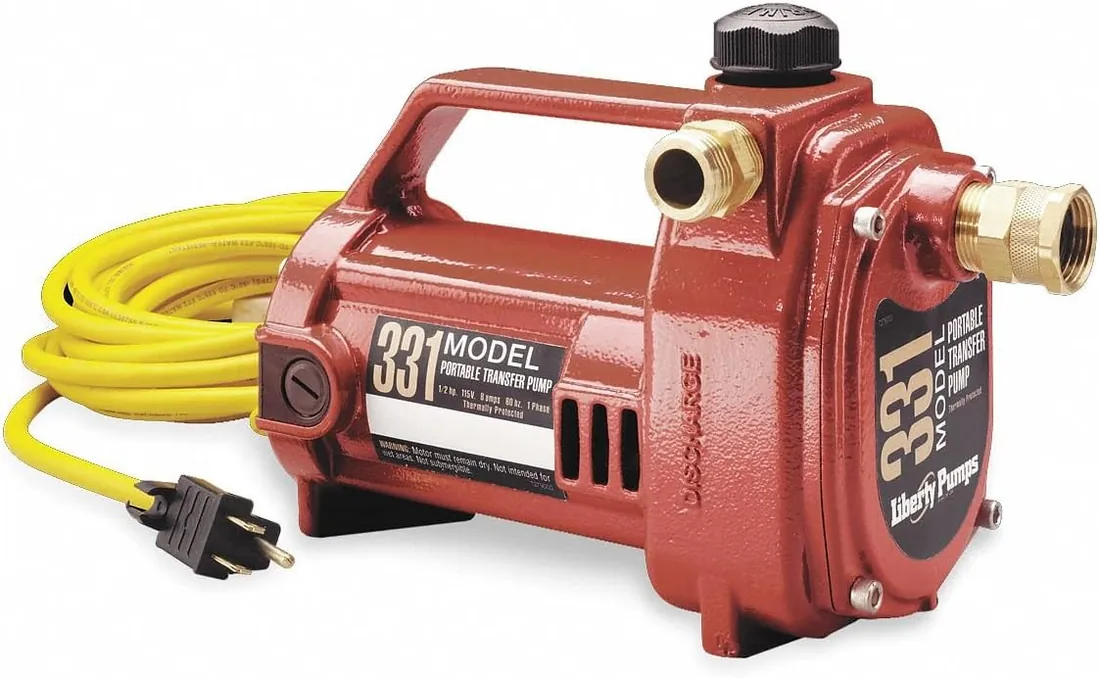
Liberty Pumps 331 Portable Transfer Pump
1/2 HP transfer pump with up to 105 ft of head and garden hose fittings.
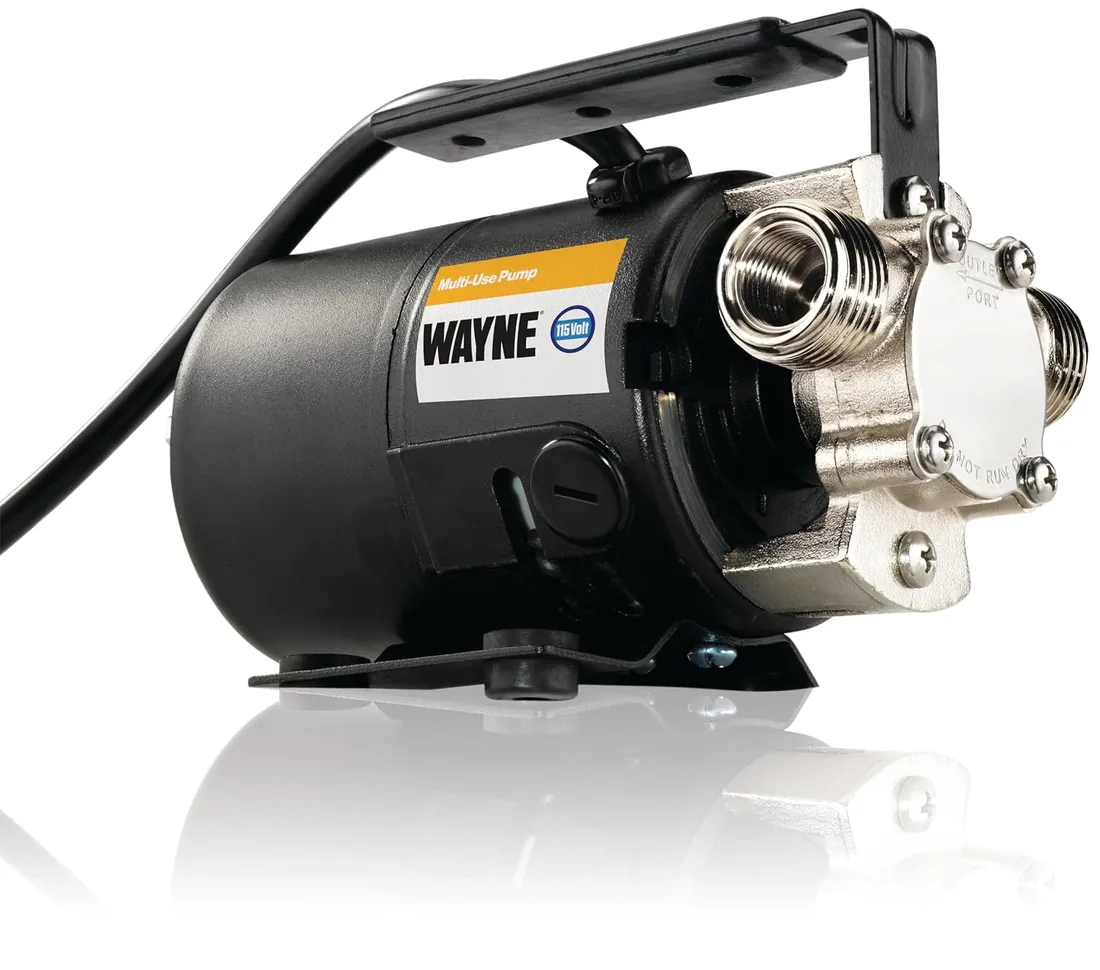
Wayne PC2 Portable Transfer Pump
Small self-priming transfer pump with a 6 ft suction hose included.
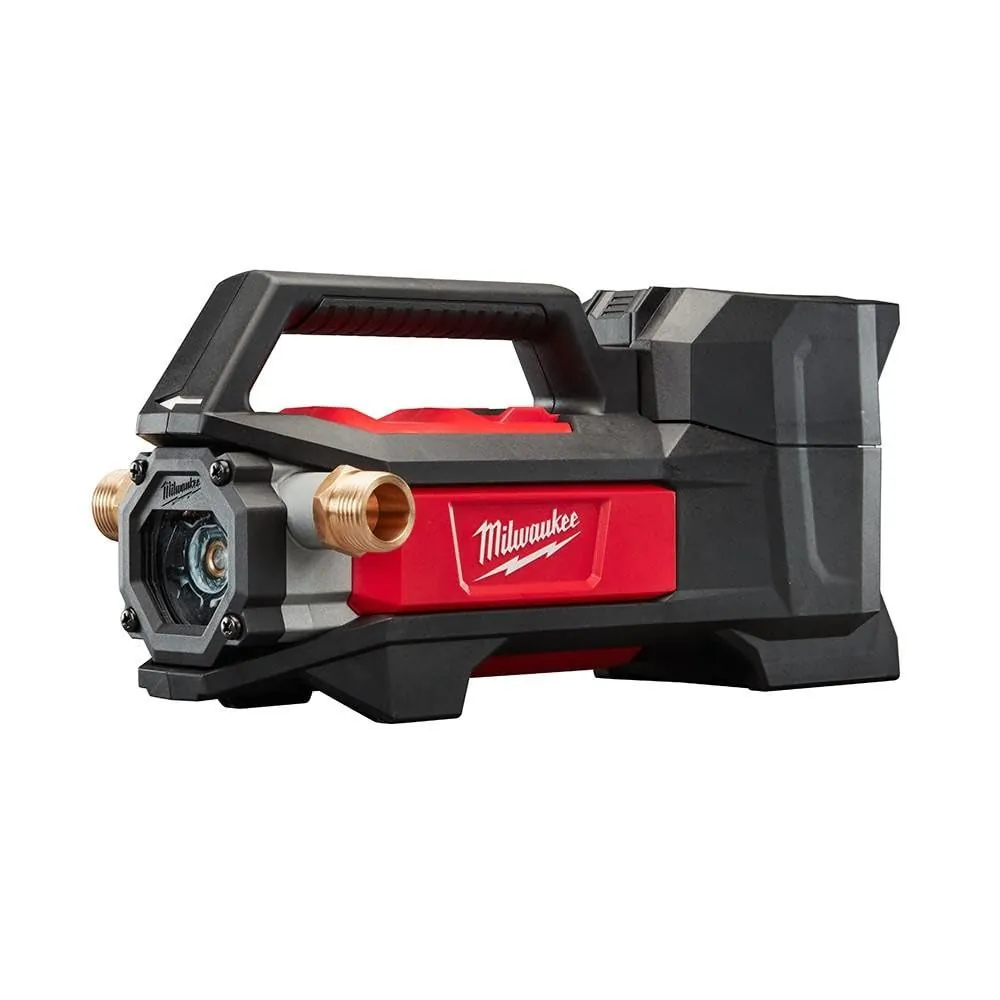
Milwaukee 2771-20 M18 Transfer Pump
Cordless M18 transfer pump with an automatic dry-run shutoff for jobs far from an outlet.
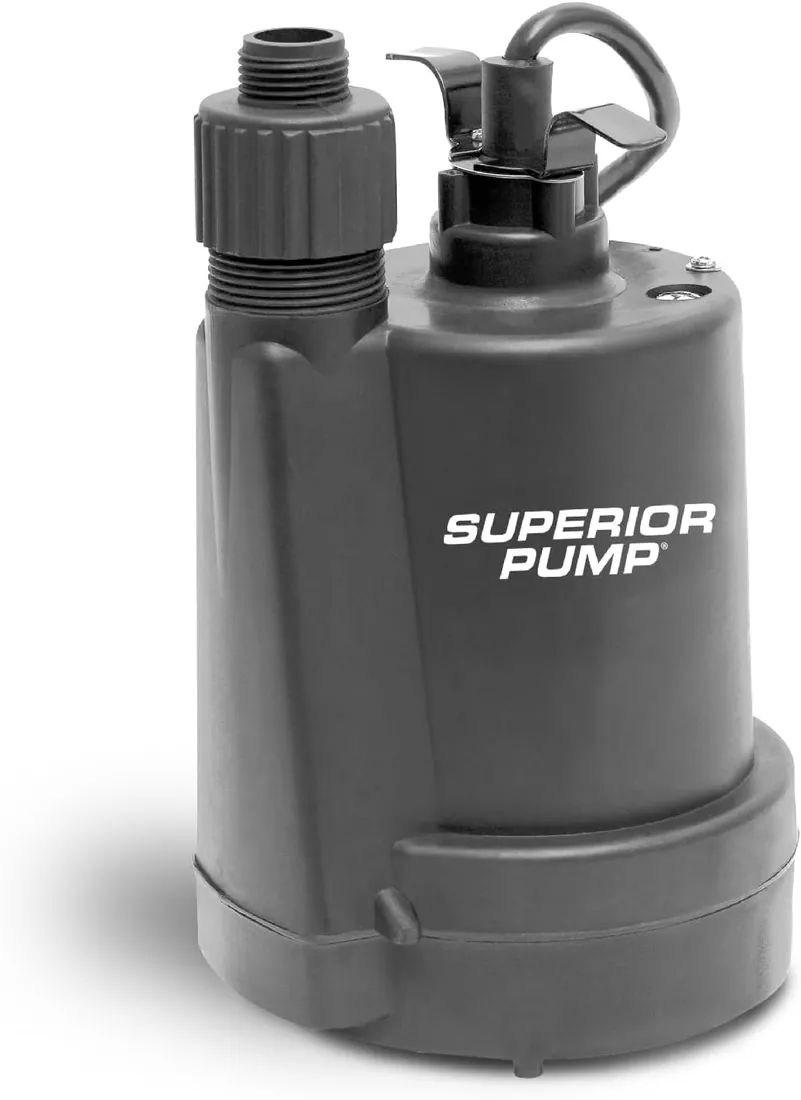
Superior Pump 91250 Thermoplastic Utility Pump
Submersible utility pump for standing water you can reach directly.
Questions readers ask
Can a transfer pump be submerged?
No. Transfer pumps have open motors that must stay dry. Liberty says the 331 motor is not submersible and not for wet or damp areas. If the pump has to sit in the water, use a submersible utility pump.
Is a transfer pump better than a utility pump?
For moving water between containers or pushing it to height, yes. For emptying standing water quickly, a submersible utility pump usually moves more water and needs no priming. Many owners keep one of each.
How high can a transfer pump lift water?
By suction, not far: Wayne says no more than 10 ft for the PC2, Liberty gives 15 ft for the 331 and Milwaukee 18 ft for the 2771-20. Discharge height is much greater, up to 105 ft on the Liberty 331.
Can I drain a water heater with a transfer pump?
Yes, Liberty lists draining water heaters as a use for the 331. Let the water cool first, since the 331's maximum fluid temperature is 135 °F, and keep the pump on a dry surface.