A transfer pump is not submersible. It sits on dry ground, draws water up a suction hose and pushes it out through another, which makes it the right tool for draining a water heater, emptying a rain barrel or a washer, moving water between tanks or filling a hydronic loop. Most need priming before the first run and must never run dry.
The picks include corded pumps and cordless ones that run on tool batteries, and they range from light household helpers to pumps that can raise water pressure or lift it a long way. If you are unsure whether you need a transfer pump or a submersible utility pump, read utility pump vs transfer pump.
- Qualifies if
- Pump stays out of the water and draws through a suction hose.
- Maker or seller states flow or head.
- Hose connections included or specified.
- On the list
- 5 pumps
The picks
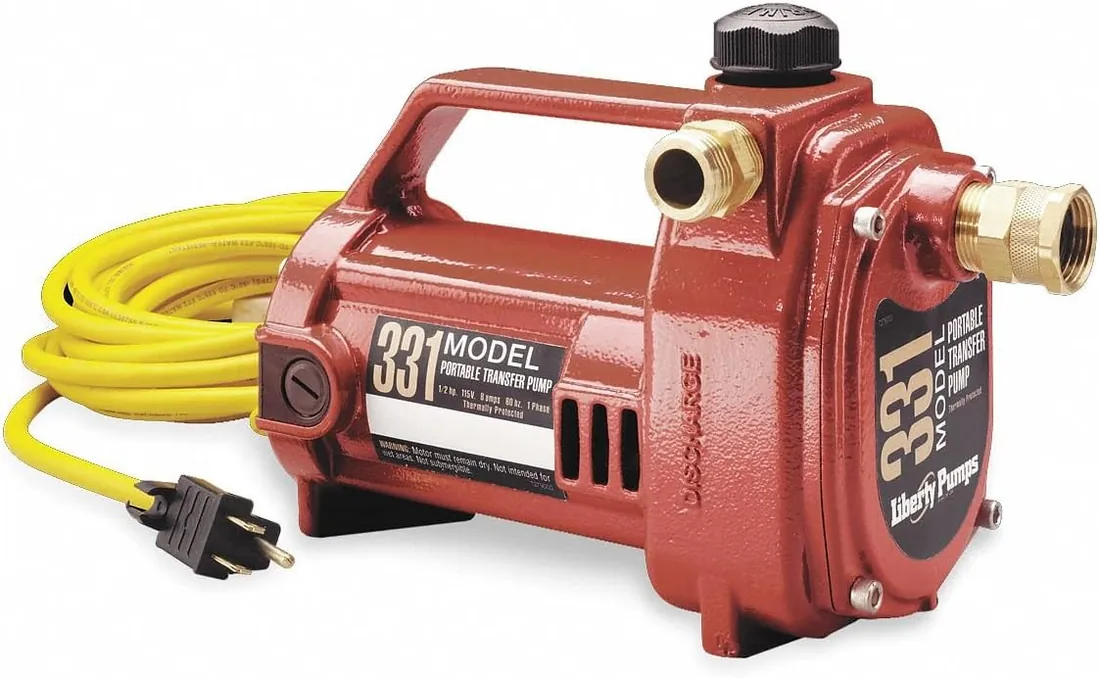
Liberty Pumps 331 Portable Transfer Pump
Best for: Boosting pressure or pushing water far uphill
Liberty rates the 1/2 hp Model 331 for a maximum head of 105 ft and up to 40 lbs of pressure, enough to boost a weak supply or push water far up a slope. It can draw from as far as 15 ft below the pump. Liberty lists water heater draining and glycol charging of hydronic floors among its jobs, and warns the motor is not submersible.
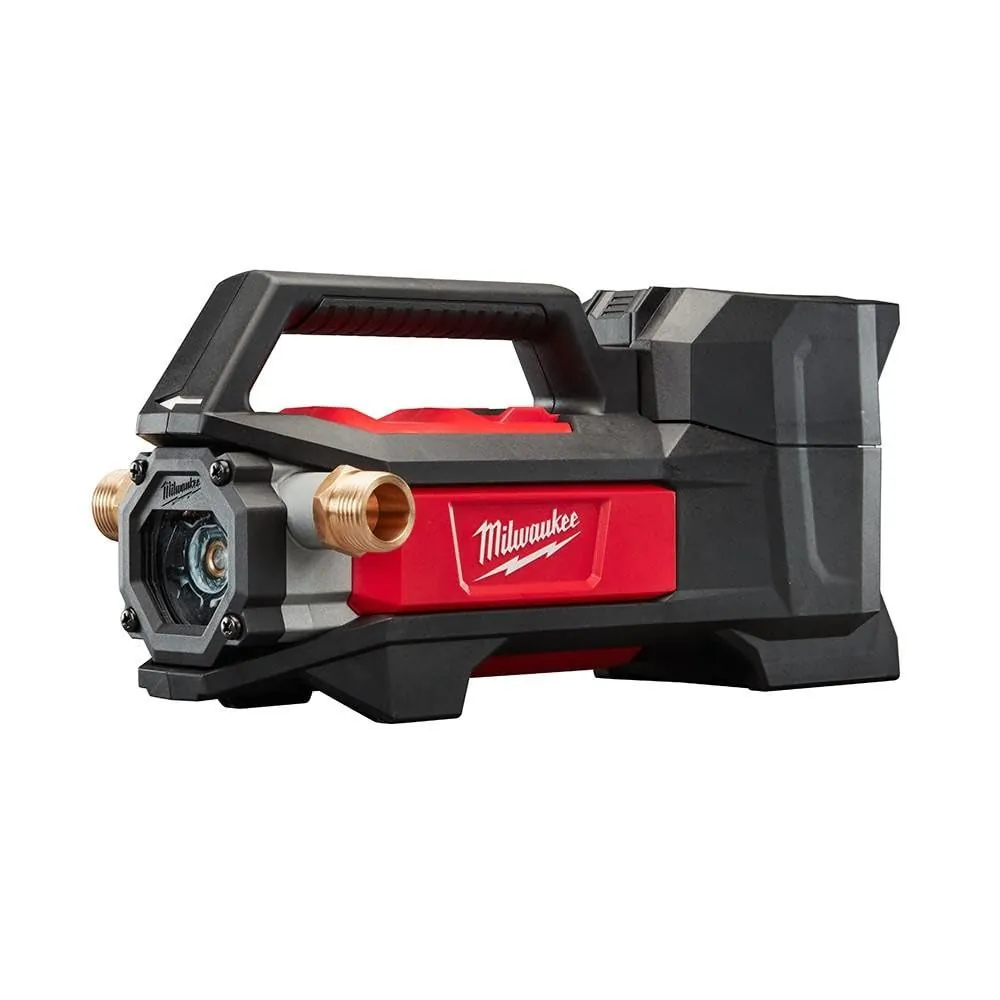
Milwaukee 2771-20 M18 Transfer Pump
Best for: Sites with no outlet
Milwaukee's 2771-20 runs on an M18 battery, so it works in a crawl space, a boat or a new build with no power. The manual lists a maximum flow of 8 GPM, a 75 ft maximum head and up to 18 ft of suction lift, with water up to 140 degrees F. It is for clear water only and must stay out of wet areas.
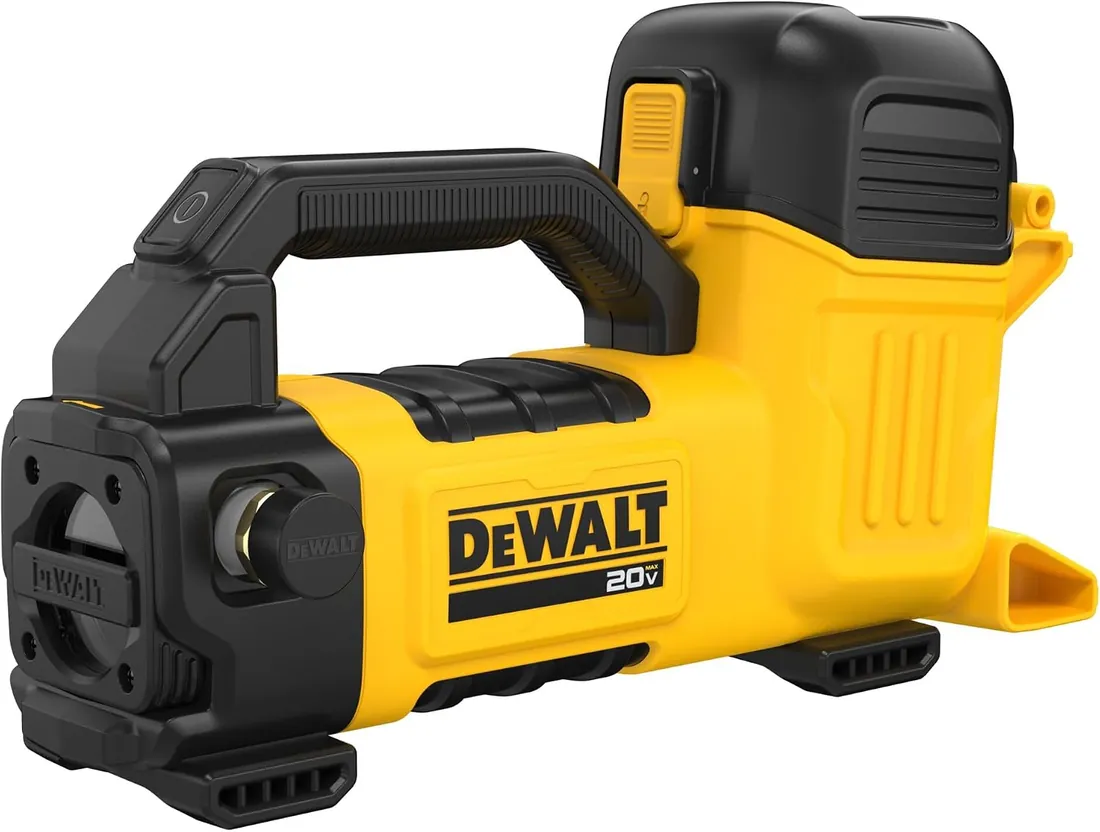
DEWALT DCE050B 20V MAX Transfer Pump
Best for: Contractors moving glycol mixes
DEWALT's DCE050B runs on a 20V MAX battery and is listed for a 60% water and 40% propylene glycol mix, which suits charging hydronic and refrigeration systems. The listing gives up to 10 GPM with tap water and about 4.5 GPM at 45 feet of head, and up to 300 gallons per charge. It is sold as a bare tool.
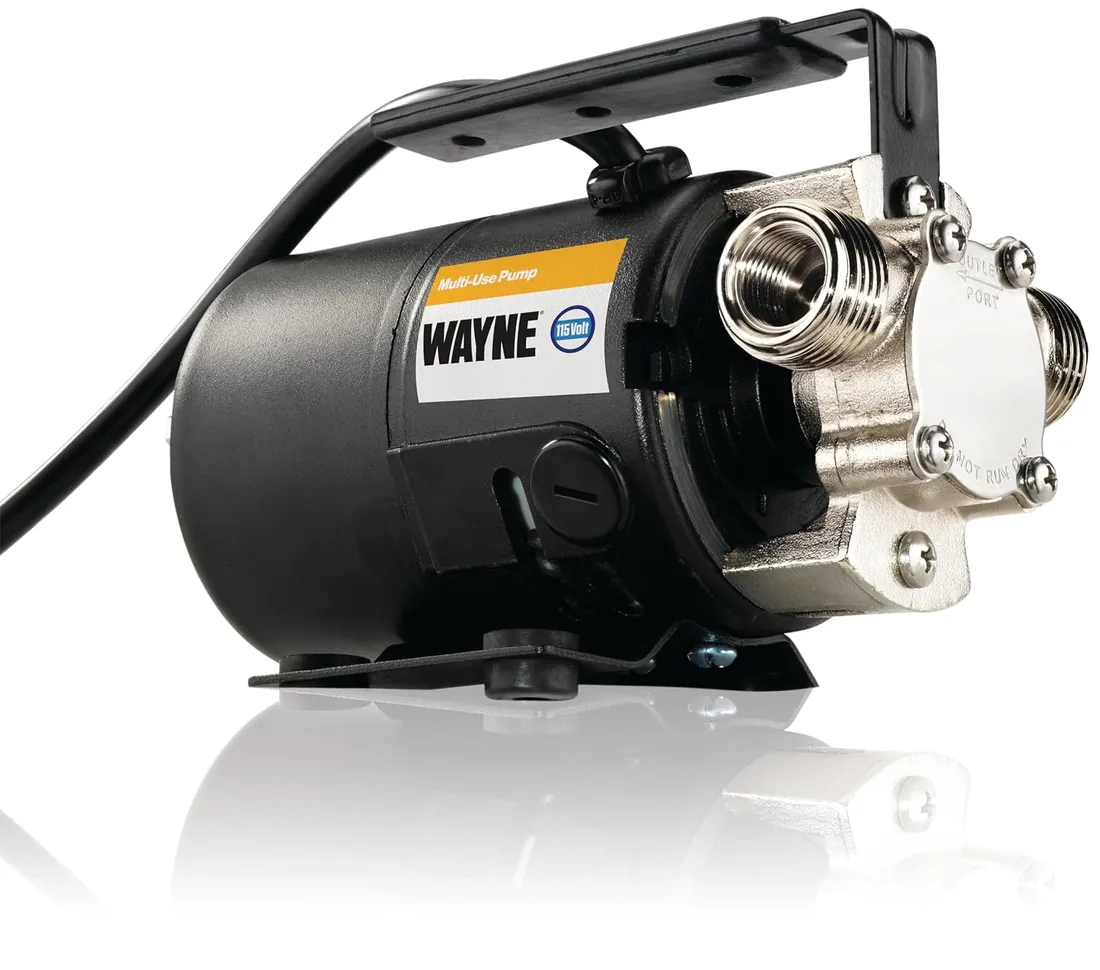
Wayne PC2 Portable Transfer Pump
Best for: Water heaters, rain barrels and clogged sinks
The Wayne PC2 is a compact 120 V transfer pump with a coated steel body that self-primes and comes with a 6 ft suction hose, a suction adapter and a parts kit. Wayne says the adapter lets it remove water down to 1/8 inch, useful for emptying a sink or a flooded washer. It carries a one-year warranty.
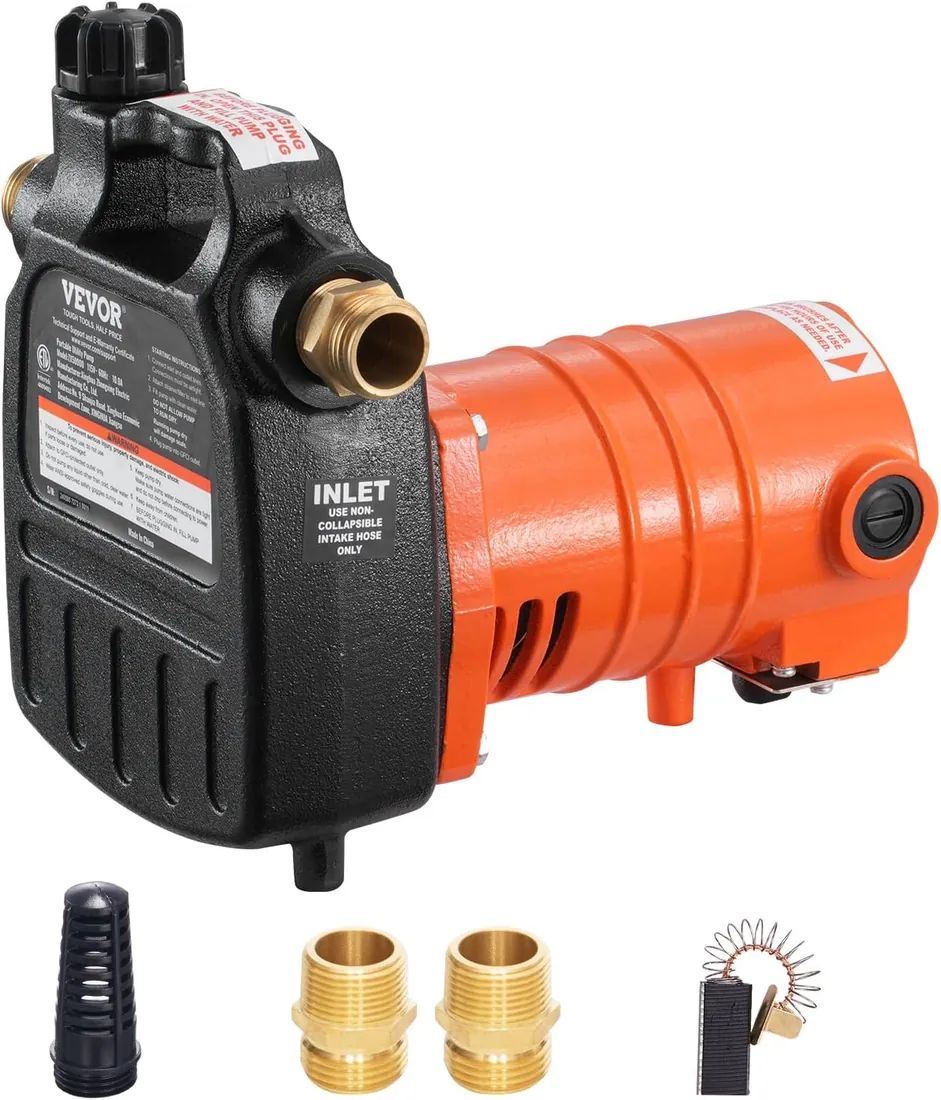
VEVOR Q1CZ-800C Cast Iron Water Transfer Pump
Best for: Larger transfers between tanks or barrels
VEVOR's Q1CZ-800C puts a 1/2HP motor in a cast iron body and lists 1600 GPH, far more than the small household pumps. It has an on-off switch built in, a tool-free inlet and two brass connectors, and its carbon brushes are rated for up to 200 hours. Fill the inlet with water before each use.
Side by side
| Pump | Power source | Flow | Max head | Suction lift |
|---|---|---|---|---|
| Liberty Pumps 331 Portable Transfer Pump | 115 V, 1/2 hp | Curve published as a graphic | 105 ft | 15 ft |
| Milwaukee 2771-20 M18 Transfer Pump | M18 battery | 8 GPM | 75 ft | 18 ft |
| DEWALT DCE050B 20V MAX Transfer Pump | 20V MAX battery | 10 GPM | Not stated in the listing | Not stated in the listing |
| Wayne PC2 Portable Transfer Pump | 120 V | Not stated on the data sheet | Not stated on the data sheet | Not stated on the data sheet |
| VEVOR Q1CZ-800C Cast Iron Water Transfer Pump | 115V, 1/2 HP | 1600 GPH | Not stated in the listing | Not stated in the listing |
Figures: Liberty Pumps Model 331 sales literature; Milwaukee 2771-20 M18 transfer pump operator's manual; DEWALT DCE050B listing; Wayne PC2 transfer pump sell sheet; VEVOR Q1CZ-800C listing.
How the list was narrowed
All transfer pumps on this site were compared on maximum flow, maximum head, suction lift, power source, body material and what comes in the box. Look-alike 1/10 HP pumps sold under several seller names were treated as one design. Each pick then had to lead in a distinct situation: pressure, portability, hydronic work, light household jobs or heavy use.
Who should skip this list
Skip a transfer pump for a flooded floor or a pit; a submersible utility pump works better because it does not need priming and cannot lose suction. Transfer pumps are also wrong for sewage, fuel or anything flammable.
Final recommendation
Pick the power source first. With an outlet nearby, the Liberty 331 is the strongest and the Wayne PC2 the handiest for small jobs, while the VEVOR moves the most volume. Without power, the Milwaukee and DEWALT run on tool batteries you may already own; the DEWALT suits glycol work and the Milwaukee lifts water from deeper below.
Questions readers ask
Do transfer pumps need priming?
Most do. Fill the pump body or suction hose with water before starting, and keep the suction end submerged. Running a transfer pump dry can ruin its impeller or seal within moments.
Can a transfer pump drain a water heater?
Yes, it is a common use. Connect the suction hose to the heater's drain valve and the discharge to a hose leading to a drain. Let the water cool first, and check the pump's temperature limit, such as 140 degrees F for the Milwaukee.
What is suction lift?
It is how far below the pump the water can be. The Liberty 331 can draw from 15 ft down and the Milwaukee from 18 ft. Beyond that, the pump cannot pull water up the hose.
Are cordless transfer pumps powerful enough?
For small and medium jobs, yes. The Milwaukee and DEWALT move up to about 8 to 10 GPM, enough for a water heater or a tank, though a corded pump runs longer without changing batteries.
Can a transfer pump move hot water?
Only within its rating. Milwaukee allows water up to 140 degrees F, and most small transfer pumps have similar or lower limits. Let a water heater or boiler cool before draining it, both for the pump's seals and for your own safety.