A tankless flush uses a small pump, a bucket of descaling solution and two hoses on the heater service valves, so the solution loops through the heat exchanger and back. Follow the heater maker on solution and time. Pick a pump whose maker allows the solution: Liberty covers vinegar in its 331 manual, while Little Giant rules out acids for its 5 Series.
Why tankless heaters need flushing
A tankless water heater heats water as it passes through a narrow heat exchanger. In hard water areas, minerals deposit on the hot surfaces as scale, which reduces heat transfer and flow and can trigger fault codes. Flushing dissolves that scale with a mild acid solution circulated through the unit.
The heater maker decides how often, which solution and for how long, so treat its manual as the authority on those points. Many heaters ship with service valves on the hot and cold lines for exactly this job. What you choose is the pump, the hoses and the bucket, and that is where pump makers' limits matter.
How the flush loop is set up
The loop is simple. Close the heater's main hot and cold isolation valves and cut its power or gas as the heater manual directs. Connect one hose from the pump outlet to the cold service port, and a second hose from the hot service port back into the bucket. Fill the bucket with the cleaning solution, set the pump in it if it is submersible or beside it if it is a transfer pump, open the service valves and start the pump. The solution circulates through the heater and returns to the bucket.
After the run, empty the bucket, refill it with clean water or reconnect the cold supply, and flush the heater with fresh water to clear the solution. Close the service valves, clean the heater's inlet screen, and restore the main valves and power.
- Shut off power or gas and close the main isolation valves.
- Connect pump outlet to the cold service port and a return hose from the hot port.
- Fill the bucket with the solution the heater maker specifies.
- Open the service valves and run the pump for the maker's stated time.
- Flush the heater with clean water and clean the inlet screen.
- Rinse the pump with clean water and drain it before storage.
Which pump makers allow it
Read the pump manual before putting any cleaning solution through it. Liberty's Model 331 manual mentions vinegar directly: when the pump moves materials other than clear water, such as glycol or vinegar, it must be flushed with water and drained before storage. Its quick start guide repeats it and suggests PEX or washing machine supply hose for the suction line so it does not collapse. The 331 also lists draining water heaters among its uses.
Not every small pump is suitable. Little Giant's 5 Series manual says not to pump acids or chemical solutions, which rules it out for an acid descaler even though it is rated for continuous duty. Wayne's utility and pool cover pump manuals warn against caustic chemicals. Superior does not state chemical compatibility for its 91250 utility pump on its product page. If the manual is silent or says no, use a pump whose maker says yes.
| Pump | Type | Maker's statement |
|---|---|---|
| Liberty 331 | Transfer, 1/2 HP | Flush with water and drain after vinegar or glycol |
| Little Giant 5-MSP | Submersible utility, 1/6 HP | Do not pump acids or chemical solutions |
| Wayne WaterBUG | Submersible utility | Not for caustic chemicals or highly chlorinated water |
| Superior 91250 | Submersible utility, 1/4 HP | Not stated on the product page |
Figures: Liberty Pumps Model 331 installation manual 7327000; Little Giant 5 Series utility pump manual 10000005491; Wayne WaterBUG owner's manual 620009W-001 E; Superior Pump 91250 product page.
Temperature, duty and size
Let the heater and its water cool before you start. Liberty limits the 331 to 135 °F water, Superior lists 35 °F to 120 °F for the 91250, and Wayne says heated water should cool to room temperature before a pump drains it. A flush can run for a long time, so a pump rated for continuous use is a plus.
Flow does not need to be high. A tankless flush circulates a few gallons through a small heat exchanger, so a compact pump that moves a steady stream through garden hose fittings is enough. A large utility pump adds weight and splashing without speeding the cleaning.
Protecting the pump afterwards
Acidic solutions attack metal parts if left inside. Liberty notes that some chemicals used in hydronic systems can corrode the 331's aluminum housing, which is why it insists on a clean water rinse and draining after use. Run clean water through whichever pump you use for a minute or two, drain it, and store it dry. In cold areas, Liberty also warns that the 331 retains water and must be drained to prevent freeze damage.
For pump choices, the Liberty 331 is the one whose maker addresses vinegar, and the water transfer pump list and submersible utility pump list compare other options.
Common mistakes
- Using a pump whose manual forbids acids or chemical solutions.
- Starting the flush before the heater water has cooled.
- Leaving descaling solution inside the pump after the job.
- Using a soft suction hose that collapses on a transfer pump.
- Skipping the clean water flush of the heater afterwards.
Products that fit
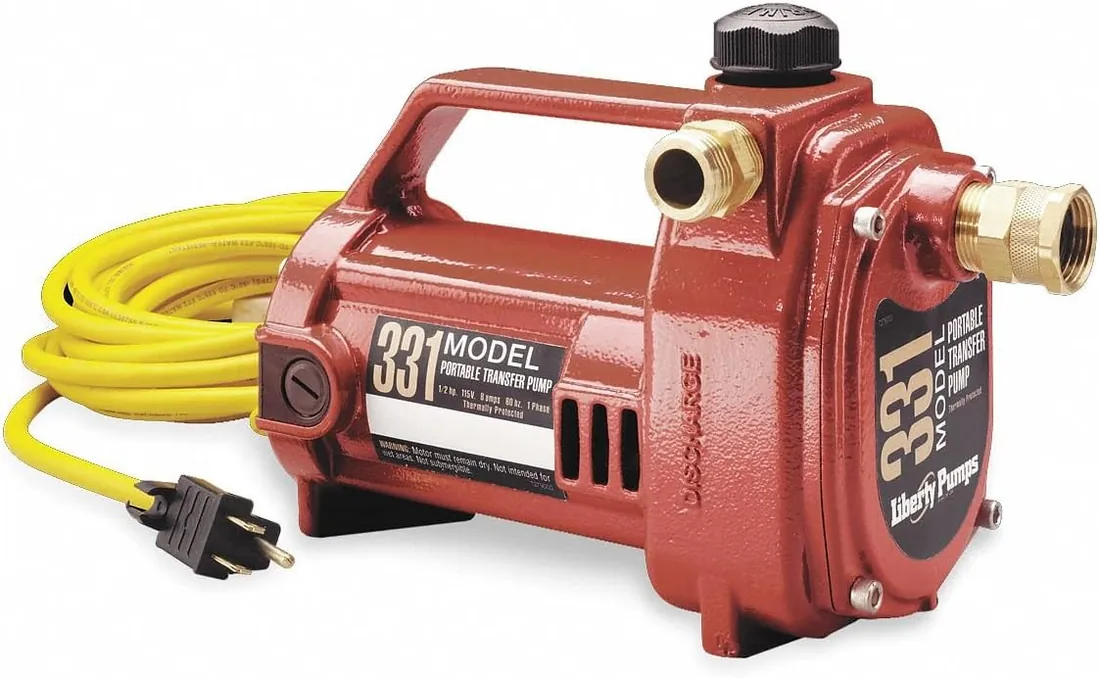
Liberty Pumps 331 Portable Transfer Pump
Transfer pump whose manual covers vinegar use and rinsing afterwards.
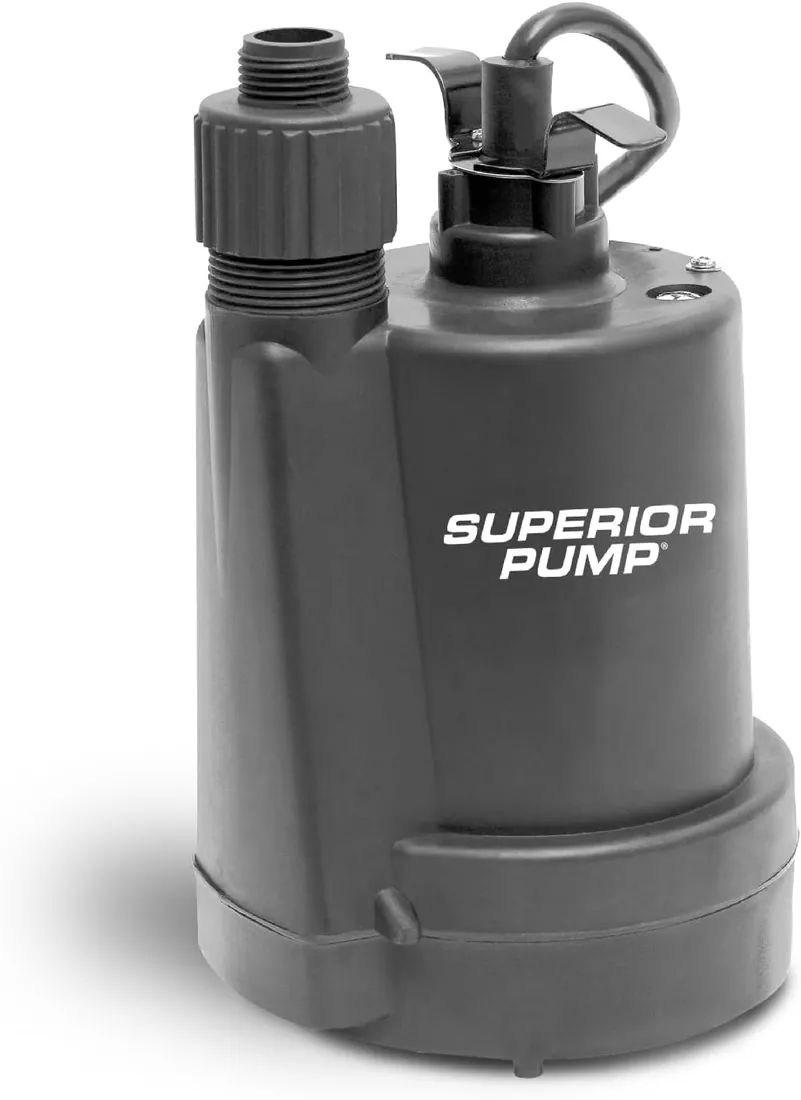
Superior Pump 91250 Thermoplastic Utility Pump
Small submersible pump; chemical compatibility is not stated by the maker.
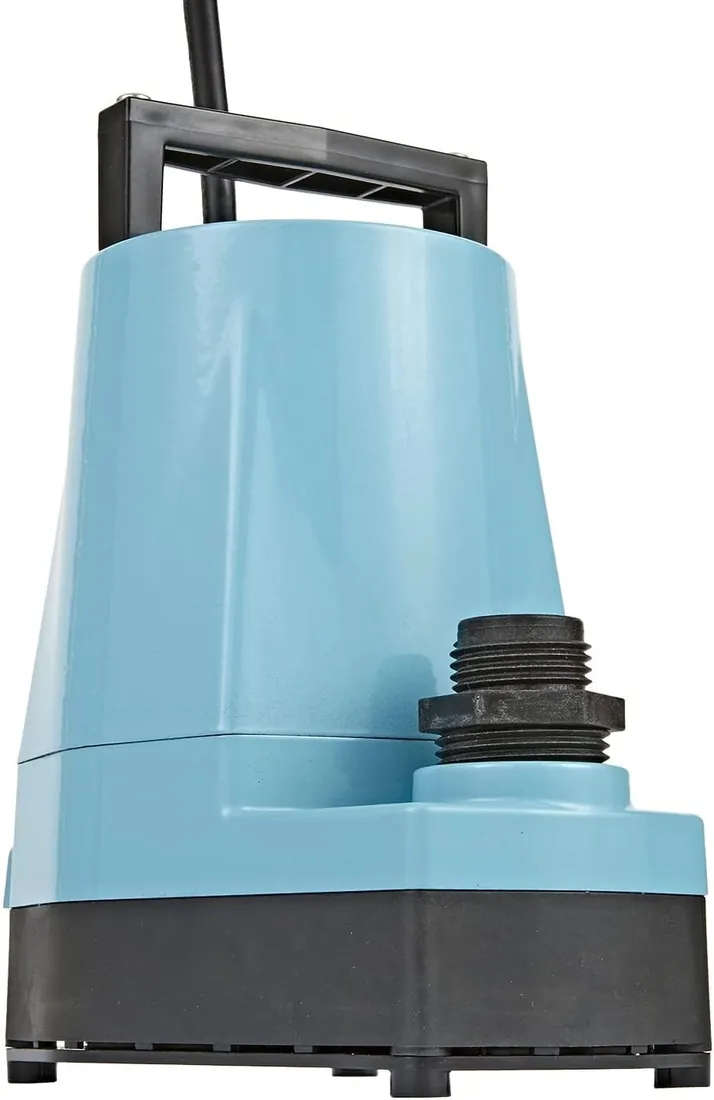
Little Giant 5-MSP Manual Utility Pump
Continuous-duty pump for clear water only; its maker rules out acids.
Questions readers ask
What size pump do I need to flush a tankless water heater?
A small one. The job circulates a few gallons through the heat exchanger, so a compact pump with garden hose fittings is enough. Chemical compatibility and temperature limits matter more than flow.
Can I use vinegar to flush a tankless water heater?
Many heater makers allow white vinegar, but follow your heater's manual. Make sure the pump's maker allows it too: Liberty's 331 manual covers vinegar and says to rinse and drain the pump afterwards.
Can I use a sump pump to flush a tankless heater?
It is not a good fit. Sump pumps are heavy, oil-filled and meant for clear groundwater, and makers do not rate them for cleaning solutions. A small transfer or utility pump whose maker allows the solution is better.
How do I clean the pump after descaling?
Run clean water through it for a minute or two, then drain it and store it dry. Liberty specifically warns that leftover solutions can corrode the 331's aluminum housing. Check hoses too.