Utility pumps handle the jobs a fixed sump pump cannot reach: a flooded floor, a window well, a water heater, a hot tub or a puddle on a flat roof. Most connect to an ordinary garden hose, run from a household outlet and are light enough to carry with one hand.
The picks cover the real choices in this category: a thermoplastic body or a metal one, manual or automatic switching, and how low each pump can draw the water. For bigger volumes, see high-flow utility pumps, and if you are unsure which type you need, read utility pump vs transfer pump.
- Qualifies if
- Fully submersible pump body.
- Runs from a standard household outlet.
- Maker publishes the horsepower and the discharge or hose connection.
- Maker documents name utility or water removal duty.
- On the list
- 5 pumps
The picks
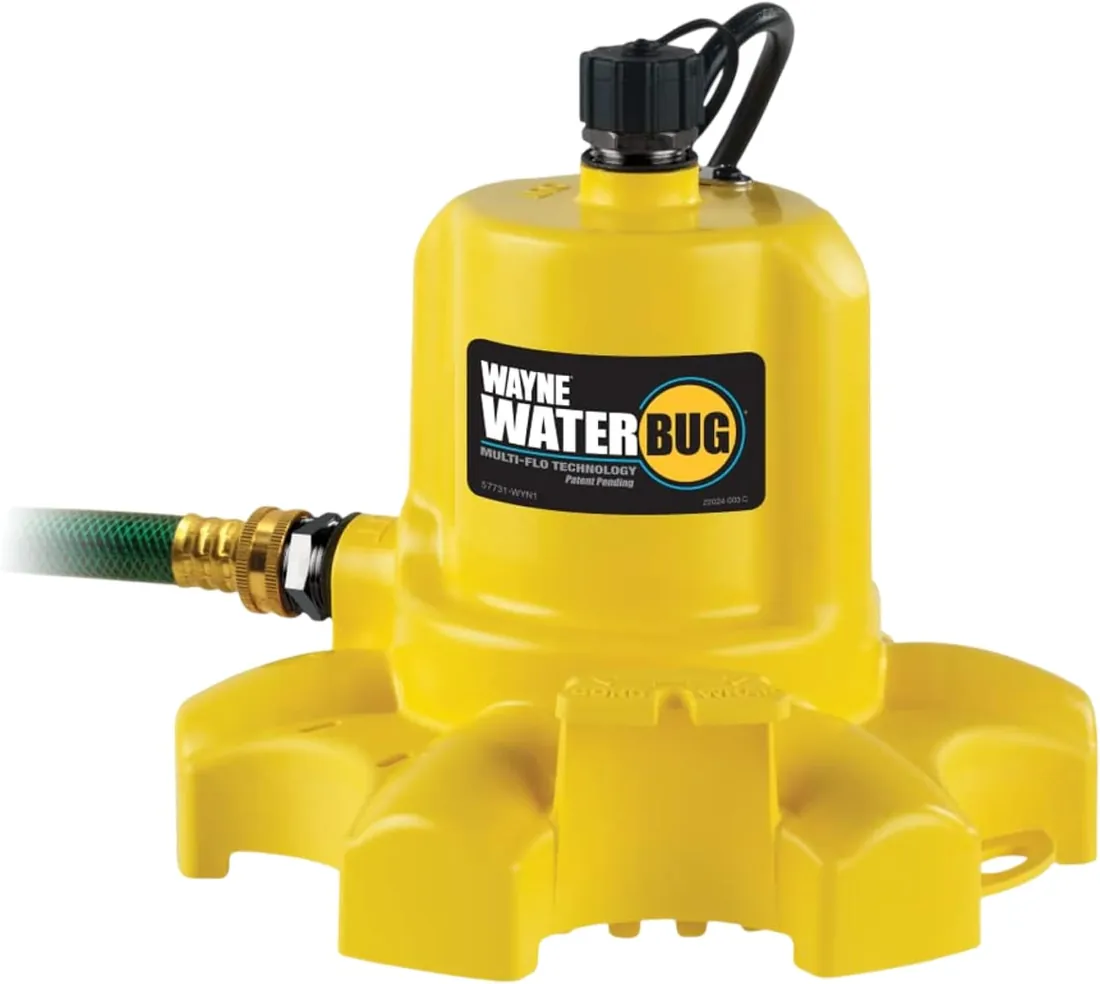
Wayne WaterBUG WWB Multi-Use Pump
Best for: Floors, flat roofs and other thin standing water
Wayne's WaterBUG has two 3/4 in discharge ports, top and side, so the hose can leave at whichever angle suits a tight space, and an integrated strainer cuts down on cleaning. The maker says it leaves surfaces virtually dry. It weighs 8 lb, carries a 10 ft cord and sits low enough to work under a deck or in a window well.
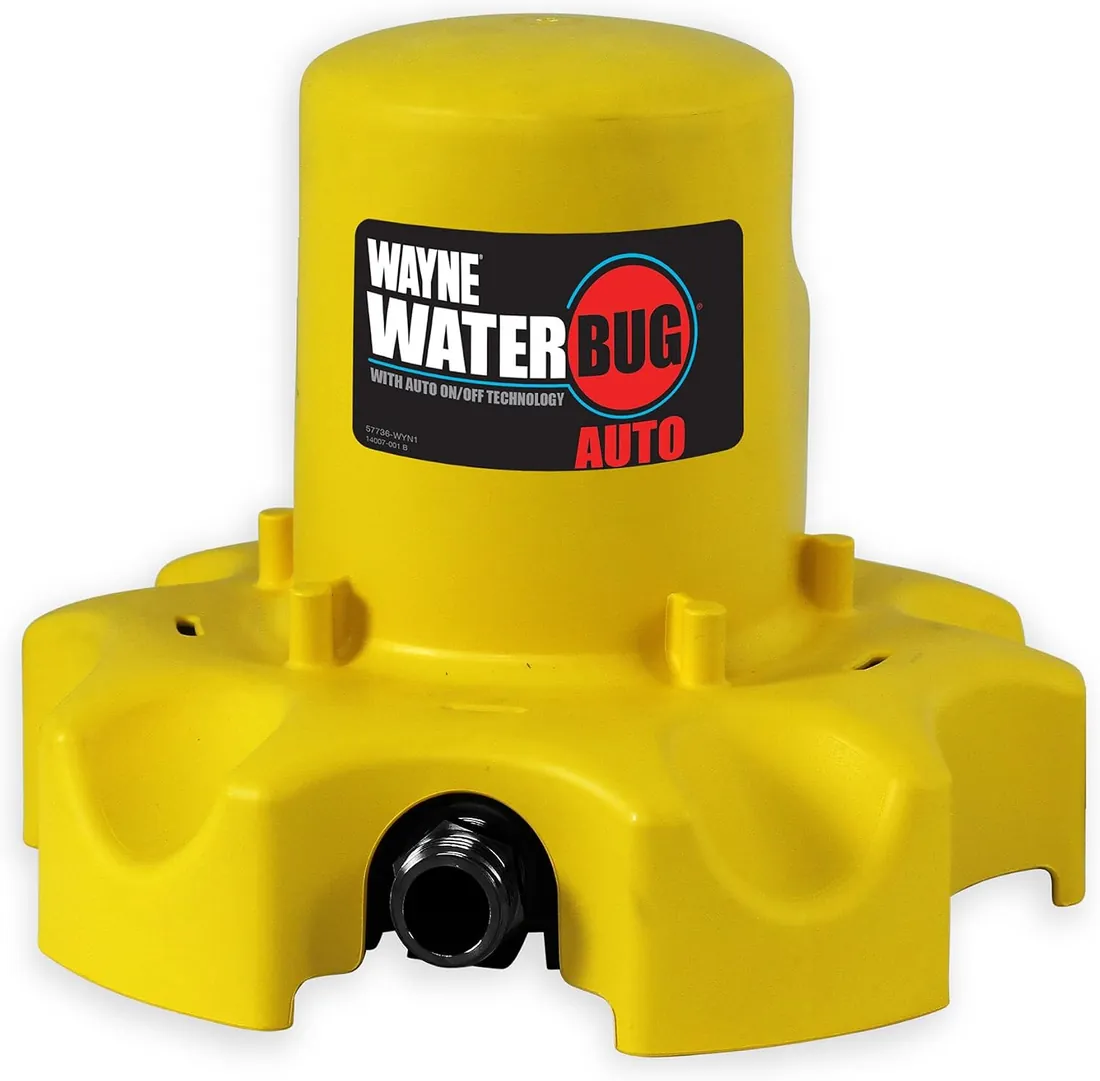
Wayne WaterBUG AUTO Automatic Multi-Use Pump
Best for: Leaving a pump unattended in a low spot
The WaterBUG AUTO adds a magnetic float switch, so it switches itself on and off and can stay in a window well or a low corner through the season. Wayne rates it at 1/4 HP and 2.5 A, and backs it for three years, against one year for the manual WaterBUG. A 10 ft cord is standard.
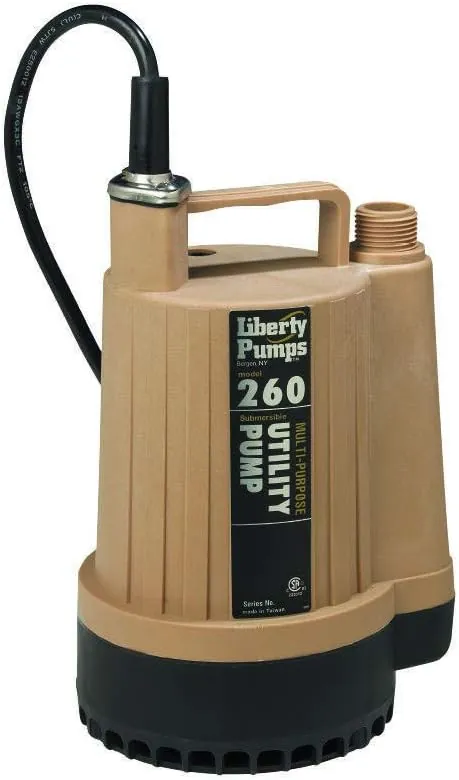
Liberty Pumps 260 Submersible Utility Pump
Best for: Jobs far from the nearest outlet
Liberty ships the 260 with a 25 ft power cord, long enough to reach a pool cover or a far corner of a yard without an extension. The 1/6 hp air-cooled motor turns a self-cleaning trash-type impeller and pumps down to 1/8 in. Liberty's curve gives 17 GPM with no lift, falling to 9 GPM at 20 ft.
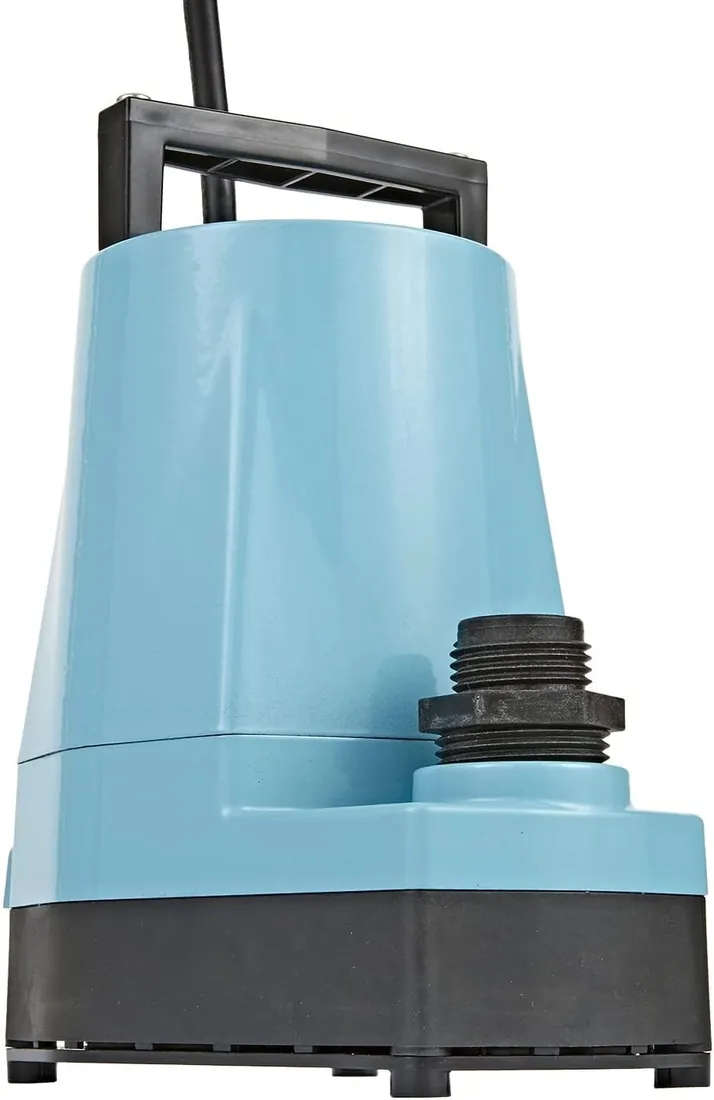
Little Giant 5-MSP Manual Utility Pump
Best for: Long transfers and circulation jobs
Little Giant rates the 5-MSP for continuous duty, unusual for a pump this compact, and wraps the 1/6 hp oil-free motor in an epoxy-coated cast aluminum housing that sheds heat. Upper and lower ball bearings and a triple-lip seal back that rating. The maker lists 1500 gph maximum and a 1 in discharge with a hose adapter.
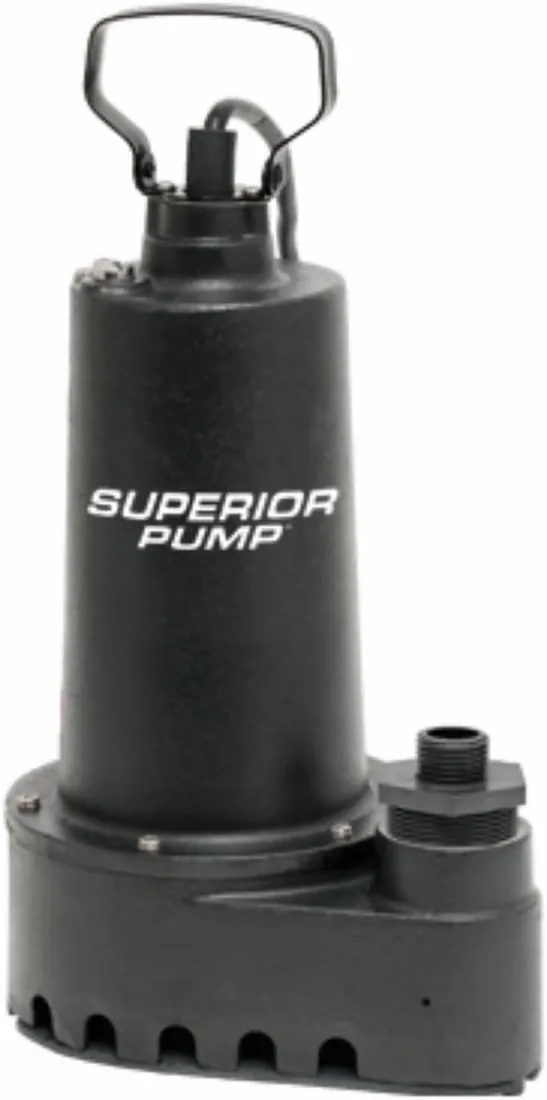
Superior Pump 91501 Cast Iron Utility Pump
Best for: Draining a flooded basement quickly
Superior's 91501 puts a 1/2 HP motor in a cast iron body and lists 4200 GPH at no lift and 3480 GPH at 10 ft, far more than the hose-sized pumps above. It draws water down to 1/8 in, passes solids up to 3/8 in through a 1-1/2 in discharge, and carries a three-year warranty.
Side by side
| Pump | Power | Body | Switching | Cord | Warranty |
|---|---|---|---|---|---|
| Wayne WaterBUG WWB Multi-Use Pump | Not stated on the data sheet | Thermoplastic | Manual | 10 ft | 1 year |
| Wayne WaterBUG AUTO Automatic Multi-Use Pump | 1/4 HP | Thermoplastic | Magnetic float | 10 ft | 3 years |
| Liberty Pumps 260 Submersible Utility Pump | 1/6 hp | Thermoplastic | Manual | 25 ft | Not stated on the data sheet |
| Little Giant 5-MSP Manual Utility Pump | 1/6 hp | Epoxy-coated cast aluminum | Manual | Not stated on the data sheet | Not stated on the data sheet |
| Superior Pump 91501 Cast Iron Utility Pump | 1/2 HP | Cast iron | Manual | 10 ft | 3 years |
Figures: Wayne WaterBUG (WWB) sell sheet; Wayne WaterBUG AUTO sell sheet; Liberty Pumps Model 260 sales literature; Little Giant 5-Series utility pump spec sheet; Superior Pump 91501 product page and technical data.
How the list was narrowed
All submersible utility pumps on this site with a maker sell sheet or product page were considered. They were compared on what changes each job: how low the pump draws water, cord length, body material, continuous-duty rating, switching and warranty. Pumps whose maker publishes no specifications were set aside, and each remaining pick had to win on a different point.
Who should skip this list
Skip a utility pump if the water collects in a pit every time it rains; that is a job for a permanently installed sump pump with a check valve. Pumps that must draw water uphill through a suction hose, such as from a water heater drain, are transfer pumps instead.
Final recommendation
Match the pump to how you will use it. The WaterBUG suits floors and thin water, and its AUTO version can be left in place. The Liberty 260 earns its slot with its cord, the Little Giant 5-MSP with its continuous-duty rating and metal housing. When the job is a flooded basement rather than a puddle, the cast iron Superior 91501 moves the most water.
Questions readers ask
What is the difference between a utility pump and a sump pump?
A sump pump is installed permanently in a pit with a switch and a check valve. A utility pump is portable, usually manual, and connects to a hose for one-off jobs. Some utility pumps add a float, but they still lack the plumbing of a fixed install.
How low can a utility pump drain water?
It depends on the intake design. The Liberty 260 and Superior 91501 both pump down to 1/8 in, and the WaterBUG is built to leave a floor nearly dry. Pumps with deep intake screens leave more water behind.
Can I run a utility pump through a garden hose?
Yes, most include a 3/4 in garden hose adapter. A garden hose limits the flow of a larger pump such as the 91501, so use a wider discharge hose when you need to move a lot of water.
Can a utility pump run dry?
Avoid it. Most manual utility pumps rely on the water for cooling and seal lubrication, so unplug them as soon as the water is gone. A thermal overload protects the motor but does not prevent seal wear.
Is a metal utility pump worth it over plastic?
For occasional jobs a thermoplastic pump is light and cannot rust. A metal housing, like the cast aluminum Little Giant 5-MSP or the cast iron Superior 91501, carries motor heat away better and stands up to long runs and rough handling on site.