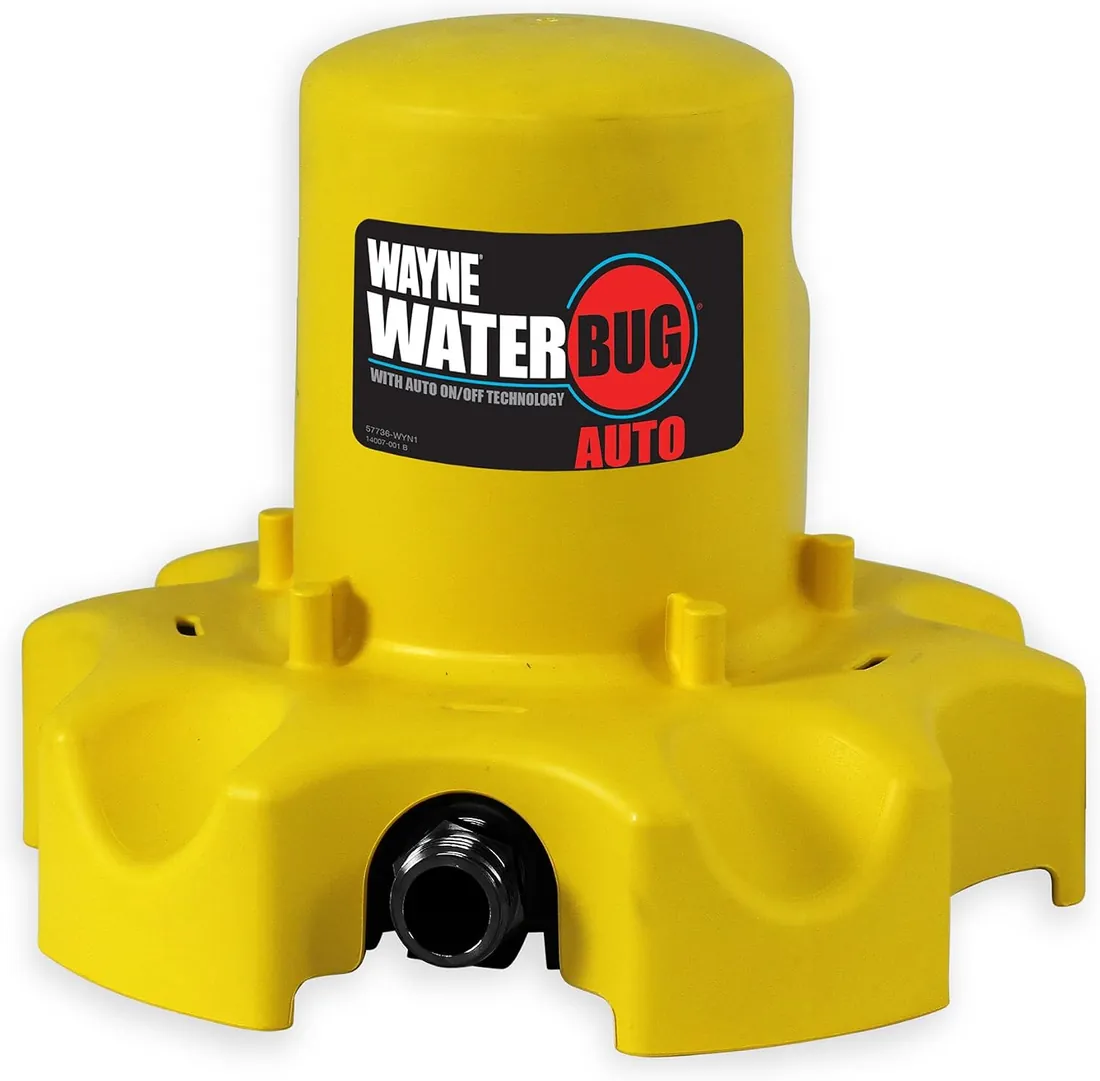
Quick verdict
The WaterBUG AUTO is the version to buy when nobody can stand over the pump: it starts itself once water reaches about 1-5/8 in and shuts off on its own. That makes it useful in window wells, on flat roofs or under a leaking appliance. It does not dry the floor like the manual WaterBUG, stopping near 1/2 in, and its automatic control stops working properly above 23 ft of lift.
Who it fits, and who should skip it
A good fit if
- Water collects in one spot, such as a window well or a low corner, and the pump must look after it.
- You want a three-year warranty on a small portable pump.
- You run a garden hose to a drain or the yard.
- Your lift is modest; Wayne lists 1,250 GPH at 10 ft.
Look elsewhere if
- You need the floor nearly dry; it stops at about 1/2 in.
- Your discharge climbs more than 23 ft, where the auto feature fails.
- It would be left outside through freezing weather.
Specifications
Motor
| Horsepower | 1/4 HP |
|---|---|
| Voltage | 120 V, 60 Hz, 2.5 A |
| Circuit | 15 A minimum, GFCI-protected |
Figures: Wayne WaterBUG AUTO operating instructions and parts manual 620013W-001 B; Wayne WaterBUG AUTO sell sheet.
Performance
| Max flow | 1,900 GPH at 0 ft |
|---|---|
| Flow at 5 / 10 ft | 1,580 / 1,250 GPH |
| Flow at 15 / 20 ft | 850 / 350 GPH |
| Max head | Auto feature works up to 23 ft of pumping height |
Figures: Wayne WaterBUG AUTO operating instructions and parts manual 620013W-001 B; Wayne WaterBUG AUTO sell sheet.
Switch
| Switch type | Built-in magnetic float switch, auto on/off |
|---|---|
| Start level | 1-5/8 in of water |
| Prime level / pump-down | Primes at 5/8 in; removes water down to about 1/2 in |
| Start-up check | Runs for 2 seconds when plugged in, then shuts off if dry |
Figures: Wayne WaterBUG AUTO sell sheet; Wayne WaterBUG AUTO operating instructions and parts manual 620013W-001 B.
Build
| Discharge | 3/4 in garden hose threads |
|---|---|
| Construction | Thermoplastic housing, volute and vortex impeller; stainless shaft |
| Motor protection | Locked-impeller circuit: retries, then rests up to 12 hours |
| Power cord | 10 ft, 3-prong |
| Size and weight | 11 x 11 x 10 in; 8 lb |
| Warranty | 3-year limited |
Figures: Wayne WaterBUG AUTO operating instructions and parts manual 620013W-001 B; Wayne WaterBUG AUTO sell sheet.
Versions
One automatic version is sold. Wayne's manual-only WaterBUG has its own page.
| Version | Part number | What differs | Listing |
|---|---|---|---|
| WaterBUG AUTO (WWB AUTO) | 57736-WYN1 | 1/4 HP, magnetic float switch, 3/4 in hose outlet, 10 ft cord | View on Amazon |
Figures: Wayne WaterBUG AUTO sell sheet; Amazon listing B08D1NW7HZ.
Installation and setup
With the pump unplugged, set it where water gathers: the lowest corner of a floor, the bottom of a window well or the drain point of a flat roof. The strainer base must sit fully on a clean, level surface. Wayne warns against mud, sand and leaves, and an uneven pump is on the troubleshooting list for starting too often or failing to stop.
Thread a garden hose onto the 3/4 in adapter with a hose washer, which Wayne says is needed for correct operation, and unwind the hose so it has no kinks. A rope through the housing loop makes it easier to lower and lift the pump. Then plug into a grounded 120 V GFCI outlet. If water is already deeper than 5/8 in, the pump starts once plugged in, after a 2-second delay that lets air escape from the pump chamber.
Switch and sizing notes
The float switch handles everything: the pump starts at roughly 1-5/8 in of water and stops once the level falls, leaving about 1/2 in behind. When water is lifted high, the column left in the hose can drain back and restart the pump in a small area; Wayne's answer is a check valve. Clean the float and switch housing if the pump refuses to start or will not shut off.
The flow table reads 1,900 GPH at 0 ft, 1,580 at 5 ft, 1,250 at 10 ft, 850 at 15 ft and 350 at 20 ft. Keep total pumping height under 23 ft or the automatic feature will not work correctly. For a lift from a basement window well, 10 ft or so, expect a little over 1,200 GPH. The sizing calculator adds hose friction to that estimate.
Ownership and maintenance
The sealed motor needs no service. Periodic cleaning does: unplug the pump, clear debris from around the inlet cover, inlet plate and switch housing, and check the impeller behind the inlet plate if flow drops. A quick check after cleaning is to plug it in upright on a dry, level surface. It should run for 2 seconds and stop.
Bring the pump indoors before freezing weather. If ice or debris locks the impeller, a protection circuit stops the motor, retries, and then waits up to 12 hours between checks; unplugging it briefly resets that delay. Wayne's limited warranty runs three years from purchase, although one retail listing bullet says one year.
Pros and cons
Pros
- Starts and stops on its own with a float switch.
- Three-year warranty from Wayne.
- Built-in protection for a jammed or frozen impeller.
- Full flow table up to 20 ft.
Cons
- Leaves about 1/2 in of water behind.
- Auto control unreliable above 23 ft of lift.
- Single 3/4 in garden hose outlet only.
Alternatives worth comparing
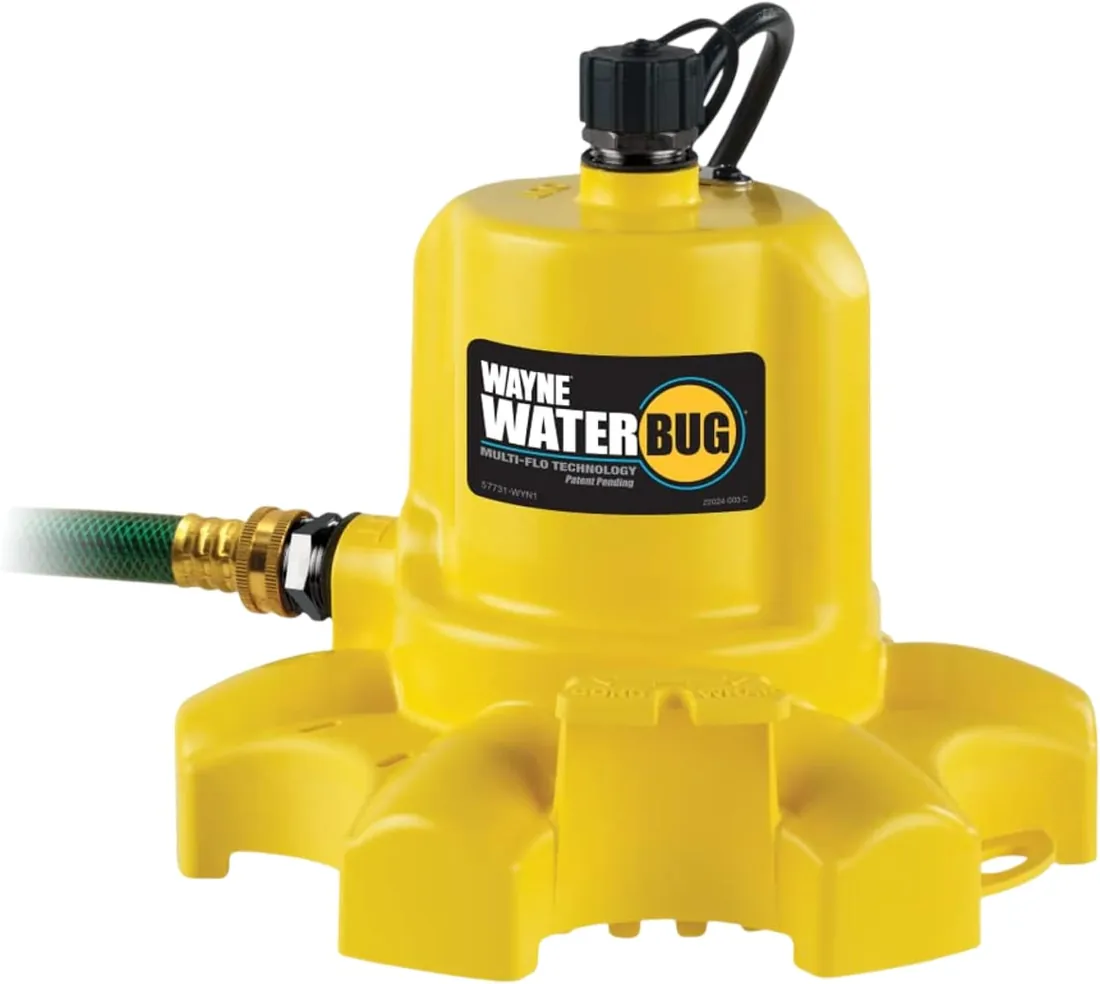
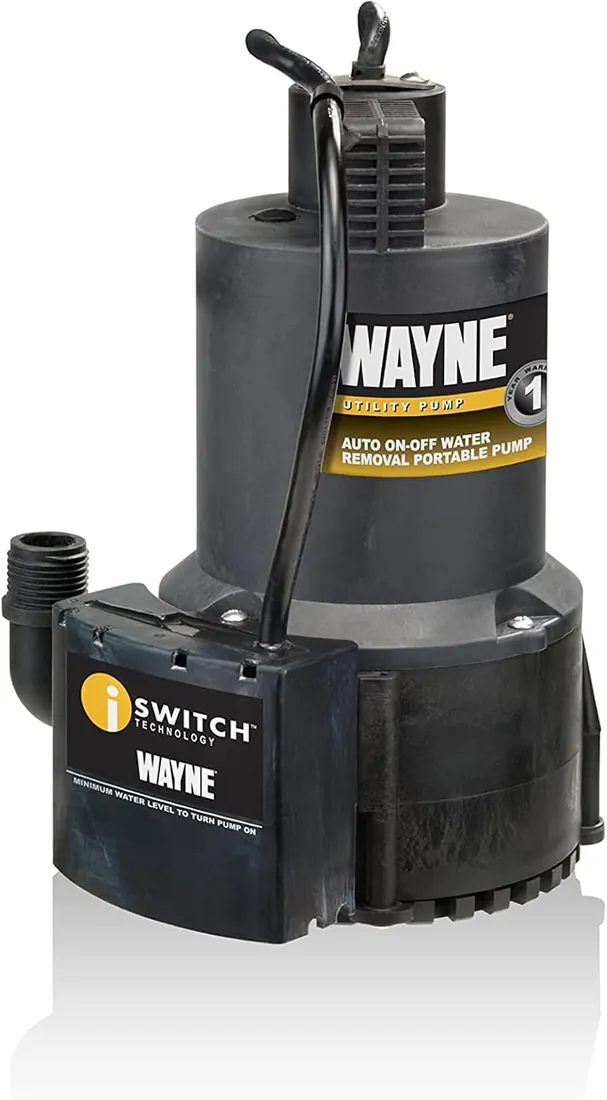
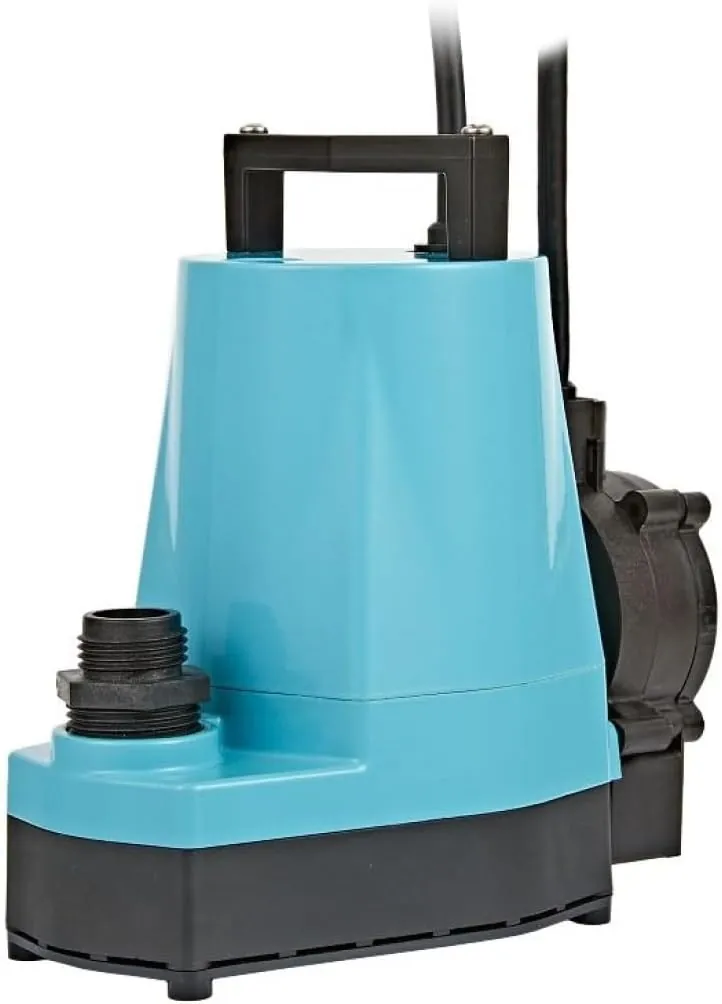
Compared with and featured in
Final verdict
Buy the WaterBUG AUTO when water collects in one place and you want a small pump to deal with it unattended, with a three-year warranty behind it. Pick the manual WaterBUG for drier floors, or a larger pump for high lifts and big floods.
Where to buy
Each button opens this exact model's listing. We may earn a commission on tracked links; it never changes what we publish. Disclosure
Questions buyers ask
At what water level does the WaterBUG AUTO turn on?
Wayne's manual says it needs about 1-5/8 in of water to start pumping automatically and at least 5/8 in to prime. It then runs until the level falls and removes water down to roughly 1/2 in of the surface.
Why does my WaterBUG AUTO keep starting and stopping?
Water left in the hose can flow back through the pump when it stops and raise the level enough to restart it, mainly in small areas or with high lifts. Wayne recommends a check valve. An uneven pump can also cause short cycling.
Does the WaterBUG AUTO leave the floor dry like the original WaterBUG?
No. The manual says it removes water down to about 1/2 in, while the manual WaterBUG reaches about 1/16 in. Some retail copy claims 1/16 in for the AUTO too, but the maker's manual gives the higher figure.
What happens if the impeller freezes or jams?
A protection circuit shuts the motor down, retries several times, then rests for up to 12 hours, checking twice a day. Unplugging the pump briefly resets the delay. Store it indoors when freezing weather arrives.