A recirculation pump moves water from the far end of the hot line back to the heater, so hot water waits near the tap. Without a return line, under-sink kits like the Grundfos Comfort System, Laing AutoCirc and APCOM UT1 send it back through the cold line instead. With a tankless heater, check its manual first: these kits here are listed for tank heaters or do not state tankless use.
How a recirculation pump works
In an ordinary house, hot water sits in the pipe between uses and cools. When you open a distant tap, all of that cooled water has to run down the drain before hot water arrives. A recirculation pump keeps the hot line warm by moving water in a loop: out from the heater along the hot pipe and back to the heater through some return path. When you open the tap, hot water is already close.
The pump itself is small, a circulator rather than a pressure pump. Grundfos lists its Comfort System pump at a flow range up to 9 GPM against up to 6 ft of head and 25 W, and Laing's AutoCirc at 14 W. These pumps add very little pressure, so they do nothing for weak water pressure; that job belongs to a booster pump.
With a return line vs without one
Some houses, especially larger ones, were built with a dedicated hot water return pipe that runs from the farthest fixture back to the heater. In those homes a circulator mounts at the heater and pumps around the loop. Most homes have no return line, and that is what the under-sink kits are for.
An under-sink system fits at the fixture farthest from the heater. It connects the hot and cold supply lines under that sink, and when it runs, it pushes cooled water from the hot line into the cold line, which carries it back toward the heater. Laing says its AutoCirc installs under the sink or faucet farthest from the heater and does not require a return line. A.O. Smith says the APCOM UT1 is designed for single-pipe homes without a return line and up to 250 ft of household piping. The trade-off is that the cold line at that sink may run lukewarm for a moment, because it has been carrying returned hot water.
| Kit | Power | Control | Heater type stated |
|---|---|---|---|
| Grundfos Comfort System 595916 | 25 W, 115 V | Timer, 6 ft line cord | Not stated on the listing |
| Laing AutoCirc LHB08100092 | 14 W, 115 V | Built-in 24 hour timer | Not stated on the listing |
| A.O. Smith APCOM UT1 | Not stated on the listing | Thermostat and timer | Tank or indirect water heater |
Figures: Grundfos Comfort System 595916 listing; Laing AutoCirc LHB08100092 listing; A.O. Smith APCOM UT1 listing.
Recirculation with a tankless water heater
Tankless heaters fire only when they sense enough flow through them, and a small recirculation pump may not provide it. Some tankless models have a built-in recirculation pump or a dedicated accessory for this reason, and others warn against adding one. Of the three kits in our catalog, only the APCOM listing names a heater type at all, and it says tank or indirect heaters. Neither the Grundfos Comfort System nor the Laing AutoCirc listing states tankless compatibility.
So with a tankless heater, start with the heater's own manual and the heater maker's recommended recirculation option. Do not assume an under-sink kit will work just because it fits the plumbing.
Pump housing material matters for drinking water
Recirculation pumps handle drinking water, which is an open system with fresh oxygen constantly arriving. Grundfos's UP series booklet splits its circulators accordingly: stainless steel and lead-free bronze housings for open systems, cast iron housings for closed heating systems. A cast iron circulator from a boiler loop is the wrong choice for domestic hot water.
Check the listing for the housing material. The ZeroPone 93W pump in our catalog describes a cast iron pump head and aluminum housing, which by Grundfos's split is a closed-system construction; read its listing carefully before using it on potable water. For heating loops, cast iron circulators such as the Grundfos UP15-42F are the ones that belong there.
Is a recirculation pump worth it?
The benefit is time and water. Laing claims its AutoCirc saves an average family of four up to 17,000 gallons a year that would otherwise run down the drain while waiting; that is the maker's own estimate, not a measured figure for any particular home. The cost is the energy to run the pump and, more significantly, the heat lost from a pipe that is kept warm.
Timers and thermostats cut that loss. The APCOM listing says its pump typically runs three to four times an hour for one to two minutes, controlled by a built-in thermostat and timer. Laing's built-in timer lets you limit running to the hours when hot water is actually used. A pump that runs around the clock on an uninsulated line wastes the most.
- Find the fixture farthest from the water heater.
- Check whether a return line already exists.
- Confirm your heater type and its maker's guidance.
- Choose a kit with a timer or thermostat.
- Set it to run only in the hours you use hot water.
Installing an under-sink kit
Under-sink kits are designed for one-wrench installation. APCOM's includes the pump, two braided hoses, two tees and fittings, and the listing says it installs in under ten minutes with an outlet under the sink. The usual layout puts tees on the hot and cold supply valves, with the pump between them. Grundfos ships its Comfort System as a kit with a timer and a 6 ft line cord.
The step that catches people is power: every one of these kits needs a receptacle under the sink, which many bathrooms lack. Plan for that first. The Laing AutoCirc, APCOM UT1 and Grundfos Comfort System pages list each kit's parts, and the booster and circulator hub compares them.
Common mistakes
- Fitting an under-sink kit to a tankless heater without checking its manual.
- Using a cast iron heating circulator on drinking water.
- Running the pump all day instead of on a timer.
- Installing the kit at a sink near the heater instead of the farthest one.
- Forgetting that the kit needs an electrical outlet under the sink.
Products that fit
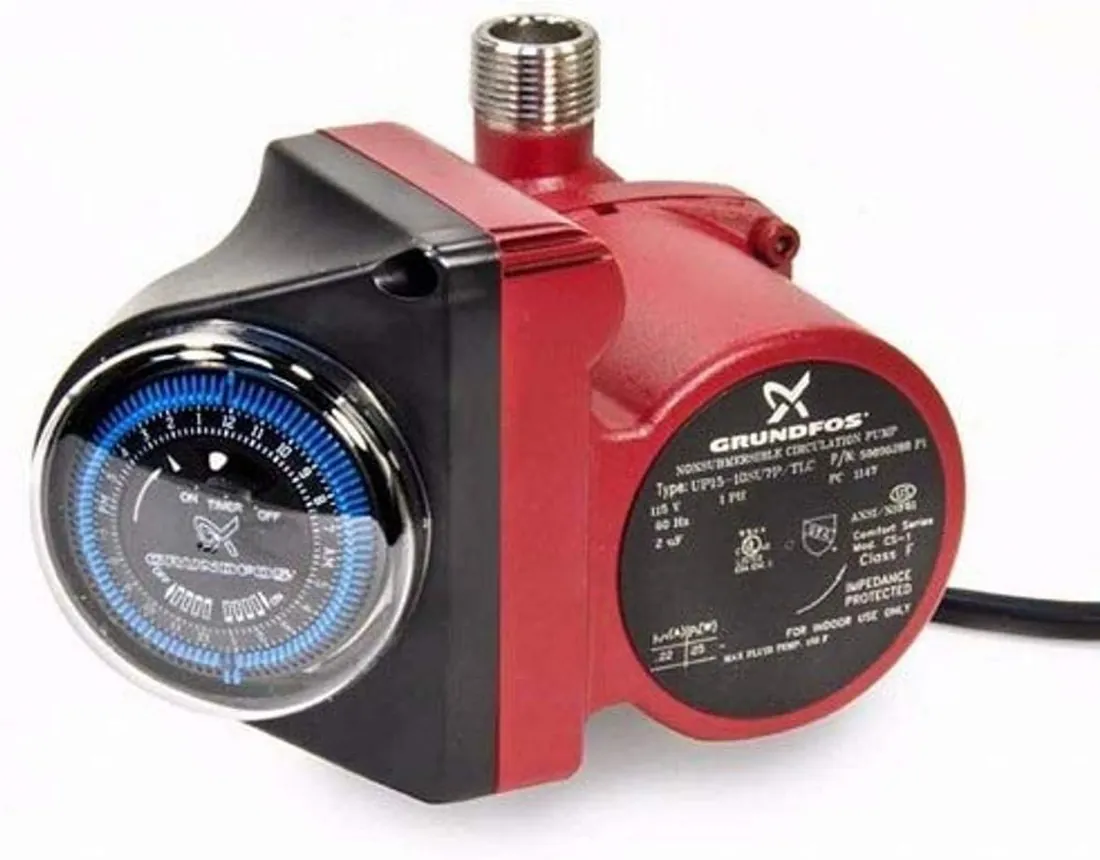
Grundfos Comfort System 595916 Recirculation Pump Kit
Under-sink kit with a timer, rated up to 9 GPM against 6 ft of head.
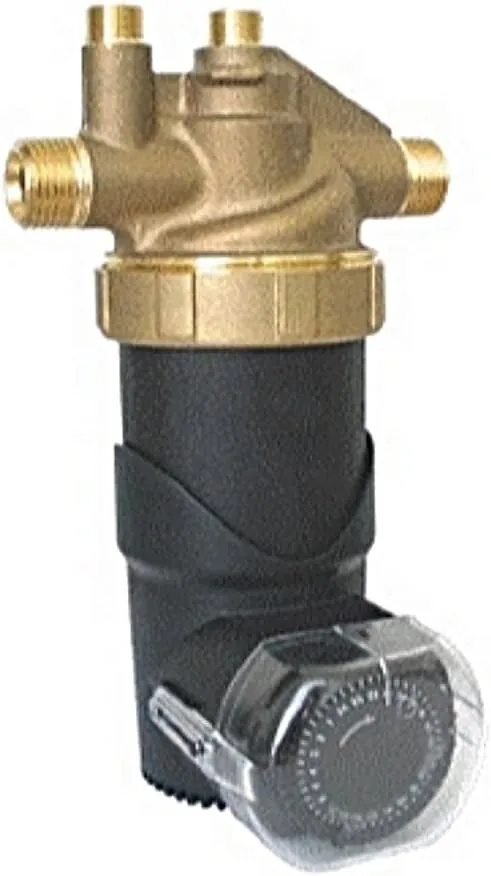
Laing AutoCirc LHB08100092 Recirculation Pump
14 W under-sink pump with a built-in timer and no return line needed.
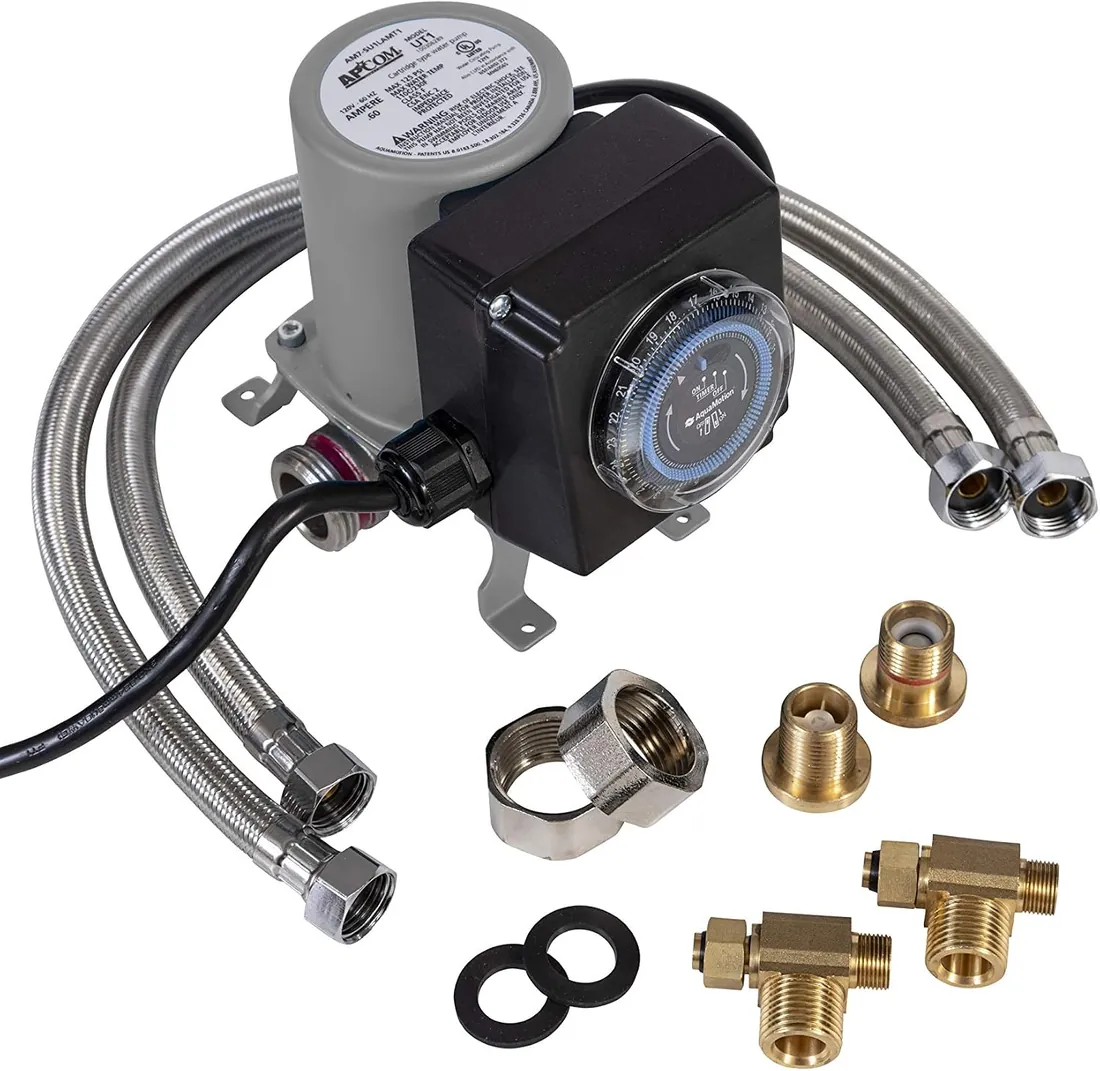
A. O. Smith APCOM UT1 Recirculation Pump
Thermostat and timer kit listed for tank and indirect heaters.
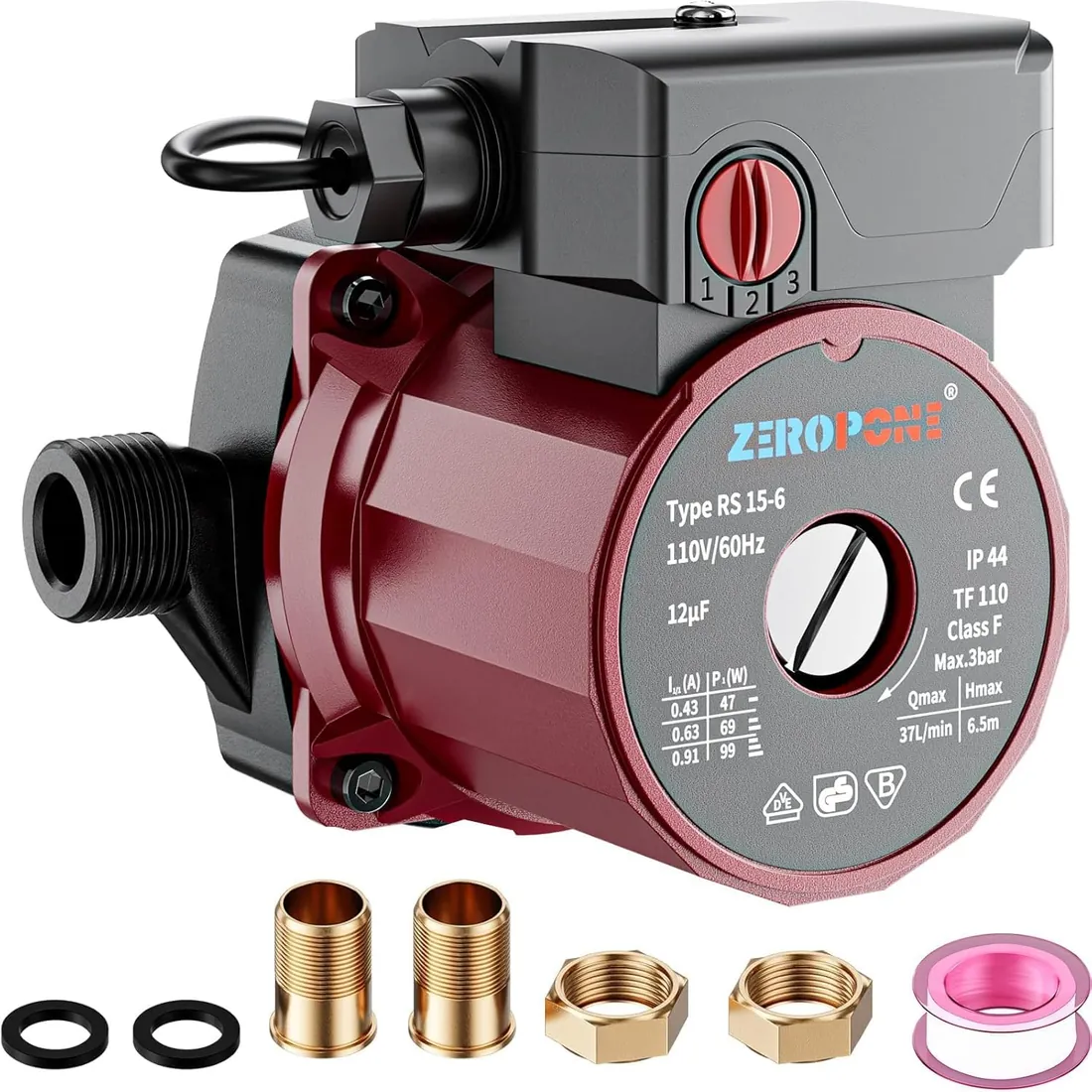
ZeroPone ZPHWCP003 93W Recirculating Pump
Three-speed inline pump whose listing describes a cast iron head.
Questions readers ask
Can I add a recirculation pump without a return line?
Yes. Under-sink kits such as the Laing AutoCirc and APCOM UT1 install at the farthest sink and send cooled water back to the heater through the cold line. APCOM says its kit suits homes up to 250 ft of household piping.
Does a recirculation pump work with a tankless water heater?
Sometimes, but check the heater's manual. Tankless heaters need enough flow to fire, and the kits in our catalog either name tank heaters only or do not state tankless use. Many tankless makers offer their own recirculation option.
Does a hot water recirculation pump use a lot of electricity?
The pumps themselves are small: Laing lists 14 W and Grundfos 25 W. The bigger cost is heat lost from the warm pipe, which a timer or thermostat reduces considerably.
Why is my cold water warm after installing a recirculation pump?
With an under-sink kit, the cold line near that sink carries returned hot water back to the heater. A short run of lukewarm cold water at that fixture is normal for this design.