Replace a sump pump when it runs but moves little water, trips its thermal protector or GFCI repeatedly, grinds or rattles, or is past its design life and you cannot afford a failure. Zoeller puts its pumps' design life at 7 to 10 years and average switch life at 4 to 7 years. A failed switch alone is often a cheaper fix than a new pump.
How long sump pumps last
Few makers publish a service life, but Zoeller does. Its support pages say that under normal conditions its units are designed for a 7 to 10 year service life, with periodic servicing along the way, and that the average switch lasts 4 to 7 years depending on the application. That gap matters: the most common failure on an otherwise healthy pump is the switch, not the motor.
Real life varies with use. A pump in a pit that fills every few minutes for half the year works far harder than one that runs a few times a month. Short cycling shortens switch life, which Zoeller says plainly, and sand or grit wears impellers and seals. Treat the design life as a planning number. If your pump is in its eighth or ninth year and a flooded basement would be expensive, replacing it on your schedule is cheaper than replacing it in a storm.
| Pump | Warranty |
|---|---|
| Wayne CDU790, CDU800 | 3 years |
| Wayne CDU980E, CDU1000, SS and CI models | 5 years |
| Zoeller M63 | 5 years |
| Liberty wholesale pumps including 257, 287 | 3 years |
| Red Lion RL-SC series | 3 years |
| Superior 92370, 92372 | 1 year |
| Superior 92570, 92572 | 3 years |
Figures: Wayne submersible sump pump manual 600002W-001 J; Zoeller Model 63 product page; Liberty Pumps installation manual 7035000R; Red Lion RL-SC series sump pump manual 998495; Superior Pump sump pump owner's manual, models 92370/92372/92570/92572.
Signs a sump pump is failing
The maker troubleshooting charts list the faults that, once ruled out, leave only one remedy: replace the pump. Wayne's chart prescribes a new pump for a failed motor, worn bearings and a broken impeller. Red Lion's RL-SC manual explains that repeated thermal protector trips can mean the pump, motor, bearings or seal have reached the end of their useful life. Liberty and Wayne both list a GFCI that trips because of the pump as a replacement case.
In practice, watch for these: the pump runs but the pit drains much more slowly than it used to, even with a clean inlet and a working check valve; it hums without starting; it grinds, rattles or vibrates more than before; it stops on its own and restarts after cooling; or it trips the GFCI or breaker when nothing else has changed. Any one of these on an old pump is a strong reason to replace it rather than keep diagnosing.
- Clean the inlet screen and check the check valve first.
- Lift the float by hand to rule out a stuck switch.
- Plug the pump directly into the outlet if it has a piggyback switch.
- Time a full cycle and compare it with how the pump used to behave.
- Replace the pump if the motor, bearings or impeller are the cause.
Replace the switch or the whole pump?
Because switches wear out sooner than motors, a pump that will not start, or will not stop, is often a switch job. On a pump with a piggyback switch, the test is quick: plug the pump directly into the outlet. If it runs, buy a new switch. Wayne sells a float kit and a vertical float switch kit for its CDU pumps, and Zoeller says that on its automatic pumps with a built-in switch, the switch, switch arm and case gasket should be replaced together.
Wayne's tether-float models are a special case: Wayne requires the tether switch to be replaced every two years as maintenance. If short cycling is what wore out the switch, Zoeller offers a long-cycle kit, part 10-0001, or suggests a non-automatic pump with a piggyback variable-level switch. A new switch on a pump that is eight years old, though, buys time on an old motor; weigh that before spending on parts.
Using the warranty
Warranty terms are similar across makers but the details trip people up. Wayne's warranty covers only the original buyer and starts at the purchase date if you have a receipt from an authorized dealer, or at the manufacture date if you do not. Liberty starts from the purchase date shown on a dated receipt naming the model and serial number. Zoeller requires proof of purchase. All three exclude damage from improper installation or maintenance, and Wayne states that skipping routine maintenance voids the warranty.
No pump warranty covers the water damage from a failure. That is the real argument for replacing an aging pump early and for an alarm or backup. A pump still within warranty that fails should go back to the maker; outside warranty, compare a new pump with the cost of parts. The cast iron sump pump list includes the longer five-year models, such as the Zoeller M63 and the Wayne CDU980E.
Maintenance that extends pump life
Wayne asks owners to inspect the pump three to four times a year for movement and for debris on the switch or float, to keep it upright, to clear the inlet screen, and to pour in a bucket of water to confirm it starts and drains quickly. Liberty's schedule is quarterly checks of the float, the check valve and the pump for corrosion and wear, plus an annual basin cleaning. Liberty also says pumps idle for more than a month in a dry basin should be run monthly to lubricate the seals.
The other lever is the duty itself. A pump that short cycles in a small pit wears its switch quickly; the basin cycle calculator shows how much a larger basin or a wider switch range would help. A leaking check valve that lets water fall back is the cheapest fix of all.
Choosing the replacement
Start with what you have: the basin size, the discharge pipe size, and how well the old pump kept up. If it coped, a pump of the same size with better construction is a safe choice. If it ran nonstop in storms, size up using your lift and inflow with the sizing calculator. The 1/3 vs 1/2 HP guide shows how much flow each size adds at real lifts.
Fit a new check valve while the pipe is open, and consider adding a backup if the basement is finished. Replacement is the cheapest moment to do both.
Common mistakes
- Replacing a whole pump when only the switch has failed.
- Keeping an old pump running until it fails during a storm.
- Losing the receipt, which can shorten the warranty period.
- Skipping routine checks that the warranty depends on.
- Reusing a worn check valve with a new pump.
Products that fit
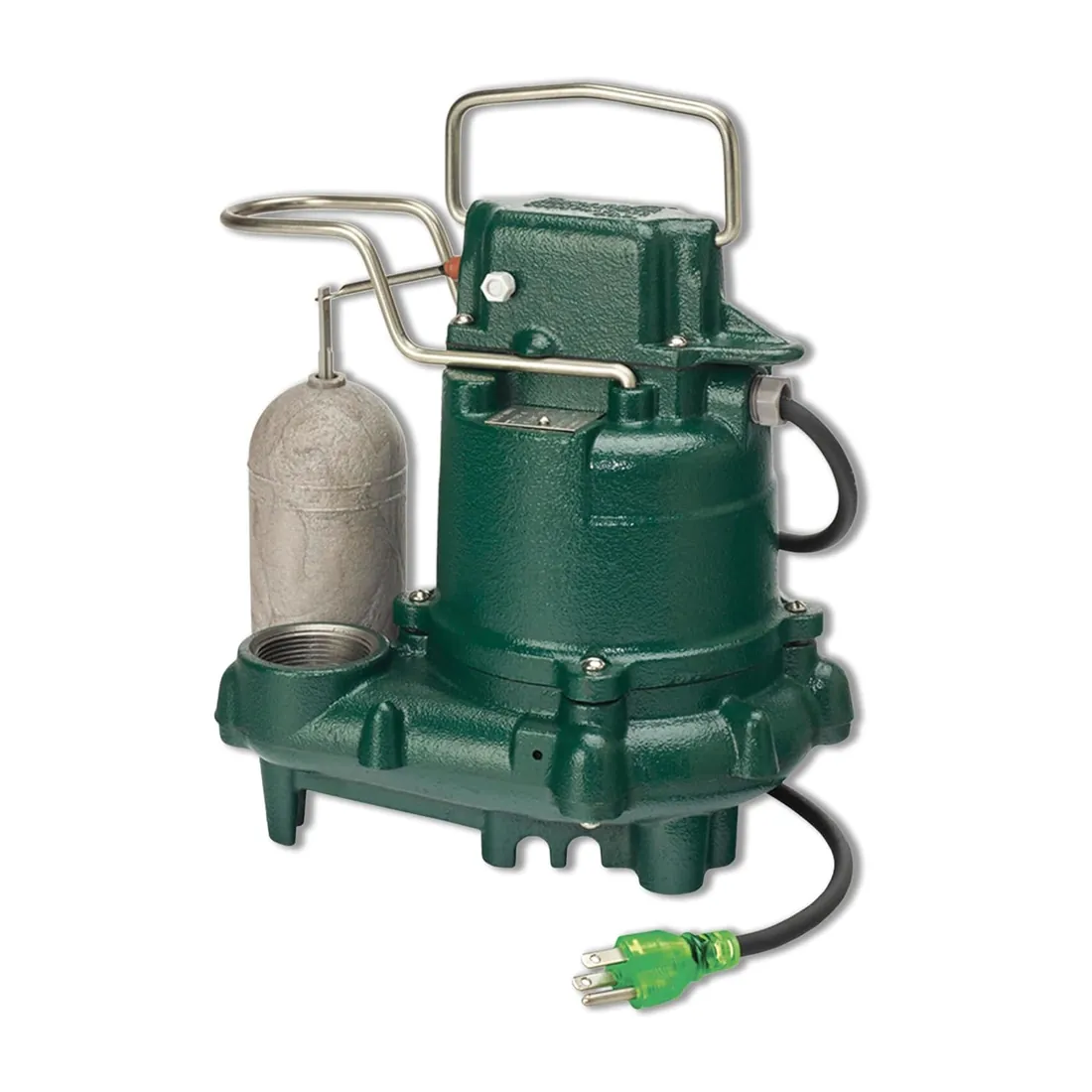
Zoeller M63 Premium Sump Pump
Cast iron 3/10 HP pump with a five-year warranty from Zoeller.
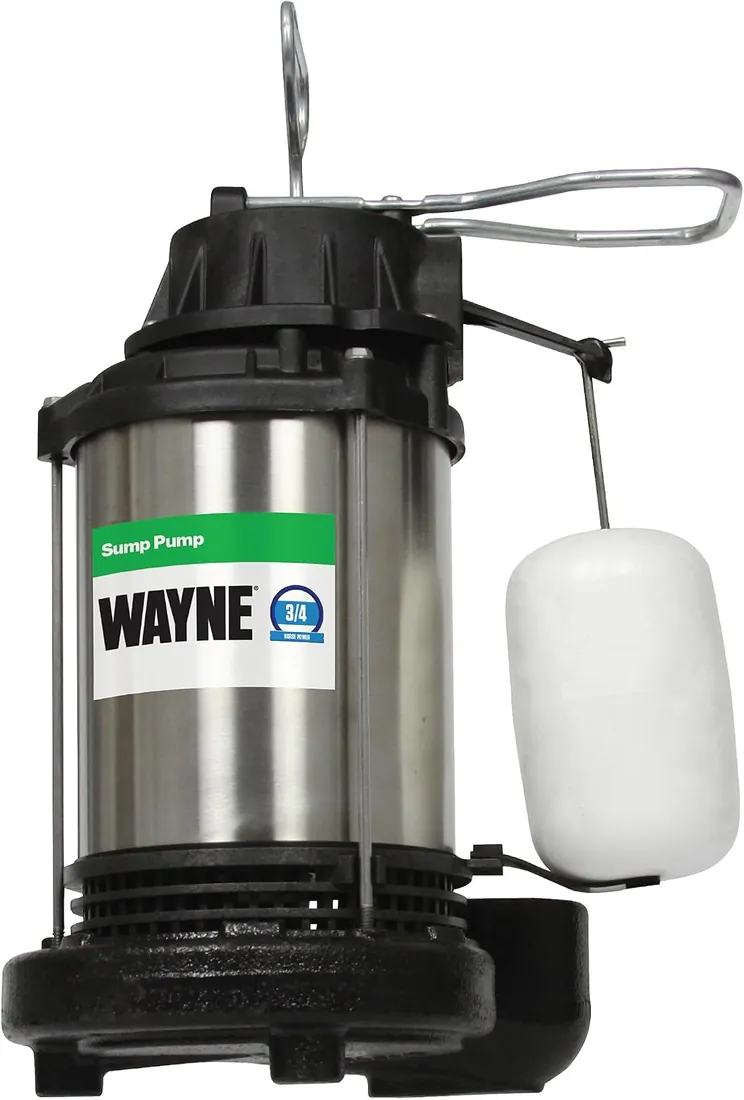
Wayne CDU980E Sump Pump
3/4 HP stainless steel pump with five years of coverage.
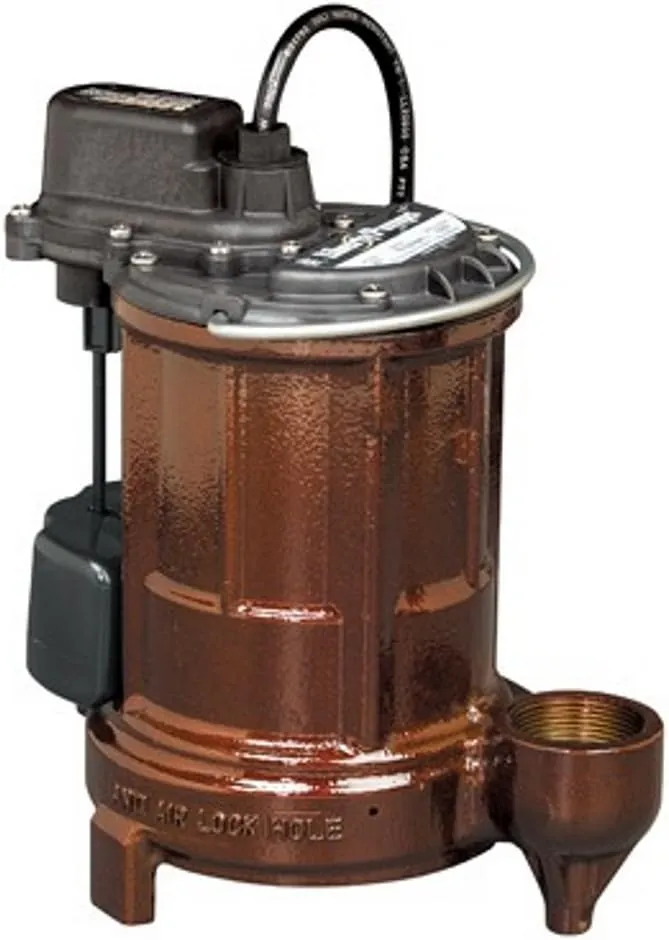
Liberty Pumps 257 Sump Pump
Cast iron 1/3 HP pump with a three-year Liberty warranty.
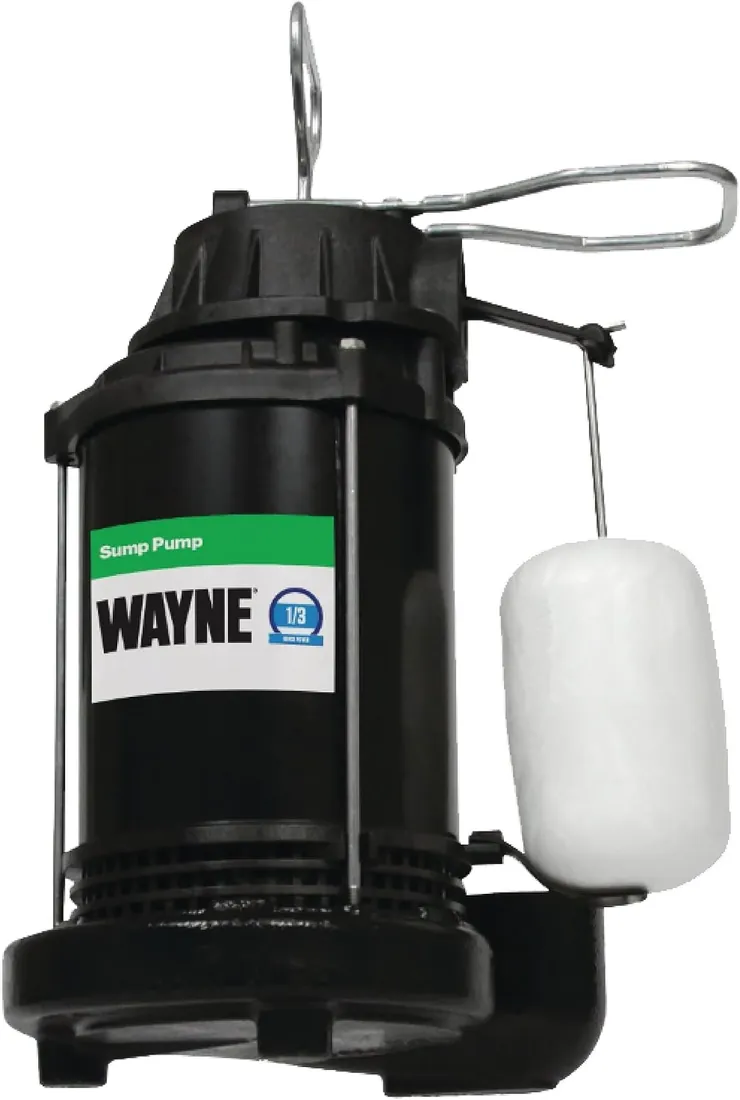
Wayne CDU790 Sump Pump
Coated steel 1/3 HP pump with replaceable float and switch kits.
Questions readers ask
How long does a Zoeller sump pump last?
Zoeller says its units are designed for a 7 to 10 year service life under normal conditions, with periodic servicing. It puts average switch life at 4 to 7 years, so expect to replace the switch at least once in that time.
Should I replace my sump pump every 10 years?
Many owners do, because that is the end of the design life Zoeller quotes. If the pump is still strong and you have an alarm or backup, running it longer is a reasonable risk; without either, replace it on schedule.
Can a sump pump be repaired?
Switches and floats can usually be replaced by the owner. Motor, bearing, seal and impeller faults generally mean a new pump, and makers such as Liberty void the warranty if the pump is opened without factory approval.
What voids a sump pump warranty?
Improper installation, poor maintenance, misuse and modifications are excluded by Wayne, Liberty and Zoeller. Liberty also excludes cut cords and a reduced discharge size, and Wayne says skipping routine maintenance voids its warranty.