A 1/3 HP pump is the default choice for a basement or crawl space pit that fills steadily but not violently, with a discharge that climbs one storey or a little more. Every pick below is rated at exactly 1/3 HP by its maker, runs on a standard 115 or 120 V outlet and switches itself on.
The five differ where it matters at home: how the switch fits the pit, what the housing is made of and how much water each still moves once the pipe climbs. If you are torn between this size and the next, read the 1/2 HP and larger list and run your numbers through the sizing calculator.
- Qualifies if
- Rated 1/3 HP on the maker's specification.
- Automatic switch supplied with the pump.
- Maker publishes switch levels and a warranty term.
- A 1-1/2 in discharge connection.
- On the list
- 5 pumps
The picks
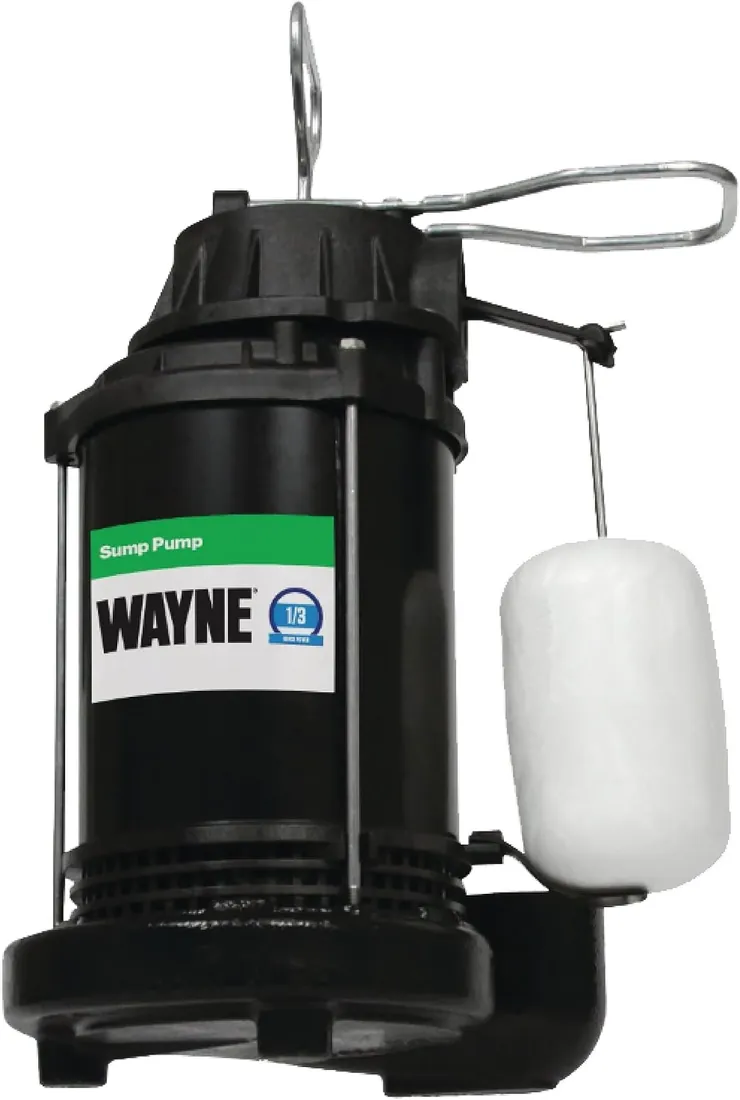
Wayne CDU790 Sump Pump
Best for: Pits where the pipe climbs a full storey
Wayne's table credits the CDU790 with 3,060 GPH at 10 ft and still 1,200 GPH at 20 ft, the strongest high-lift figures in this group. Water enters through the top of the pump, so sand on the pit floor is less likely to reach the impeller. The integrated vertical float runs from about 9 in down to 4 in, and Wayne asks for a basin at least 11 in wide.
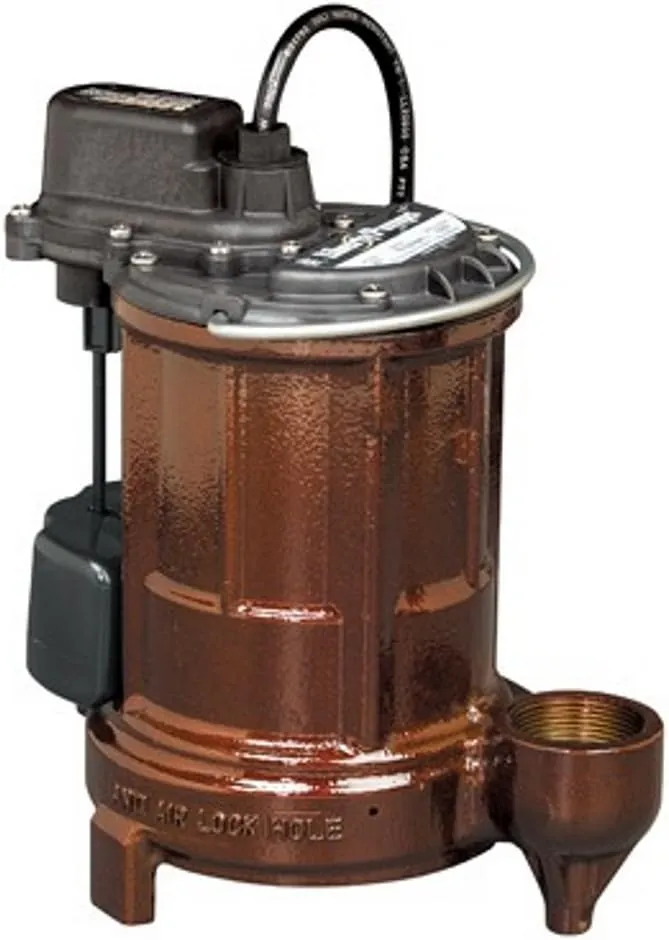
Liberty Pumps 257 Sump Pump
Best for: A standard pit and a pump meant to last
Liberty casts the 257 motor housing and volute as a single piece of class 25 iron, which removes a housing seal ring from the design. Its vertical magnetic float starts the pump at 7 in and stops it at 4 in under the current manual, and the maker allows a sump as narrow as 10 in. Liberty backs it for three years, and a 25 ft cord version is listed.
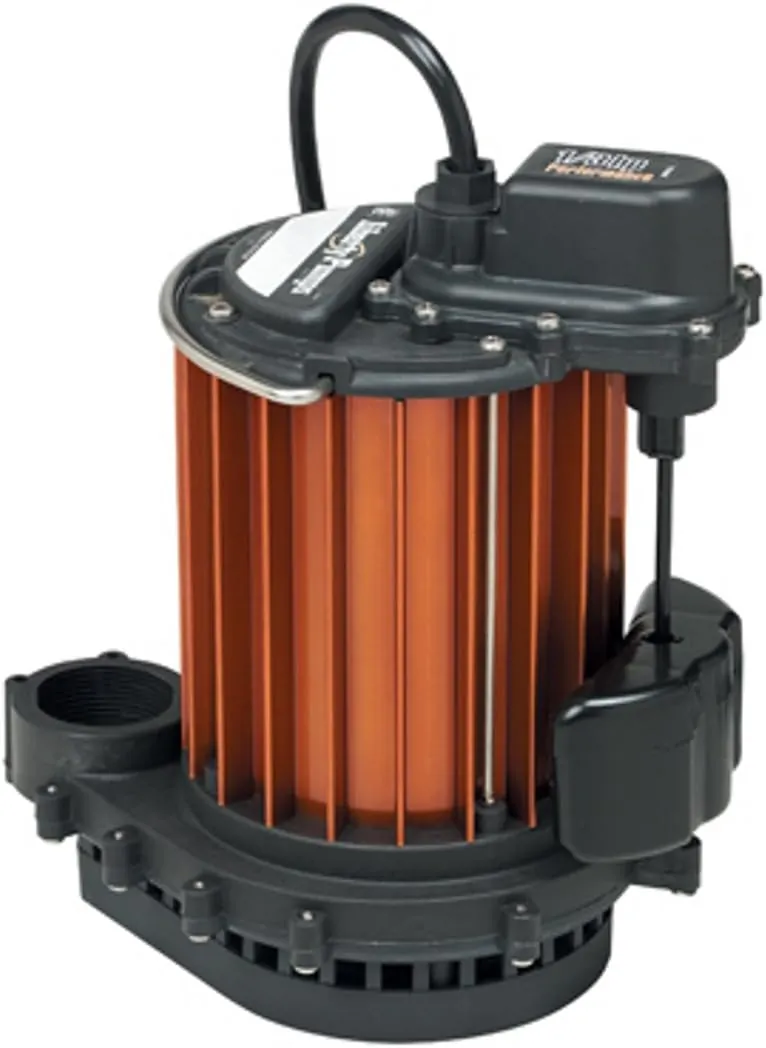
Liberty Pumps 237 Sump Pump
Best for: Owners who handle the pump themselves
The 237 shares the 1/3 HP, 5.2 A motor of Liberty's iron pumps but weighs 11 lb, about half as much, because the motor housing is powder coated aluminum with deep fins. Liberty says those fins shed heat better than a cast iron shell. It uses the same vertical magnetic float, fits a 10 in sump and passes solids up to 3/8 in.
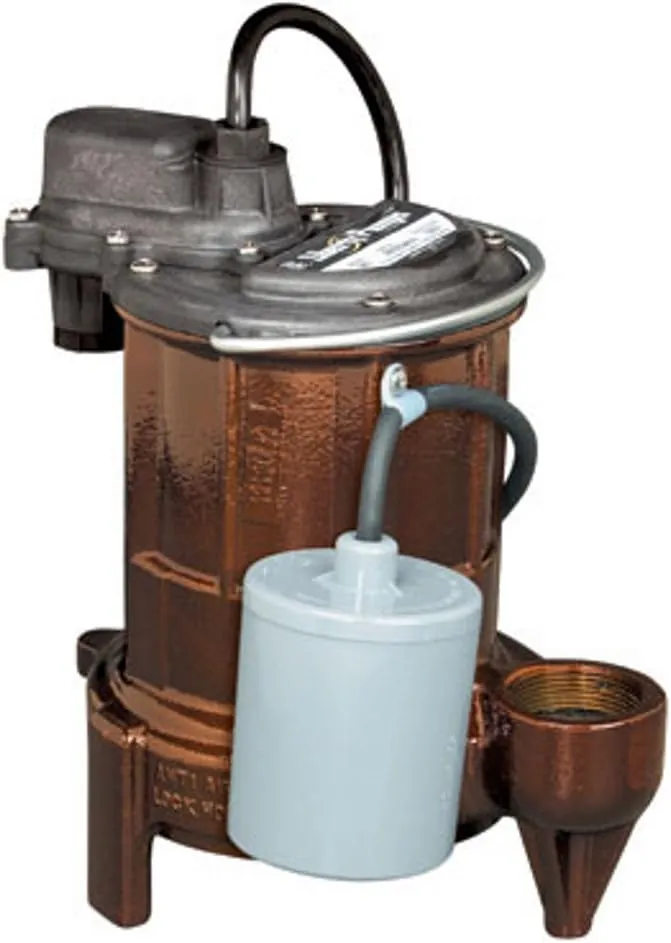
Liberty Pumps 253 Sump Pump
Best for: Large basins where long cycles save the motor
Instead of a vertical float, the 253 hangs a wide-angle float on a piggyback plug. Liberty sets it to switch on at 11 in and off at 4 in, so every cycle empties a deep slice of the pit and the motor starts less often. The iron body and 1/3 HP motor match the 257; the difference is the switch, which needs room to swing.
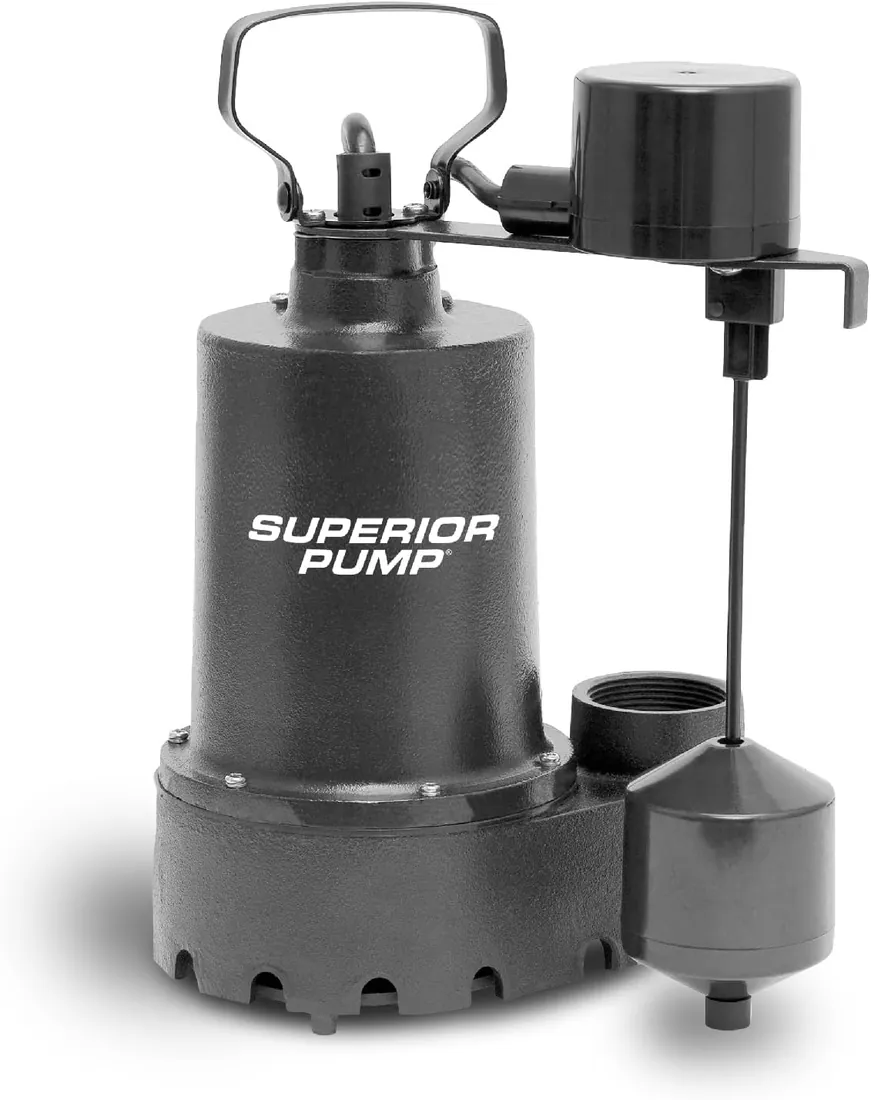
Superior Pump 92341 Cast Iron Sump Pump
Best for: Owners who want a separate, swappable switch
Superior pairs an epoxy-coated cast iron housing with a vertical float on a piggyback cord, so a failed switch unplugs instead of condemning the pump. The maker lists 2,760 GPH at no lift and 1,800 GPH at 10 ft, with a 25 ft maximum. The switch turns on at 6 in and off at 2 in, which suits a shallow pit.
Side by side
| Pump | Housing | Switch | On / off | Smallest pit or basin | Warranty |
|---|---|---|---|---|---|
| Wayne CDU790 Sump Pump | Coated steel, cast iron volute | Integrated vertical float | About 9 in / 4 in | 11 in basin | 3 years |
| Liberty Pumps 257 Sump Pump | One-piece cast iron | Vertical magnetic float | 7 in / 4 in | 10 in sump | 3 years |
| Liberty Pumps 237 Sump Pump | Powder coated aluminum | Vertical magnetic float | Not stated on the data sheet | 10 in sump | 3 years |
| Liberty Pumps 253 Sump Pump | One-piece cast iron | Wide-angle piggyback float | 11 in / 4 in | Not stated on the data sheet | 3 years |
| Superior Pump 92341 Cast Iron Sump Pump | Epoxy-coated cast iron | Vertical piggyback float | 6 in / 2 in | Not stated on the data sheet | 3 years |
Figures: Wayne submersible sump pump manual 600002W-001 rev J; Wayne coated steel sump pump sell sheet, CDU790 and CDU800; Liberty Pumps installation manual 7035000, 250, 280 and 290 series; Liberty Pumps 250-Series sales literature; Liberty Pumps 230-Series sales literature; Liberty Pumps installation manual 7108000, 230 and 450 series; Superior Pump 92341 product page and technical data.
How the list was narrowed
The starting pool was every 1/3 HP sump pump on this site with a maker data sheet, manual or product page. Pumps sold at that size under a different maker rating were left out. The remaining models were sorted by the features that separate one pit from another: the switch style and the basin width it needs, cast iron versus aluminum or coated steel, and the flow the maker lists at a ten-foot lift. Each pick had to win on one of those points.
Who should skip this list
Skip this size if the pit refills within seconds during a storm or the discharge climbs well beyond one storey; a 1/2 HP pump keeps more flow at height. A pit that only takes water from a dehumidifier or a washing machine needs a drain pump instead, and no primary pump protects you during a power cut.
Final recommendation
Start with the switch your pit can hold. A narrow basin rules out the swinging float of the 253 and points to the 257, the 237 or the CDU790. Choose the Wayne when the pipe climbs highest or the pit collects grit, the 237 when weight matters, and the Superior 92341 if you want a switch that unplugs separately from the motor. Iron or aluminum, each one needs a check valve on the discharge.
Questions readers ask
Is 1/3 HP enough for a basement sump pump?
For most houses it is. A 1/3 HP pump handles steady groundwater with a lift of roughly one storey. Wayne's CDU790, for example, is rated for 3,060 GPH at 10 ft. Step up to 1/2 HP when the pit fills faster than the pump empties it in heavy rain.
What is the difference between the Liberty 253 and 257?
They share the same cast iron body and 1/3 HP motor. The 257 uses a vertical magnetic float that works in a 10 in sump, while the 253 uses a wide-angle float on a piggyback plug that switches on higher, at 11 in, and needs a wider pit.
Does a 1/3 HP sump pump use a lot of power?
Liberty lists 5.2 A at 115 V for its 1/3 HP models and Superior lists 4.1 A for the 92341. A pump only draws that while it runs, so the yearly total depends on how often your pit fills, not on the rating alone.