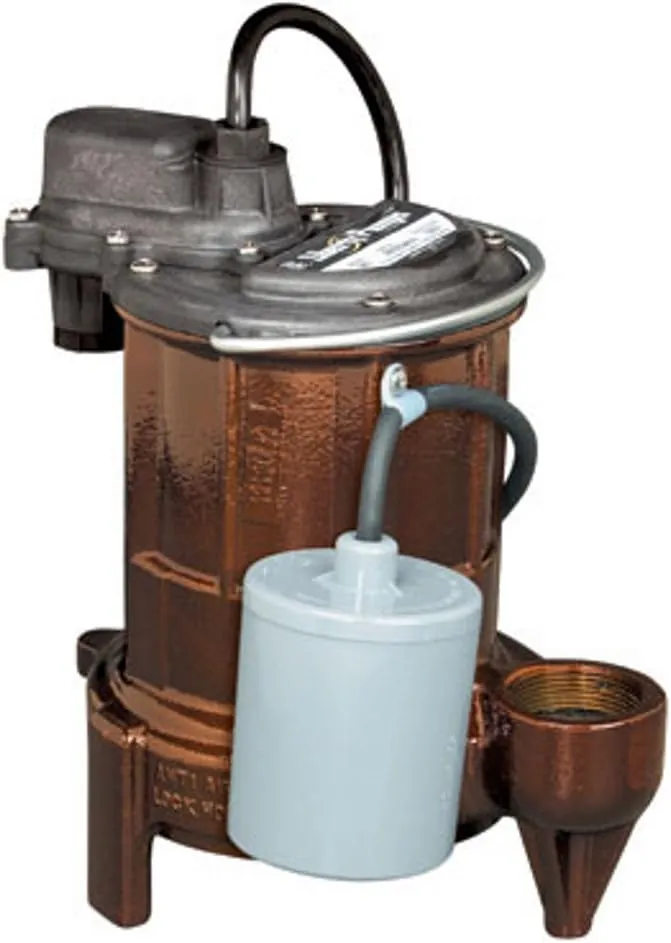
Quick verdict
The 253 is the same one-piece cast iron 250-Series pump as Liberty's popular 257, swapped to a tethered float. That costs pit width, since it needs at least 14 in, but buys a longer pumping cycle that you can set yourself and a plug that lets you run the pump by hand if the switch ever fails. It is a sound choice for a roomy basement pit with ordinary lift.
Who it fits, and who should skip it
A good fit if
- Your basin is 14 in or wider and you want fewer, longer pump cycles.
- You like being able to bypass a failed switch without pulling the pump.
- The pump may handle effluent as well as groundwater.
Look elsewhere if
- The pit is narrow; a swinging float can catch on the wall.
- Total head nears the 23 ft ceiling, where a 1/2 HP pump keeps far more flow.
Specifications
Motor
| Horsepower | 1/3 HP |
|---|---|
| Voltage | 115 V, single phase, 60 Hz (253HV: 230 V) |
| Amps | 5.2 A full load, 8 A locked rotor; 253HV 2.6 A |
| Motor type | Oil-filled PSC, class B winding, 3450 RPM, thermal overload |
Figures: Liberty Pumps 250-Series engineering specifications 250_P1.
Performance
| Max flow | 44 GPM at 5 ft of total head |
|---|---|
| Max head | 23 ft shut-off head |
Figures: Liberty Pumps 250-Series engineering specifications 250_P1.
Switch
| Switch type | Wide-angle tethered float with piggyback plug |
|---|---|
| On / off levels | Factory set on at 11 in, off at 4 in; adjustable by tethering |
Figures: Liberty Pumps 250-Series engineering specifications 250_P1; Liberty Pumps installation manual 7035000R, dewatering and effluent pumps.
Build
| Discharge | 1-1/2 in NPT |
|---|---|
| Solids handling | 1/2 in, vortex impeller in engineered polymer |
| Construction | One-piece class 25 cast iron body, stainless shaft and hardware, powder coat |
| Seal and bearings | Engineered double lip seal; upper and lower ball bearings |
| Minimum sump | 14 in diameter, 18 in deep |
| Weight | 24 lb on the sales sheet (series spec page lists 23 lb) |
| Power cord | 10 ft SJTW; 25 ft as 253-2, 35 ft as 253-3 |
| Max liquid temperature | 140 °F intermittent, 104 °F continuous |
| Listings | SSPMA, cCSAus |
| Warranty | 3-year limited |
Figures: Liberty Pumps 250-Series engineering specifications 250_P1; Liberty Pumps 250-Series sales literature LLIT002500; Liberty Pumps installation manual 7035000R, dewatering and effluent pumps.
Versions
The 253 comes in two voltages and three cord lengths; the 250-Series siblings change only the switch.
| Version | Part number | What differs | Listing |
|---|---|---|---|
| 253, piggyback float, 115 V | 253 | 10 ft cord, 5.2 A | View on Amazon |
| 253-2 or 253-3, piggyback float, 115 V | 253-2 / 253-3 | 25 ft or 35 ft cord | Not linked |
| 253HV, piggyback float, 230 V | 253HV | 2.6 A; also sold with 25 ft and 35 ft cords | Not linked |
| 251, integral wide-angle float, 115 V | 251 | Float wired into the pump, factory set and not adjustable | Not linked |
| 257, vertical magnetic float, 115 V | 257 | Fits a 10 in pit; on at 7 in, off at 4 in | Not linked |
Figures: Liberty Pumps 250-Series engineering specifications 250_P1; Liberty Pumps installation manual 7035000R, dewatering and effluent pumps; Amazon listing B002YSGKH8, Liberty Pumps 253.
Installation and setup
Give the float room. Liberty asks for a sump at least 14 in across and 18 in deep for its tethered models, and the float must swing through its full travel without touching the pit wall, the pump or the pipe. Set the pump on brick, concrete or Liberty's molded platform rather than loose stone, and keep the float out of the direct stream from the drain tile inlet.
Plug the switch into a grounded outlet on its own breaker, then plug the pump cord into the back of the switch plug. Pipe the 1-1/2 in outlet with a check valve, a gate valve and a union just above the floor. If you use the 253 for effluent, the basin must be sealed and vented to code; Liberty notes wide-angle floats suit that work better than vertical ones.
Switch and sizing notes
From the factory the float starts the motor at 11 in and lets it stop at 4 in, a larger draw-down than the 257's 7 in start. To change it, tether the float cord to the discharge pipe at a different height, keeping at least 3-1/2 in of cord between the tether point and the top of the float; the off level must never drop below 4 in, which keeps the motor cool.
Liberty states two performance points, 44 GPM at 5 ft and zero at 23 ft, and draws the rest as a curve. A 1/3 HP pump is happiest well below that ceiling, so total your lift and pipe losses with the sizing calculator and use the cycle calculator to see how a longer tether changes run time.
Ownership and maintenance
Because the switch sits on a piggyback plug, a stuck float is a nuisance rather than a flood: unplug the switch, plug the pump cord straight into the outlet and it runs until you unplug it again. Never leave it like that unattended, since the motor must not run dry. Check the float's swing and the check valve every quarter, and clean the basin once a year.
The motor is oil-filled and sealed, and Liberty's wholesale warranty covers it for three years; repairs inside that period need the maker's approval first.
Pros and cons
Pros
- Adjustable pumping range by moving the tether.
- Piggyback plug allows manual running if the switch fails.
- One-piece cast iron body with 1/2 in solids handling.
- Suitable for effluent as well as groundwater.
Cons
- Needs a 14 in pit for the float to swing.
- Flow falls away well before the 23 ft ceiling.
- Maker performance between end points is a graphic only.
Alternatives worth comparing
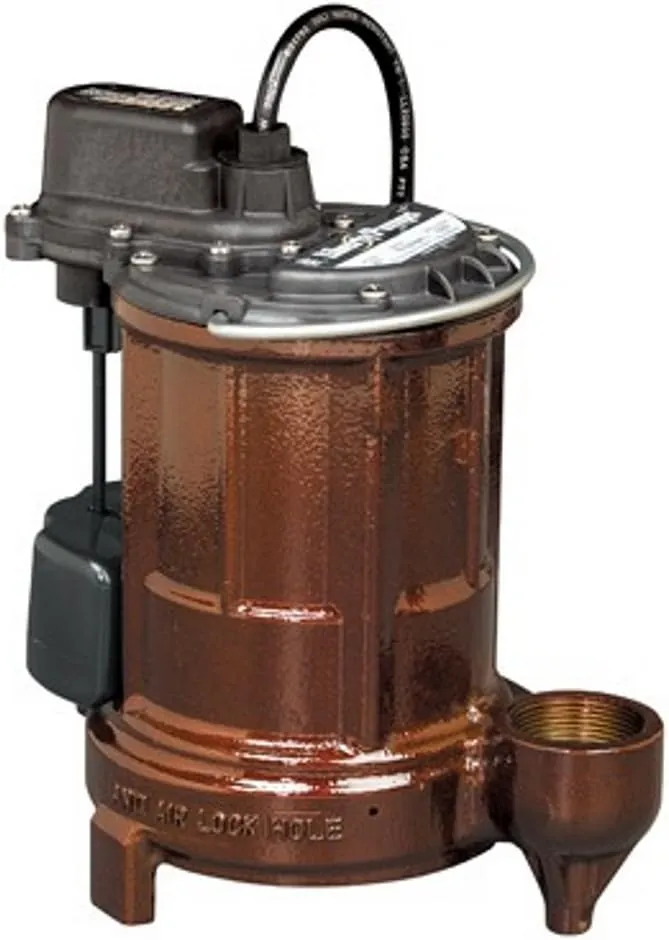
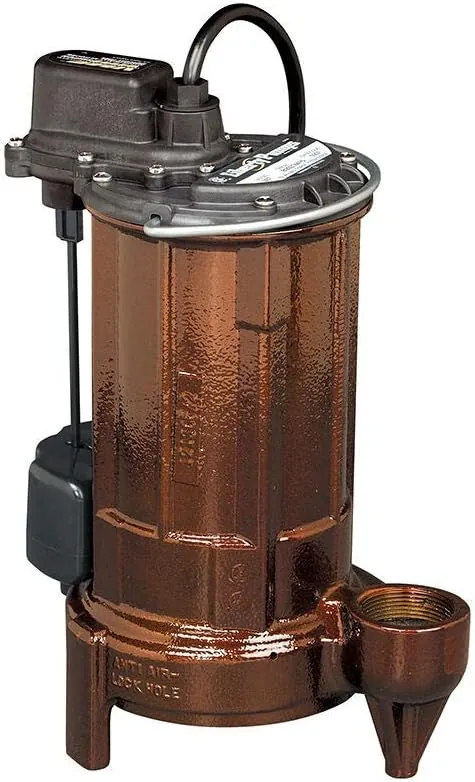
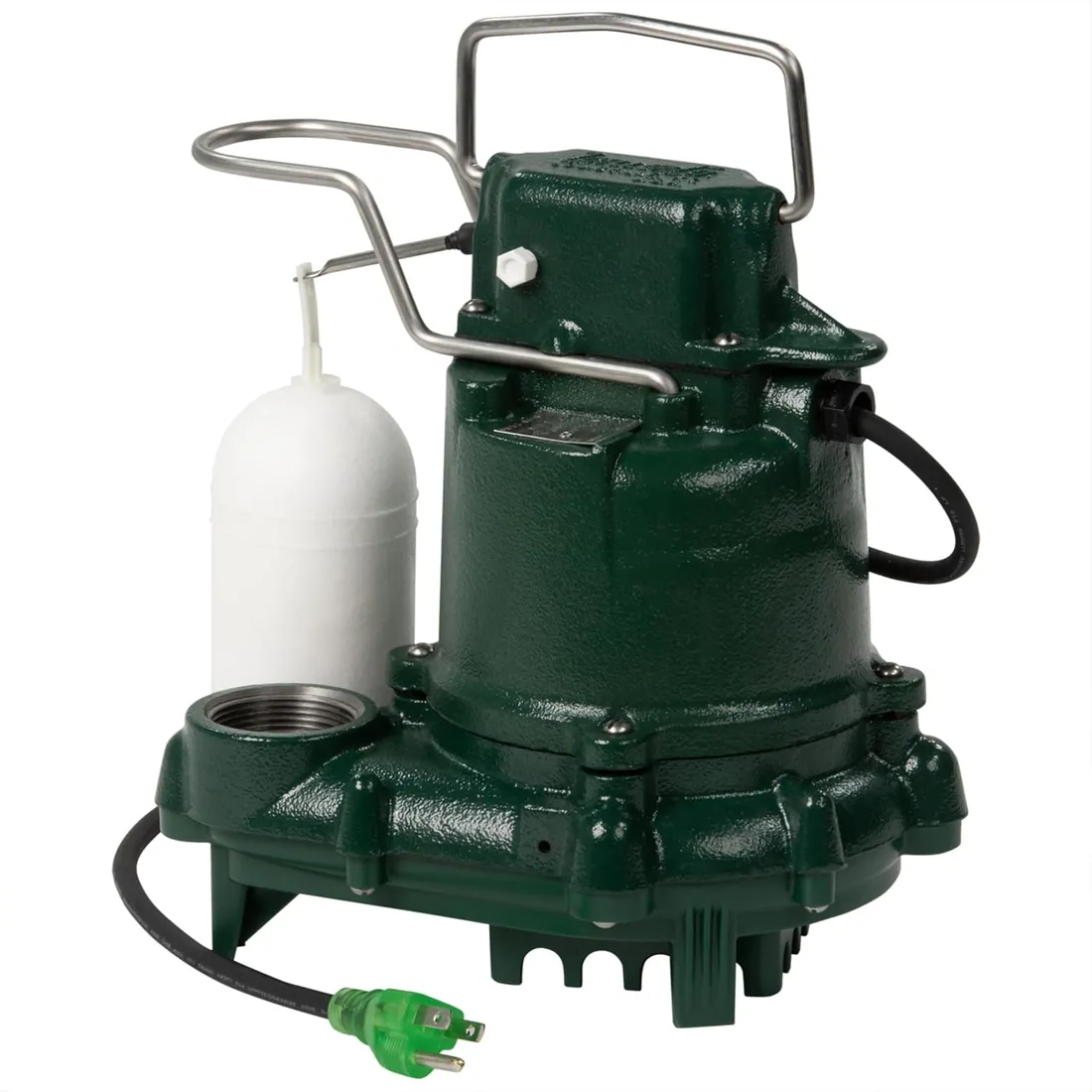
Compared with and featured in
Final verdict
Choose the 253 when the pit is wide enough for a swinging float and you value a longer, adjustable cycle plus a manual fallback. For a narrow basin the 257 is the better fit, and for a high lift the 1/2 HP 287 makes more sense.
Where to buy
Each button opens this exact model's listing. We may earn a commission on tracked links; it never changes what we publish. Disclosure
Questions buyers ask
What are the factory switch levels on the Liberty 253?
Liberty's current installation manual, revision R, lists the 251 and 253 as turning on at 11 in and off at 4 in. The 253's float can be tethered to raise or lower the start point, but the off level must stay at 4 in or higher so the motor stays submerged.
What does the piggyback plug do?
The float switch cord ends in a plug with a socket on its back. The pump cord plugs into that socket, so the switch controls power. If the switch fails you can unplug it and plug the pump straight into the wall for temporary manual pumping.
Is the 253 the same pump as the 257?
The pump end, motor, cast iron body and 1/3 HP rating are shared across the 250-Series. The difference is the switch: the 253 uses a tethered wide-angle float on a piggyback plug, while the 257 uses a vertical magnetic float with fixed levels.
Can the 253 run on 230 volts?
Yes, as a different model. The 253HV is the 230 V version, drawing 2.6 A instead of 5.2 A, and it is offered with the standard 10 ft cord or the longer 25 ft and 35 ft cords. Order the HV model rather than rewiring a 115 V pump.