An upflush toilet is a rear-outlet toilet connected to a macerating pump that sits behind it on the floor. When you flush, blades grind the waste and a small pump pushes it through narrow pipe up to the main drain. It avoids breaking concrete and can take a sink and shower too, but it is noisier than a gravity toilet, needs power, and is fussy about what goes down it.
How a macerating toilet works
A macerating system has three parts: a toilet with a rear outlet, a sealed tank behind it holding a motor with cutting blades, and a small discharge pipe. Waste flows into the tank, a float or pressure switch senses the rising level, and the motor spins up. Blades reduce the solids to slurry, and the pump sends it up and along to a soil stack or drain. Grey water from a sink or shower can enter through extra inlets on the side of the unit.
Zoeller, which sells its own Qwik Jon upflush systems, notes they need a toilet with a rear spigot outlet. Its float, properly mounted, starts the pump at about 4 to 4.5 in and stops it before 3 in. Zoeller also says its units carry national code approval through IAPMO.
What a macerator can handle
Makers set limits on lift, distance and fixtures. Saniflo's listing for the Saniplus says it handles a full bathroom with black and grey water, pumping up to 15 ft vertically or 150 ft horizontally. VEVOR lists its FLO900 at 48 GPM with a 40 ft lift and its FLO500 at 29 GPM with a 26 ft lift, each with four inlets for other fixtures. Zoeller says either Qwik Jon unit can serve one bathroom with a toilet, lavatory and tub or shower, but not a washing machine.
Read those figures as maximums. Every foot of lift reduces how far the unit can push horizontally, so check the maker's chart for your exact layout before buying.
| Unit | Lift | Other figures | Source type |
|---|---|---|---|
| Saniflo Saniplus | Up to 15 ft | Up to 150 ft horizontal | Saved listing |
| VEVOR FLO900 | 40 ft | 48 GPM; 4 inlets | Saved listing |
| VEVOR FLO500 | 26 ft | 29 GPM; 4 inlets | Saved listing |
| Saniflo Sanishower (grey water only) | 12 ft | 0.2 HP | Saved listing |
Figures: SANIFLO Saniplus Amazon listing; VEVOR FLO900 macerator Amazon listing; VEVOR FLO500 macerator Amazon listing; SANIFLO Sanishower Amazon listing.
Pros and cons
The main advantage is installation. No concrete is cut, so a bathroom can go into a basement, garage or attic in a fraction of the time an ejector basin takes, and the discharge pipe is small enough to run inside a wall. The unit also sits above the floor where it can be reached for service.
The drawbacks are real. The motor is audible each flush, the unit needs a power outlet nearby, and it fails if the power is out. Wipes, sanitary products, dental floss and grease jam the blades. Macerators also tend to need more service over the years than a basement ejector with a 2 in solids pump. For a guest bathroom used now and then, those trade-offs are usually acceptable; for a busy family bathroom, a sewage ejector system is often the better investment.
Macerating toilet vs composting toilet
A composting toilet needs no plumbing connection at all: waste is kept and broken down in the unit and emptied periodically. That makes it useful where there is no drain or sewer within reach, such as cabins and outbuildings. A macerating toilet, by contrast, flushes like a normal toilet and sends waste to the house drain, so it behaves like any other bathroom once installed.
If there is a drain line within the unit's lift and distance limits, a macerator gives a conventional bathroom. If there is none, a composting toilet may be the only practical option, subject to local health rules.
Macerating toilet vs sewage ejector
A sewage ejector system puts a basin and pump under the floor. Fixtures drain into it by gravity, and a pump that passes 2 in solids lifts the waste. It is quieter, handles more fixtures, takes a standard toilet and tolerates more abuse, but it requires digging. Liberty's P382LE51 is a complete example.
Choose a macerator when the floor must stay intact, the bathroom is lightly used, or the space is above the drain line. Choose an ejector for a main basement bathroom in a finished space. The basement bathroom pump guide compares all the options.
Living with a macerating toilet
Flush only toilet paper and waste. Keep a sign in the bathroom for guests. Use the descaler the maker recommends in hard water areas, because scale builds up on the blades and switch. If the unit runs but leaves waste behind, Zoeller says the float is out of adjustment and should be moved higher on the discharge pipe; the same fix applies when the pump will not shut off.
Fit a high water alarm where the maker offers one. Zoeller sells a Qwik Alarm for its Premier model where a separate vent is used, and says its sealed units should produce no odour when installed per the instructions. The Saniflo Saniplus and VEVOR FLO900 are two units in the catalog.
- Flush only toilet paper and human waste.
- Descale the unit on the maker's schedule in hard water.
- Check the float position if the pump short runs or will not stop.
- Keep the power outlet and cord dry and accessible.
- Add a high water alarm where available.
Common mistakes
- Flushing wipes, which jam the blades even when sold as flushable.
- Connecting a washing machine to a unit not rated for it.
- Ignoring the lift and distance chart for your exact layout.
- Using a standard floor-outlet toilet instead of a rear-outlet one.
- Choosing a macerator for a heavily used main bathroom.
Products that fit
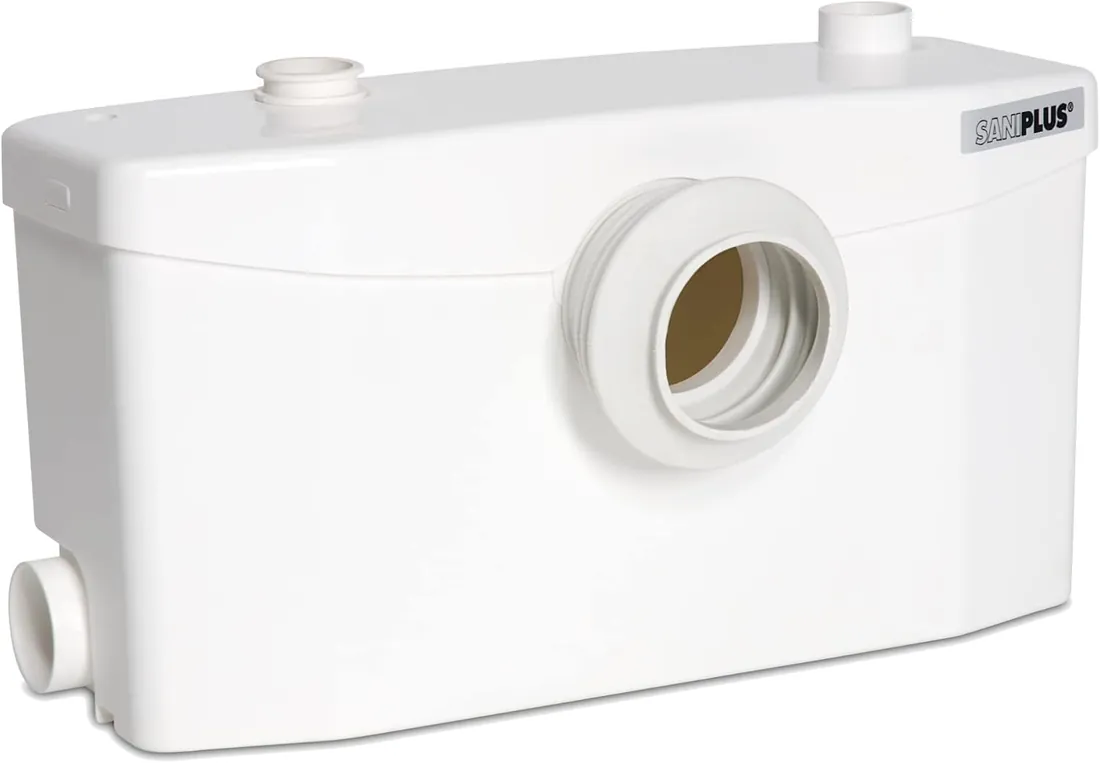
Saniflo Saniplus Macerating Pump
Macerating unit sold for a full bathroom with toilet, sink and tub or shower.
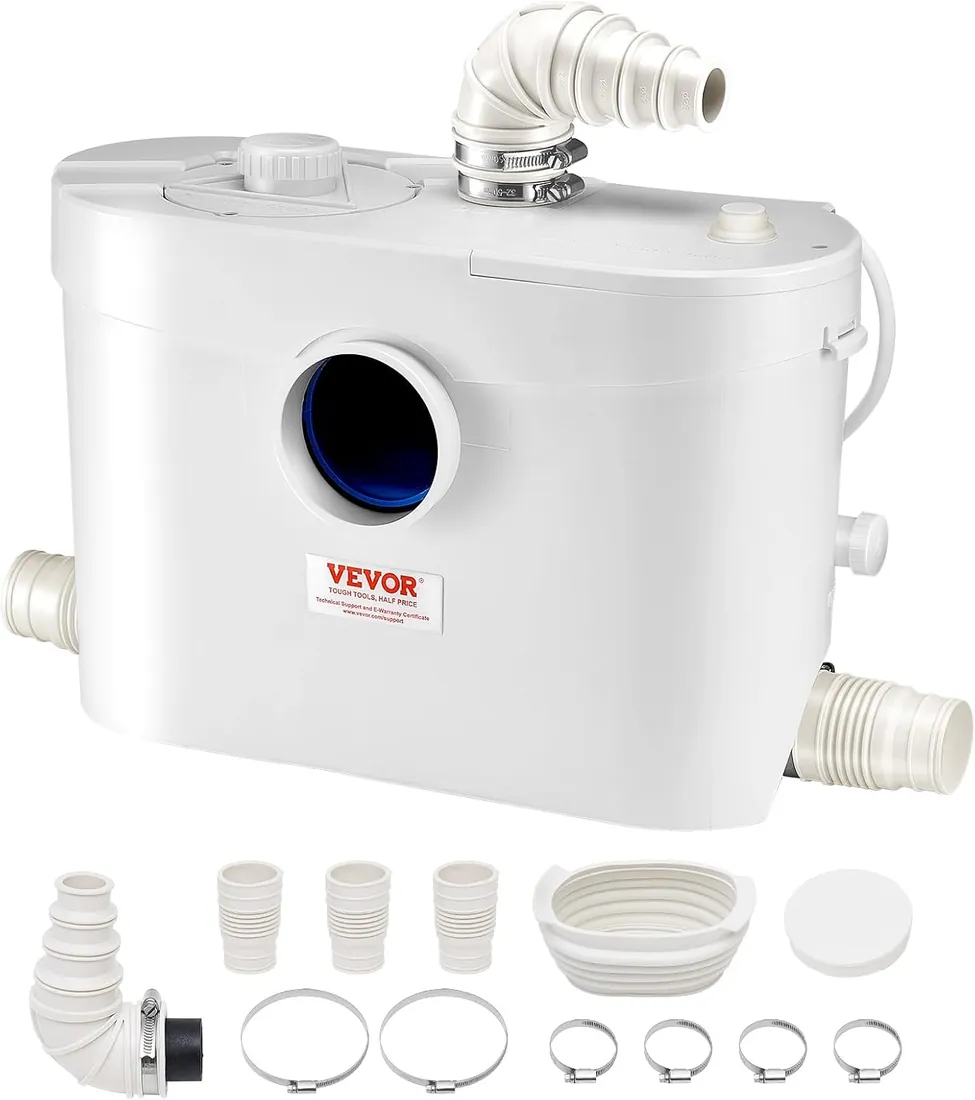
VEVOR FLO900 Macerator Pump
Macerator with four inlets and a listed 40 ft lift.
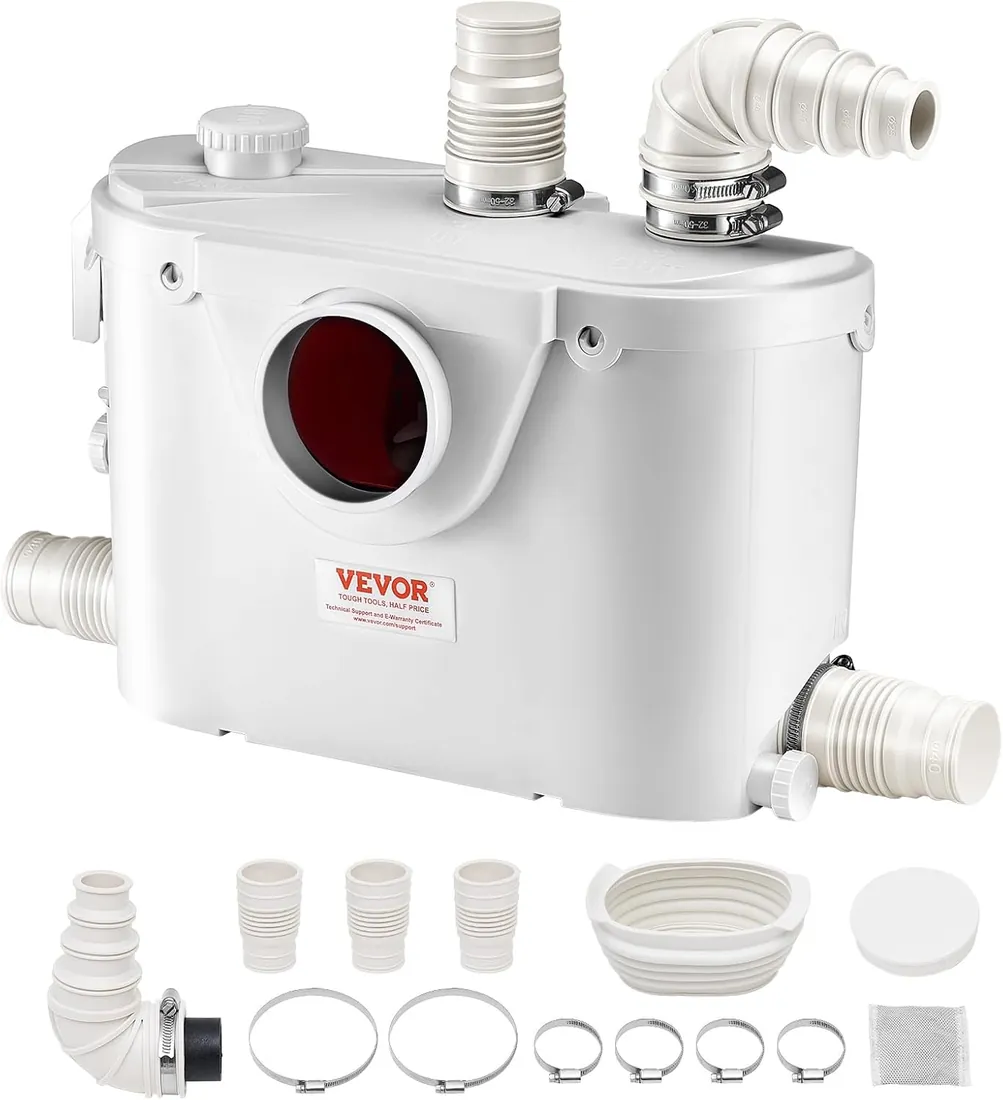
VEVOR FLO500 Macerator Pump
Smaller macerator with four inlets and a listed 26 ft lift.
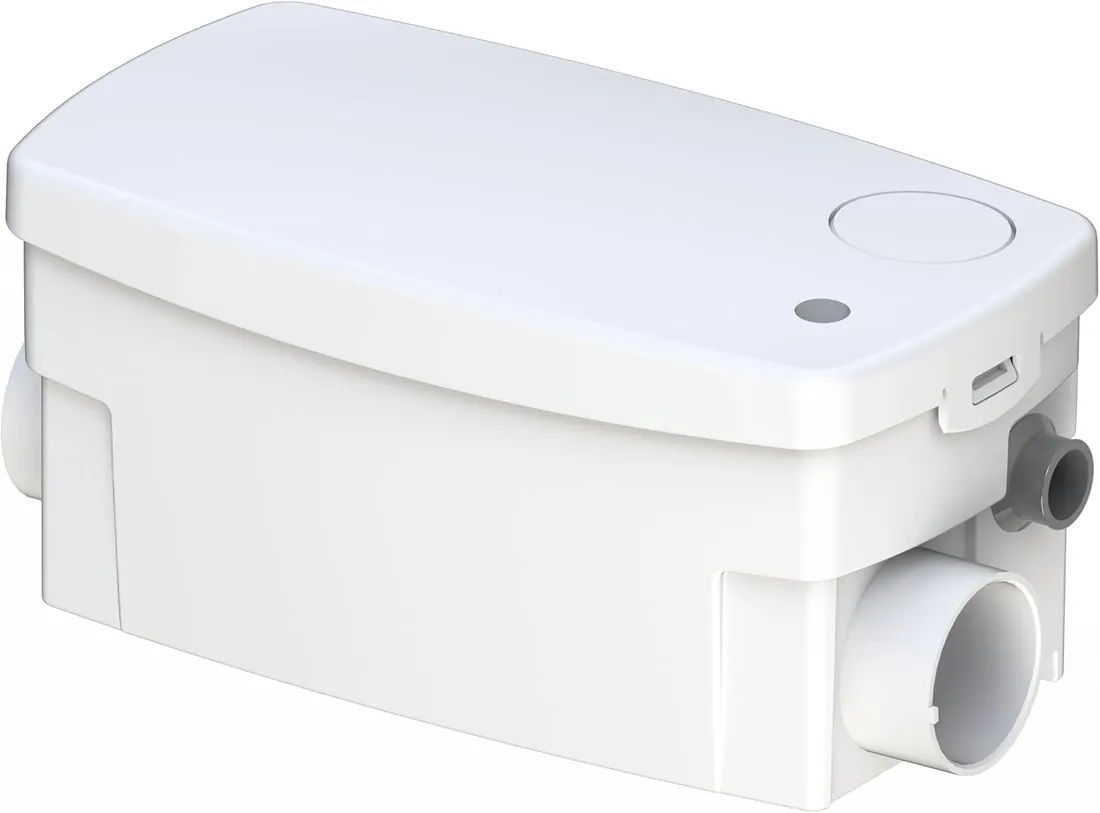
Saniflo Sanishower Gray Water Pump
Grey water pump for showers and sinks with no toilet.
Questions readers ask
What is an upflush toilet?
A toilet connected to a macerating pump that grinds waste and pumps it up to a drain line. It lets you add a bathroom below the sewer or where no floor drain exists, without breaking concrete.
Are macerating toilets reliable?
They work well when used as designed: only toilet paper and waste, regular descaling and proper venting. They are less forgiving than a sewage ejector with a 2 in solids pump, so they suit lighter use.
Can a shower drain into a macerating toilet?
Usually yes, through a side inlet, if the maker allows it. Zoeller's Qwik Jon serves a toilet, lavatory and tub or shower. A washing machine is a different matter; Zoeller says not to connect one.
Do upflush toilets smell?
They should not when installed and vented correctly. Zoeller says its sealed units produce no odour when installed per the instructions. A smell usually points to a venting or seal problem.