A sump pump moves clear groundwater only. An effluent pump moves septic tank liquid with small solids, typically up to 3/4 in. A sewage ejector passes whole solids, commonly 2 in, through a 2 in discharge. A grinder pump cuts sewage into slurry so it can be pushed through smaller pipe, farther and higher, as on Liberty's ProVore PRG range.
The four types at a glance
The quickest way to tell the types apart is the solids rating, the discharge size and the basin they sit in. The table uses figures from maker documents for representative pumps. A sump pump such as the Wayne CDU790 is designed for clear water only, and Wayne's manual forbids using it for raw sewage, grey water or anything that is not clear ground water.
Price and running cost rise in the same order as the table, and so does the amount of care each one needs. Picking a heavier type than the job requires wastes money; picking a lighter one leads to clogs, burned motors and a basin that backs up into the house.
| Type | Example | Solids | Discharge | Basin |
|---|---|---|---|---|
| Sump (clear water) | Zoeller M53 | 1/2 in | 1-1/2 in NPT | Sump pit |
| Effluent | Zoeller 152 and 153 | 3/4 in | Varies by model | Septic dosing chamber |
| Sewage ejector | Zoeller M267 | 2 in | 2 in NPT | 18 in x 30 in simplex |
| Sewage ejector | Wayne RPP50 | 2 in | 2 in NPT | 18 in or larger |
| Grinder | Liberty PRG-Series | Ground to slurry | Can reduce to 1-1/4 in | 18 in x 24 in minimum |
Figures: Zoeller technical data sheet FM2778, Mighty-Mate series; Zoeller installation instructions FM2676; Zoeller technical data sheet FM2789, Model 267; Wayne RPP50 cast iron sewage and effluent pump sell sheet; Liberty Pumps installation manual 2399000, PRG-Series grinder pumps.
Sump pumps and effluent pumps
Sump pumps and effluent pumps are close relatives, and some models are sold for both. Zoeller's FM2676 groups its 53, 57 and 98 series under effluent, sump and dewatering. The difference is the setting. Effluent comes from the second chamber of a septic tank, after the solids have settled, and goes to a drain field or mound. Zoeller recommends that effluent systems pass no solids larger than 3/4 in, so they do not clog the field.
Effluent pumps also run differently. Liberty asks for effluent pumps to stay fully under water to prevent corrosion, and advises against its short-cycle vertical-float sump models for effluent work. Zoeller recommends non-automatic pumps with external level controls for septic effluent. Neither type is meant for raw sewage; Zoeller states plainly that dewatering and effluent sump pumps are not designed for pits handling it.
Sewage ejectors: whole solids, larger pipe
A sewage ejector takes waste from a basement toilet, shower and sink that sit below the sewer line and lifts it to gravity drainage. It passes solids whole, so the impeller and outlet are large. The Zoeller M267 is a 1/2 HP pump rated for 2 in spherical solids with a 2 in NPT discharge and a simplex basin of at least 18 in x 30 in. Wayne's RPP50 also passes 2 in solids through a 2 in outlet, using a tether switch that turns on at 16 in and off at 7.5 in.
Liberty's sewage systems hold to the same rule: on its Pro-Series non-grinder systems, the discharge must not be smaller than 2 in. Sewage basins are sealed and vented, and Liberty notes that the plumbing code requires sewage systems to have an audio and visual alarm.
Grinder pumps: slurry through small pipe
A grinder pump has hardened cutters at its intake that shred solids and fibrous matter into small particles. Because the output is a slurry, it can be pumped through narrow pipe over long distances or to a pressurized sewer main. Liberty's PRG-Series 1 HP grinders use a 2 in outlet that can be reduced to 1-1/4 in, but Liberty warns not to increase the pipe above 2 in on its grinder systems, because flow would fall too low to carry solids.
Grinders cost more to run and maintain, and the cutters need checking: Liberty asks installers to turn the cutter by hand before first power to make sure it spins freely. Use one when the sewer is far away, uphill or pressurized; for an ordinary basement bathroom close to a gravity line, a sewage ejector is the usual choice. The Aquastrong SEP100CA is a grinder in our catalog.
Choosing the right one
Match the pump to what enters the basin. Groundwater from drain tile needs a sump pump. Septic effluent headed to a drain field needs an effluent pump with external level controls. Toilet waste needs a sewage ejector or a grinder, and the distance and height to the sewer decide which. Zoeller notes that sewage pumps can be used for effluent where code allows, but never the reverse.
For a ready-made basement bathroom package, a simplex system such as the Liberty P382LE51 includes basin, cover, float tree and pump. The sewage ejector pump list compares more options.
- Clear groundwater from drain tile only: a sump pump.
- Septic tank liquid to a drain field: effluent pump.
- Toilet waste to a nearby gravity sewer: sewage ejector.
- Toilet waste far, uphill or to a pressure main: grinder pump.
Common mistakes
- Using a sump pump in a basin that receives toilet or laundry waste.
- Sending solids larger than 3/4 in to a septic drain field.
- Reducing a sewage ejector's 2 in discharge to smaller pipe.
- Upsizing a grinder's discharge above 2 in, so solids settle in the line.
- Leaving a sewage basin without the alarm the plumbing code calls for.
Products that fit
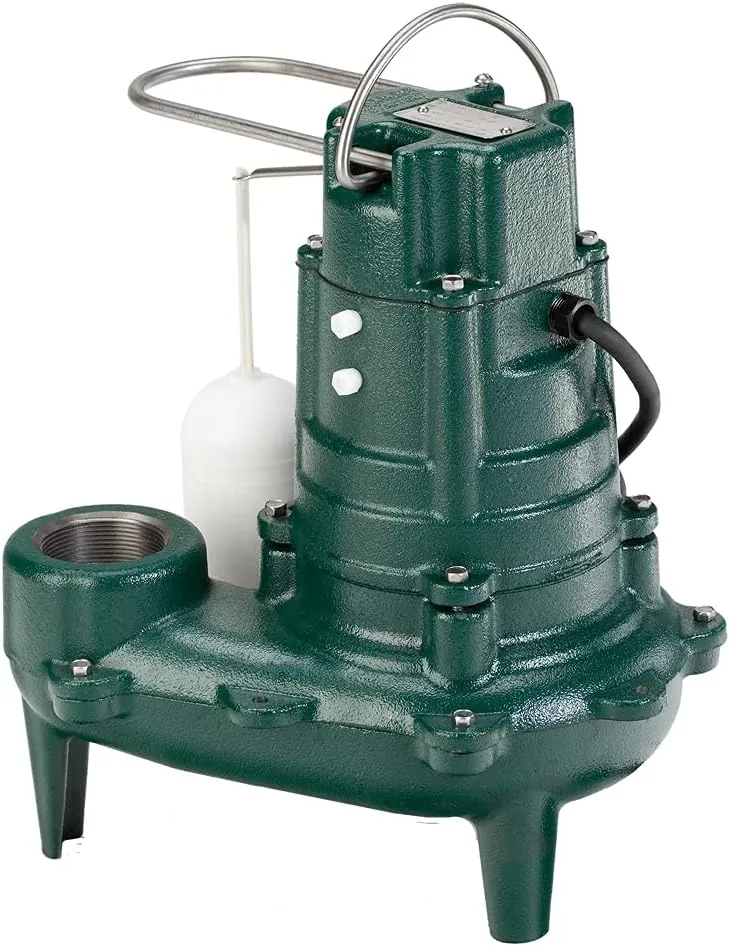
Zoeller M267 Waste-Mate Sewage Pump
Cast iron 1/2 HP sewage ejector passing 2 in solids through a 2 in outlet.
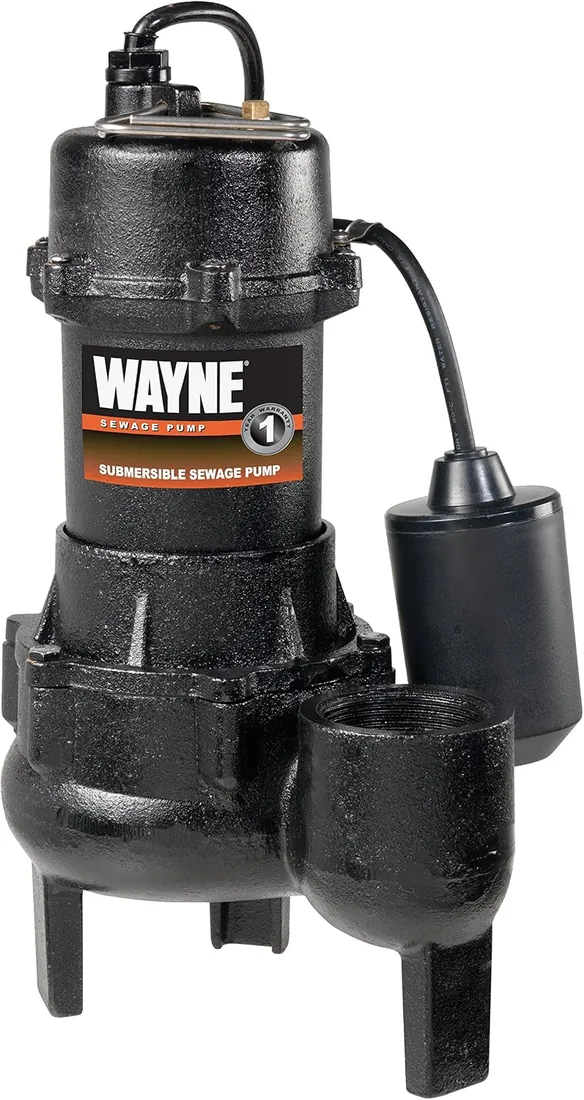
Wayne RPP50 Sewage Pump
Wayne 1/2 HP cast iron sewage and effluent pump with a tether switch.
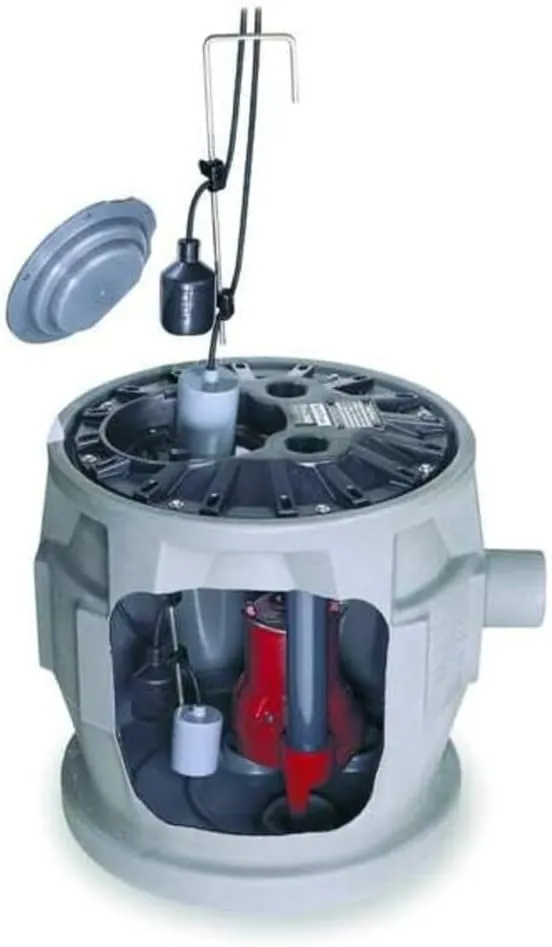
Liberty Pumps P382LE51 Pro380 Simplex Sewage System
Complete sewage basin system with a float tree and an LE51 pump.
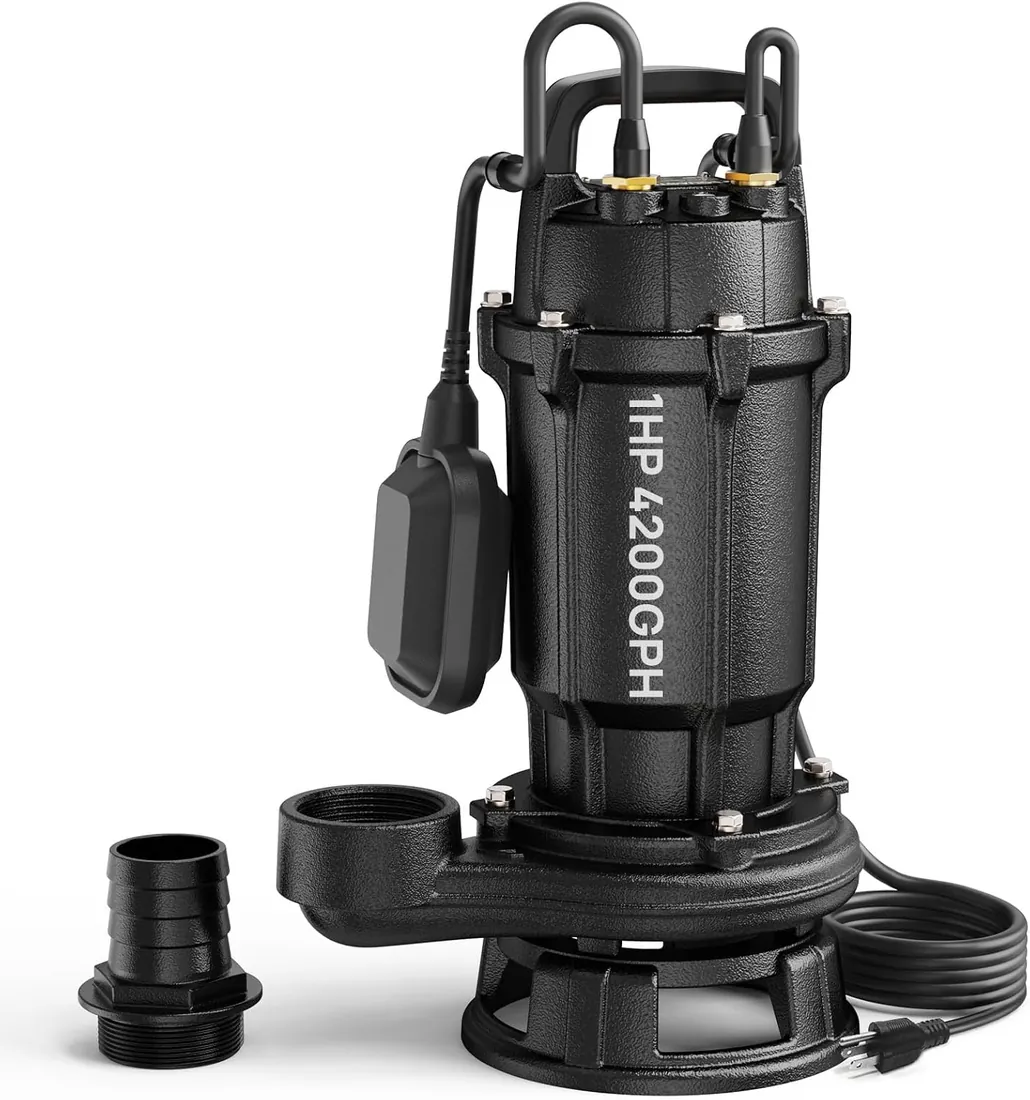
Aquastrong SEP100CA 1 HP Sewage Grinder Pump
One-horsepower grinder pump for long, uphill or pressurized sewage runs.
Questions readers ask
Can a sump pump be used as a sewage pump?
No. Wayne, Zoeller and Liberty all say their sump and dewatering pumps are for clear water and not for raw sewage. A sewage ejector or grinder is needed for toilet waste.
What is the difference between an effluent pump and a sewage pump?
An effluent pump moves liquid from a septic tank after solids settle, with small solids around 3/4 in at most. A sewage pump moves raw waste with solids up to about 2 in. Sewage pumps can serve effluent duty where code allows.
Do I need a grinder pump or an ejector pump?
If the sewer line is close and gravity flow is available once the waste is lifted, a sewage ejector is usual. If the waste must travel a long way, uphill or into a pressurized main, a grinder is the better fit.
What size discharge does a sewage ejector need?
Usually 2 in. Liberty states that its non-grinder sewage systems must not use a discharge smaller than 2 in, while its grinder systems may be reduced to 1-1/4 in because the waste is already ground fine.