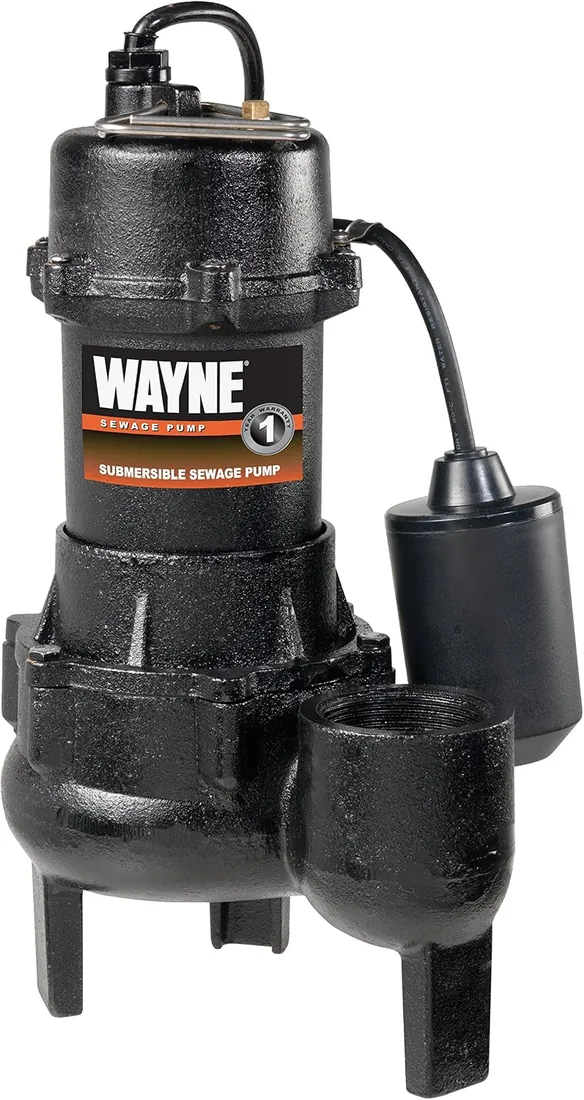
Quick verdict
The RPP50 is a straightforward replacement for a worn ejector in a standard 18 in basin with a modest lift. It is cast iron where it counts, passes 2 in solids and plugs in through a piggyback switch. The trade-offs are a one-year warranty and a tether switch Wayne wants replaced every two years, and its table shows no flow at 20 ft.
Who it fits, and who should skip it
A good fit if
- You are swapping a failed sewage pump in a basin at least 18 in wide and 24 in deep.
- Your lift stays near 10 ft or less, where Wayne lists 3,240 GPH.
- You like a switch you can bypass by unplugging the piggyback cord.
Look elsewhere if
- The line climbs 15 ft or more; flow is down to 1,500 GPH there.
- The pump would sit outdoors; Wayne rates it for indoor use only.
Specifications
Motor
| Horsepower | 1/2 HP |
|---|---|
| Voltage | 120 V, 60 Hz, single phase |
| Motor type | PSC, dielectric oil-filled |
| Circuit | 15 A minimum |
Figures: Wayne sewage pump manual 610001W-001 G; Wayne RPP50 sell sheet.
Performance
| Max flow | 6,200 GPH at 0 ft |
|---|---|
| Flow at 5 ft | 4,800 GPH |
| Flow at 10 ft | 3,240 GPH |
| Flow at 15 ft | 1,500 GPH |
| Flow at 20 ft | None listed |
Figures: Wayne sewage pump manual 610001W-001 G.
Switch
| Switch type | Piggyback tether float, not adjustable |
|---|---|
| On / off levels | On at about 16 in, off at about 7.5 in |
Figures: Wayne sewage pump manual 610001W-001 G; Wayne RPP50 sell sheet.
Build
| Discharge | 2 in NPT |
|---|---|
| Solids handling | 2 in, bottom suction, vortex impeller |
| Construction | Cast iron motor housing and volute; engineered thermoplastic impeller |
| Power cord | 8 ft |
| Size | 14 in high, 12 in base (manual); sell sheet lists 13 in high |
| Weight | 26 lb (sell sheet) |
| Minimum basin | 18 in diameter, 24 in deep |
| Warranty | 1-year limited |
Figures: Wayne sewage pump manual 610001W-001 G; Wayne RPP50 sell sheet.
Versions
Wayne sells the RPP50 in a single 120 V automatic version; the tether switch is also sold on its own as a repair part.
| Version | Part number | What differs | Listing |
|---|---|---|---|
| RPP50, piggyback tether float, 120 V | 58117-WYN2 | 1/2 HP, 2 in NPT discharge, 8 ft cord | View on Amazon |
| Replacement tether switch | 56835-002 | Fits the RPP50, SEL50 and WCS50T | Not linked |
Figures: Wayne RPP50 sell sheet; Wayne sewage pump manual 610001W-001 G; Amazon listing B0007CTMRS.
Installation and setup
Wayne calls for a basin at least 18 in in diameter and 24 in deep, cleaned of debris. Stand the pump on a solid, level surface; a brick or block underneath is fine, but never clay, earth, gravel or sand. Turn it so the tether float hangs away from the inlet and has at least 1 in of clearance from the wall.
Use rigid pipe, not flexible hose, so the pump cannot wander and foul its switch. Keep the 2 in discharge full size, put a union just above the basin, then the required check valve above the union, and add a gate or ball valve if code asks for one. A vent pipe is required to carry gases and odors away.
Zip-tie the power cord and the float cable to the discharge pipe. Plug the piggyback cord into a GFCI outlet, then the pump cord into the back of it, with no extension cord or surge strip. Seal the basin with a gasketed cover.
Switch and sizing notes
The tether float starts the pump at roughly 16 in of liquid and stops it near 7.5 in. Wayne says the tether is not adjustable: shortening or lengthening it changes the duty and can void the warranty. Before closing the lid, fill the basin and watch several complete cycles to be sure the float swings without catching.
To size the pump, total the vertical lift and the friction in the pipe. Wayne's table reads 4,800 GPH at 5 ft, 3,240 GPH at 10 ft and 1,500 GPH at 15 ft, and leaves the 20 ft column empty, so plan to stay well under 15 ft of total head. A retail listing once put the maximum head at 10 ft, which the maker's own table contradicts.
Ownership and maintenance
Wayne asks for an inspection three to four times a year: confirm the pump still stands upright, clear debris from the float, reset the GFCI if damp conditions have tripped it, and pour in a bucket of water to watch a cycle. Skipping this routine can void the warranty.
Replace the tether switch every two years as preventive maintenance, using part 56835-002. Coverage is one year from purchase for the original buyer, and you need a return authorization number from Wayne before sending anything back.
Pros and cons
Pros
- Cast iron motor housing and volute.
- Passes 2 in solids through a 2 in NPT discharge.
- Piggyback plug allows manual running.
- Published flow at four heights in the manual.
Cons
- One-year warranty, shorter than many rivals.
- Tether switch due for replacement every two years.
- No published flow at 20 ft of lift.
Alternatives worth comparing
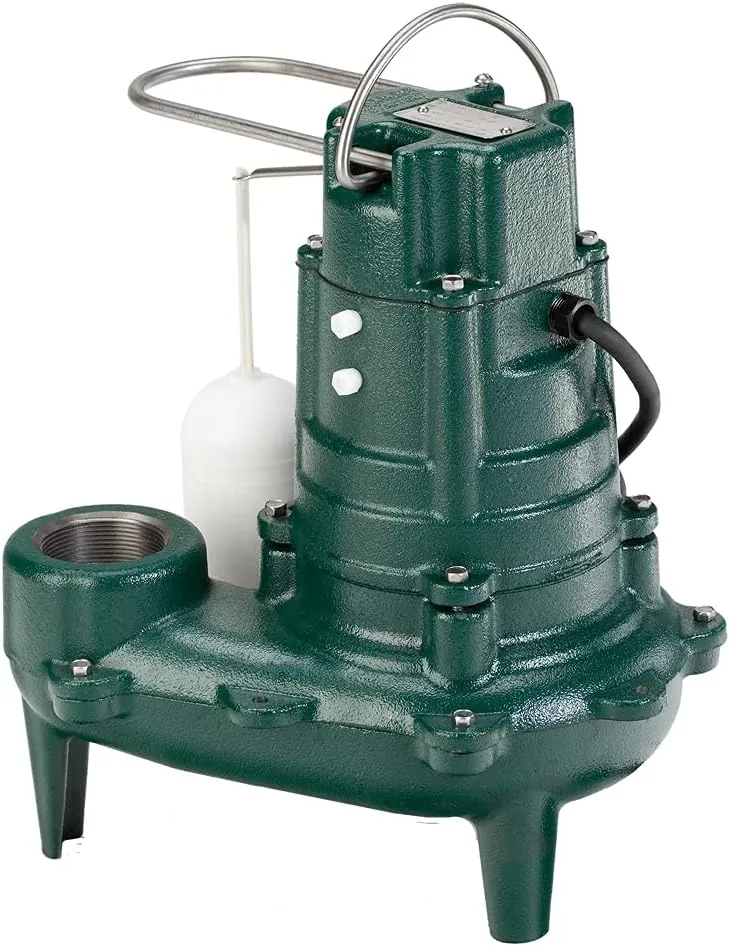
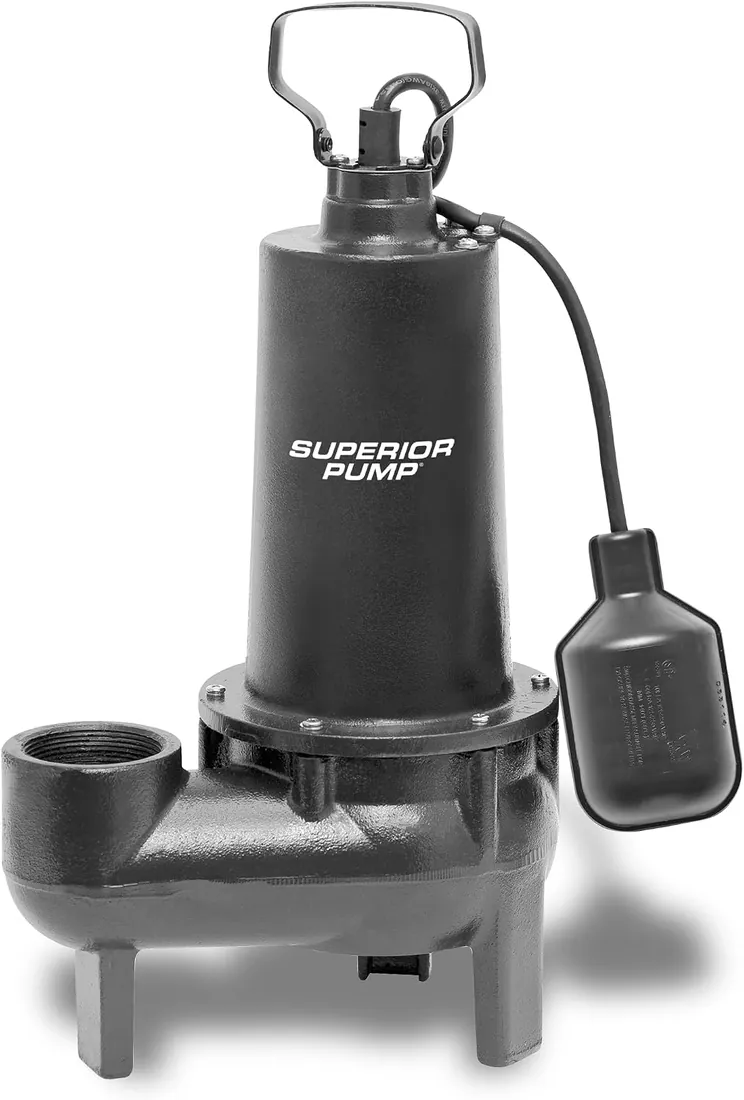
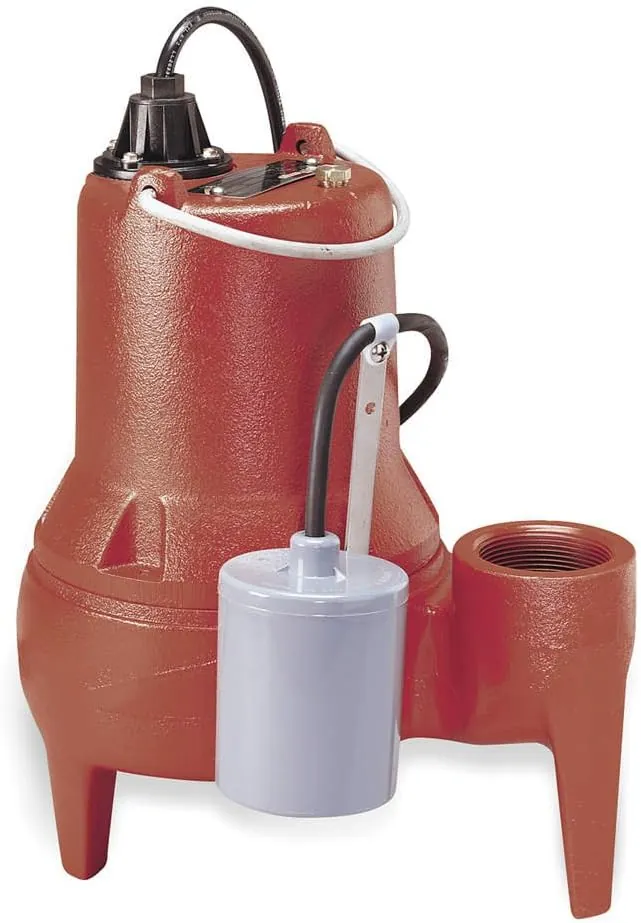
Compared with and featured in
Final verdict
The RPP50 is a no-frills cast iron sewage pump that does the job for short basement lifts. Budget for a new tether switch every two years, keep total head below about 15 ft, and choose a longer-warranty pump if you would rather not service it as often.
Where to buy
Each button opens this exact model's listing. We may earn a commission on tracked links; it never changes what we publish. Disclosure
Questions buyers ask
How high can the Wayne RPP50 pump sewage?
Wayne's manual lists 1,500 GPH at 15 ft of lift and leaves the 20 ft column blank, so treat 15 ft as the practical ceiling. At 10 ft the pump still moves 3,240 GPH, which suits most basement bathrooms draining to a sewer line one storey up.
Can I adjust the RPP50 float to run longer cycles?
Wayne says no. The tether float is not adjustable, and changing it can alter how the pump is applied, shorten its life and void the warranty. The factory points are about 16 in on and about 7.5 in off.
How often should the tether switch be replaced?
Wayne makes it routine maintenance to replace the tether switch every two years, using repair part 56835-002. Doing it on schedule lowers the chance of a switch failure flooding the basin, which is far costlier than the part.
Is the RPP50 suitable for an effluent pit?
Wayne markets it as a sewage and effluent pump and its manual covers both duties. Remember it is rated for indoor use only, so an outdoor septic dosing tank exposed to the weather is outside what the maker approves.