A sump pump moves clear groundwater. An effluent pump moves the settled liquid from a septic tank outlet chamber to a drain field, passing solids up to about 3/4 in. A sewage pump moves raw waste from toilets and drains and must pass 2 in solids through a 2 in discharge. Use the pump rated for the job; sump and effluent pumps clog on raw sewage.
Three pumps, three kinds of water
A sump pump keeps a basement dry by lifting groundwater out of a pit. Wayne's sump manual is blunt: its pumps are for clear water only and are not to be used for raw sewage or grey water. An effluent pump works after a septic tank has done its job. Solids settle in the tank, and the effluent pump, usually in a separate chamber or pump tank, sends the clarified liquid to a drain field, mound or treatment unit.
A sewage pump, often called a sewage ejector, handles everything a toilet, shower or washing machine sends down the drain, before any settling. That means the pump must pass solid waste without clogging, so makers rate sewage pumps to pass 2 in spheres and fit a 2 in discharge. Zoeller's M267, Liberty's LE51A, Wayne's RPP50 and Superior's 93501 all carry that 2 in rating.
Wayne also warns that its sump pumps are not designed for mud, sand, oil, chemicals or grey water, which rules them out of both septic and laundry duty. The safe habit is to read the application list on the data sheet before anything else: it tells you in one line whether a pump is meant for groundwater, effluent, sewage or some combination.
How the specs differ
The table puts typical maker figures side by side. Notice how often one pump is rated for two jobs. Liberty sells its 1/3 HP 253 and 257 as sump and effluent pumps with 1/2 in solids handling, and Zoeller's Mighty-Mate M53 data sheet calls it an effluent and dewatering pump. Zoeller's M267 and Wayne's RPP50 are sold for sewage and effluent. A pump rated for sewage can usually handle effluent, but not the other way round.
Discharge and basin size follow the solids. Sewage pumps need a sealed, vented basin of a minimum size; Zoeller lists 18 in by 30 in for a single M267, and Wayne asks for an 18 in or larger basin for the RPP50.
| Pump | Rated for | Solids | Discharge |
|---|---|---|---|
| Zoeller M53 | Effluent and dewatering | 1/2 in | 1-1/2 in NPT |
| Liberty 253 | Sump and effluent | 1/2 in | 1-1/2 in |
| Liberty 287 | Sump and effluent | 3/4 in | 1-1/2 in |
| Zoeller M267 | Sewage, effluent, dewatering | 2 in | 2 in NPT |
| Liberty LE51A | Sewage | 2 in | 2 in FNPT |
| Wayne RPP50 | Sewage and effluent | 2 in | 2 in NPT |
Figures: Zoeller technical data sheet FM2778, Mighty-Mate series; Liberty Pumps 250-Series sales literature LLIT002500; Liberty Pumps 280-Series sales literature LLIT002000; Zoeller technical data sheet FM2789, Model 267; Liberty Pumps LE50-Series sales literature LLIT001500; Wayne RPP50 sell sheet.
Which pump a septic system needs
It depends on where the pump sits. If the house drains by gravity into the septic tank and the tank's outlet must be lifted up to a drain field, the pump in the dosing chamber is an effluent pump. If a basement bathroom sits below the sewer or septic inlet, the pump under that bathroom is a sewage pump, because it sees raw waste first.
Effluent pumps often run on a timer or float control set by the septic designer, who sizes them to the drain field's dose. That work belongs to a septic professional and local health rules. A cast iron effluent-rated pump such as the Liberty 253 or a dedicated 4 in well-style effluent pump like the Wassermann 4TMS are the usual choices in a pump tank.
Sump pump vs septic pump
A sump pump and a septic system should never be connected. Sump water is clean groundwater; sending it into a septic tank floods the tank, pushes solids out to the drain field and can ruin it. Discharge the sump outside, away from the septic field, and keep the septic pump on its own system.
Equally, do not use a sump pump in a sewage basin. Its smaller impeller passage clogs on waste, and Wayne voids the warranty on sump pumps used with raw sewage. If a pump will see anything from a toilet, choose a sewage pump such as the Zoeller M267.
Switches and sizing
Sewage pumps use wider switch ranges than sump pumps so each cycle moves a meaningful volume and solids are flushed through. Zoeller's automatic M267 switches on at 12 in and off at 4 in, Wayne's RPP50 tether float at 16 in and 7.5 in, and Superior's 93501 at 16 in and 8 in. Size by flow at your total head: Zoeller rates the M267 at 115 GPM at 5 ft with a 20.5 ft shut-off head, and Liberty gives the LE51A 118 GPM at 10 ft total dynamic head and 25 ft maximum head.
Sewage systems need a check valve and a vent, and Liberty notes the Uniform Plumbing Code calls for an audio and visual alarm on sewage systems. The sewage ejector pump list compares the main options.
Common mistakes
- Putting a sump pump in a sewage basin where it will clog on solids.
- Draining a sump pump into the septic tank.
- Assuming any effluent pump can handle raw sewage.
- Reducing a sewage pump discharge pipe below 2 in.
- Changing a septic dosing pump or timer without the system designer's settings.
Products that fit
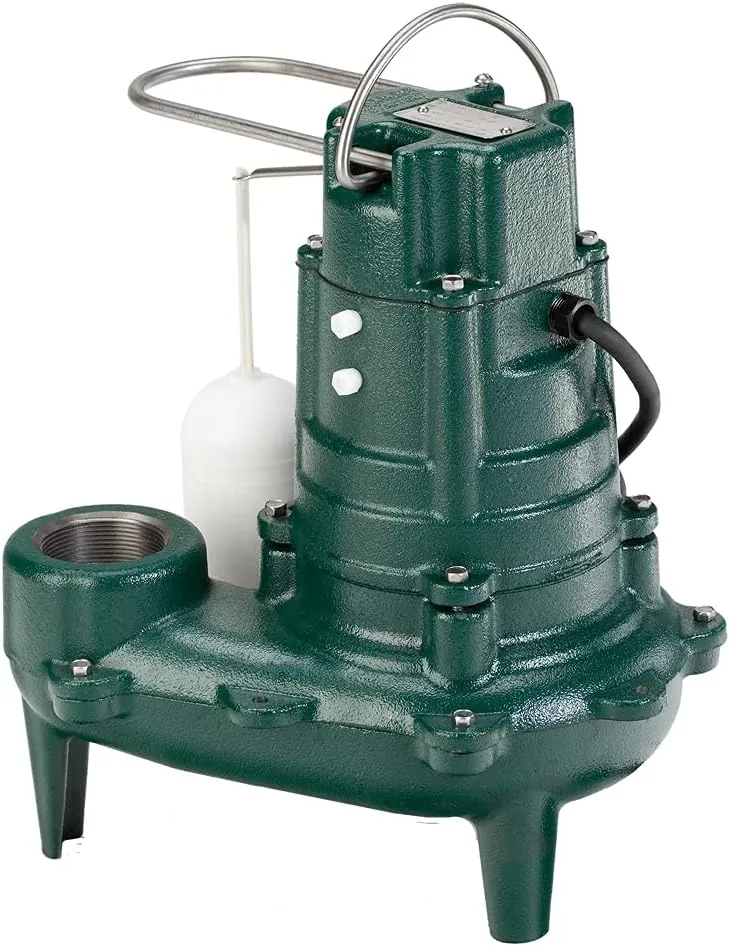
Zoeller M267 Waste-Mate Sewage Pump
Cast iron 1/2 HP pump rated for sewage, effluent and dewatering with 2 in solids.
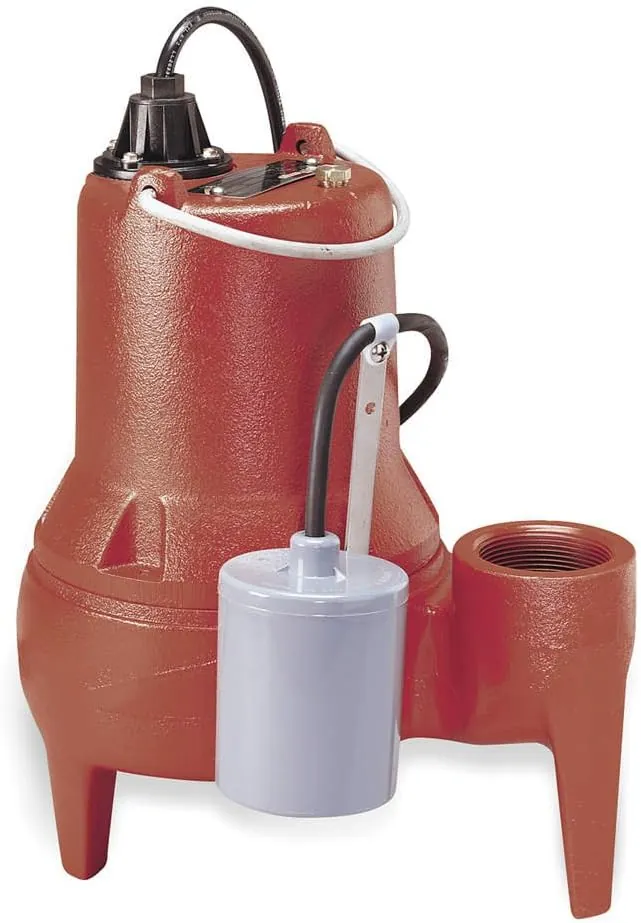
Liberty Pumps LE51A Sewage Pump
1/2 HP cast iron sewage pump with a wide-angle float and 2 in solids handling.
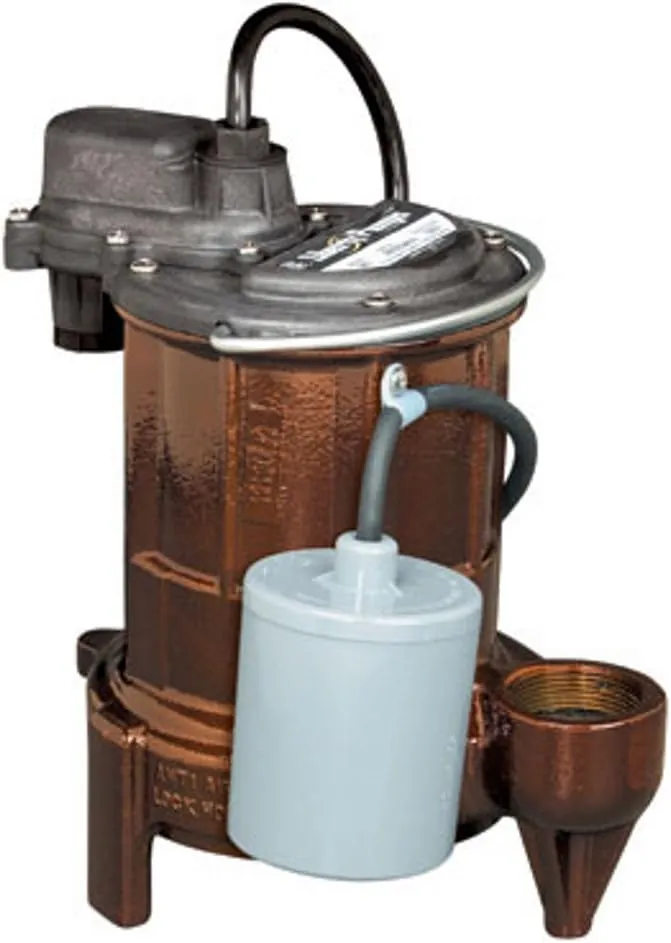
Liberty Pumps 253 Sump Pump
Cast iron 1/3 HP pump sold for sump and effluent duty.
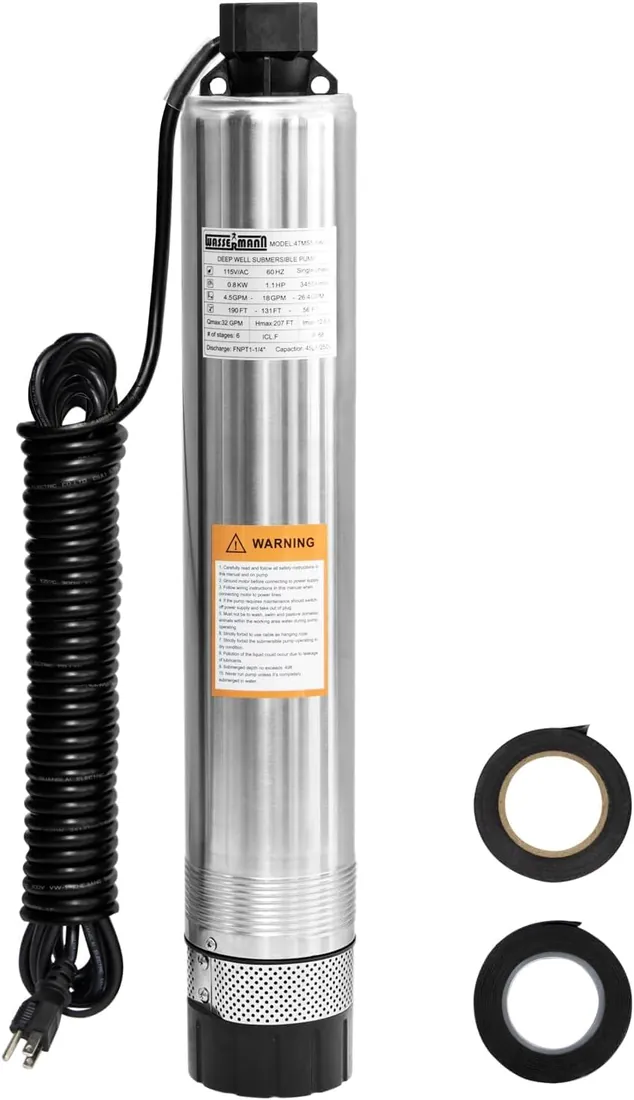
Wassermann 4TMS 1 HP Septic Effluent Pump
Slim 4 in style effluent pump made for septic pump tanks and dosing chambers.
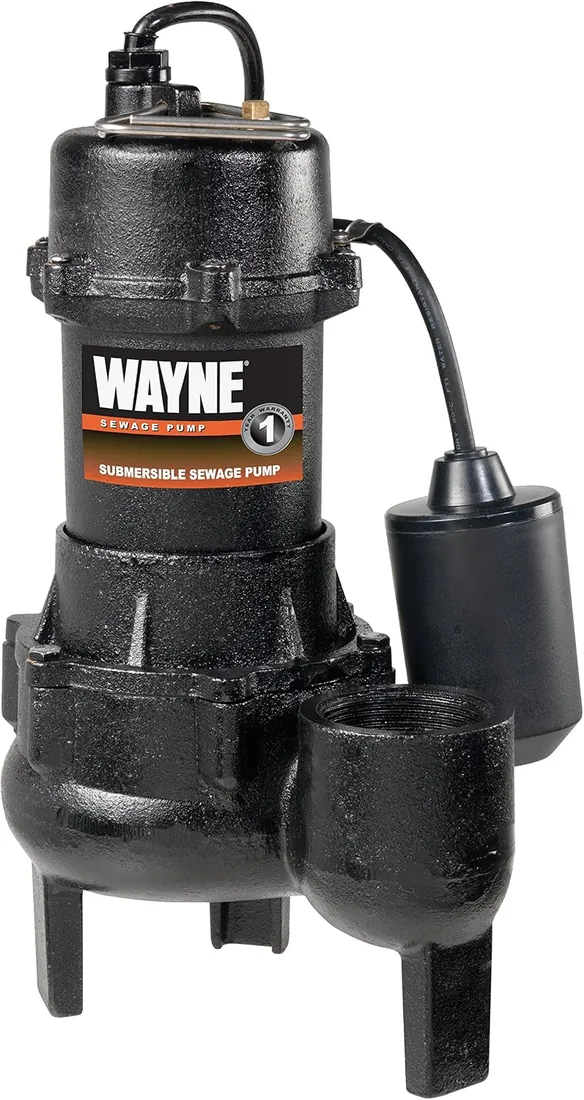
Wayne RPP50 Sewage Pump
Cast iron sewage and effluent pump for basins of 18 in or wider.
Questions readers ask
Can I use an effluent pump for sewage?
Only if the maker also rates it for sewage. Effluent pumps usually pass solids up to about 3/4 in, which is too small for raw waste. Sewage pumps pass 2 in solids, as Zoeller, Liberty and Wayne all specify.
Can a sewage pump be used as an effluent pump?
Often yes. Zoeller's M267 and Wayne's RPP50 are sold for both. Check the switch type and levels against the septic designer's dosing requirements before using one in a pump tank.
What size effluent pump do I need?
That comes from the septic system design: the dose volume, the lift to the drain field and the pipe length. Ask the septic designer or installer for the required flow and head, then match a pump's curve to it.
Is a septic pump the same as a sump pump?
No. A septic pump moves wastewater or effluent inside the septic system. A sump pump moves clean groundwater out of a basement. Keep the two systems completely separate. Never connect them.