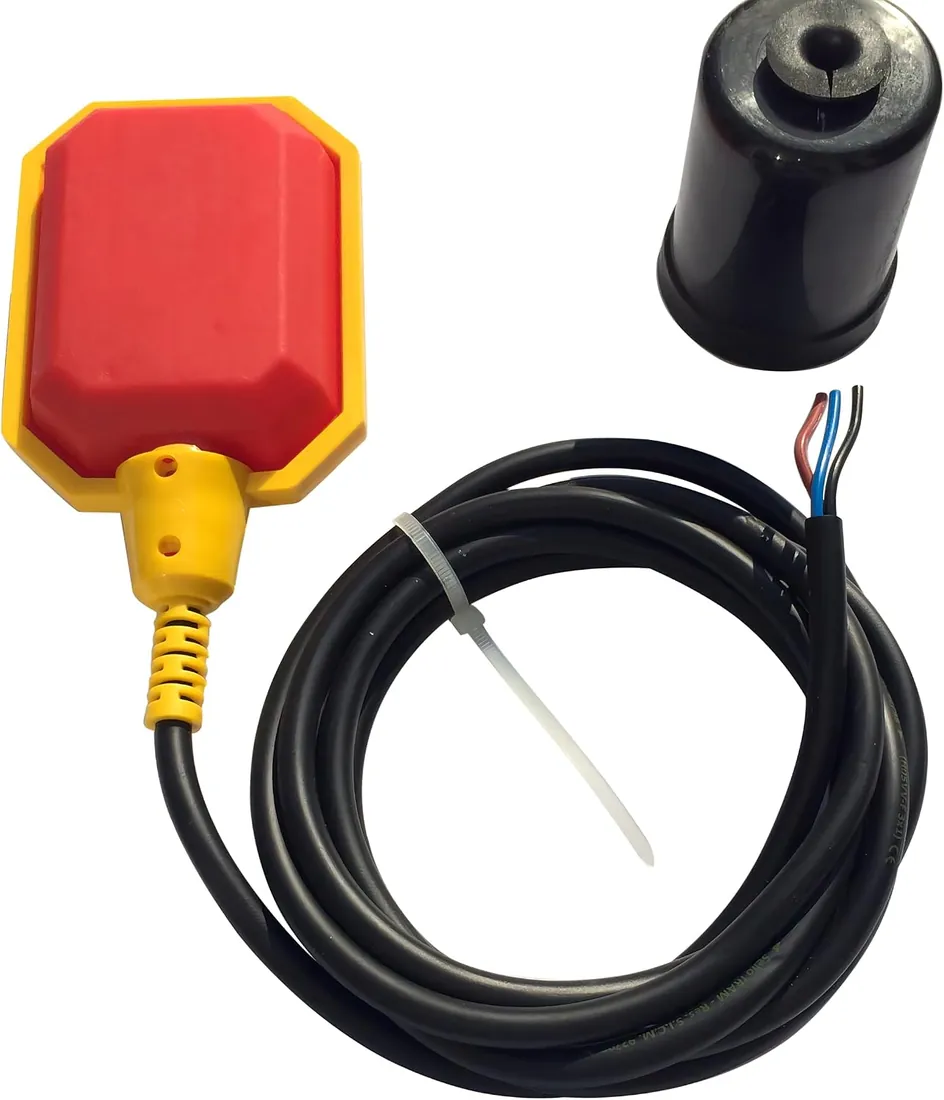
Quick verdict
This is a float for people who wire things: it has bare leads instead of a plug, and it can be connected to pump water out or to fill a tank. That flexibility suits control panels, cisterns and alarm circuits. Anyone wanting a plug-in replacement for a sump switch should buy a piggyback float instead.
Who it fits, and who should skip it
A good fit if
- You are wiring a control panel, junction box or alarm circuit.
- You need a float that can fill a tank as well as empty one.
- The pump draws up to 13 A.
Look elsewhere if
- You want to plug the pump straight into the switch.
- You are not comfortable making electrical connections.
Specifications
Electrical
| Switch type | Tethered float, wire lead, empty or fill |
|---|---|
| Rating | Up to 13 A or 1/2 HP |
| Voltage | 120 V on the listing; seller chart adds 240 VAC and 12 VDC |
| Switch element | Honeywell microswitch |
Figures: Amazon listing B0064BHEVM (Water Boss wire-lead float 2359-3).
Build
| Cable | 10 ft, PVC jacketed |
|---|---|
| Other cable lengths | 6, 16, 33 and 100 ft on the seller chart |
| Float body | Polypropylene, IP68 |
| Temperature range | 32 °F to 140 °F |
| In the box | Float switch, cable weight, user manual |
| Warranty | 5 years against manufacturer defects |
Figures: Amazon listing B0064BHEVM (Water Boss wire-lead float 2359-3).
Installation and setup
Decide first whether the float should empty or fill, since that sets which leads you connect; follow the wiring sheet in the box, and have an electrician do the work if the circuit is mains voltage. The supplied cable weight lets the float tilt around a fixed point, so you can hang it from a bracket instead of clamping it to a pipe. Set the weight height to choose the switching level, keep the float clear of pipes and walls, and run the pit or tank through a few cycles to confirm the pump starts and stops where you expect.
Compatibility
The 2359 suits pump control panels, alarm circuits, cisterns and water tanks, plus sump pits where the pump is hard-wired. The listing rates it to 13 A or 1/2 HP; larger pumps should run through a contactor in a panel. The seller places this float in the clear water to septic effluent range, so pick a sewage-rated float for raw sewage. For plug-in sump use, the piggyback version of the same float avoids any wiring. The switch types guide explains wire-lead and piggyback styles.
Ownership and maintenance
Once wired, the float needs little more than a clear swing path and an occasional rinse. Every few months, lift the float by hand or raise the water to watch the circuit respond. Keep the box and the wiring sheet, because the empty and fill connections differ and the next person to work on it will need to know which one you used.
Pros and cons
Pros
- Wires to empty or to fill.
- Honeywell microswitch inside a sealed float.
- Long warranty for a float switch.
Cons
- Needs wiring; there is no plug.
- Seller copy is the only published data.
Alternatives worth comparing
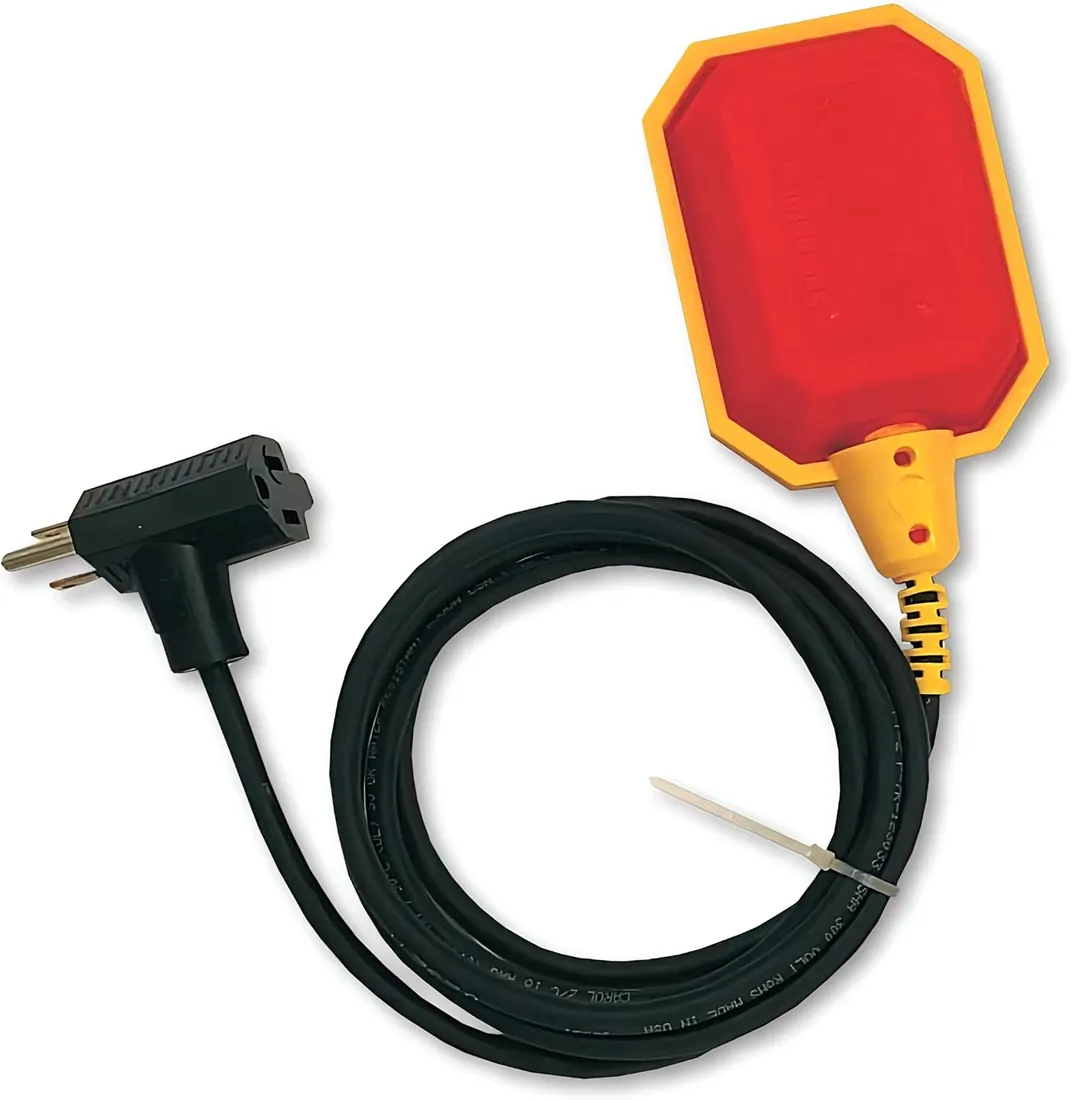
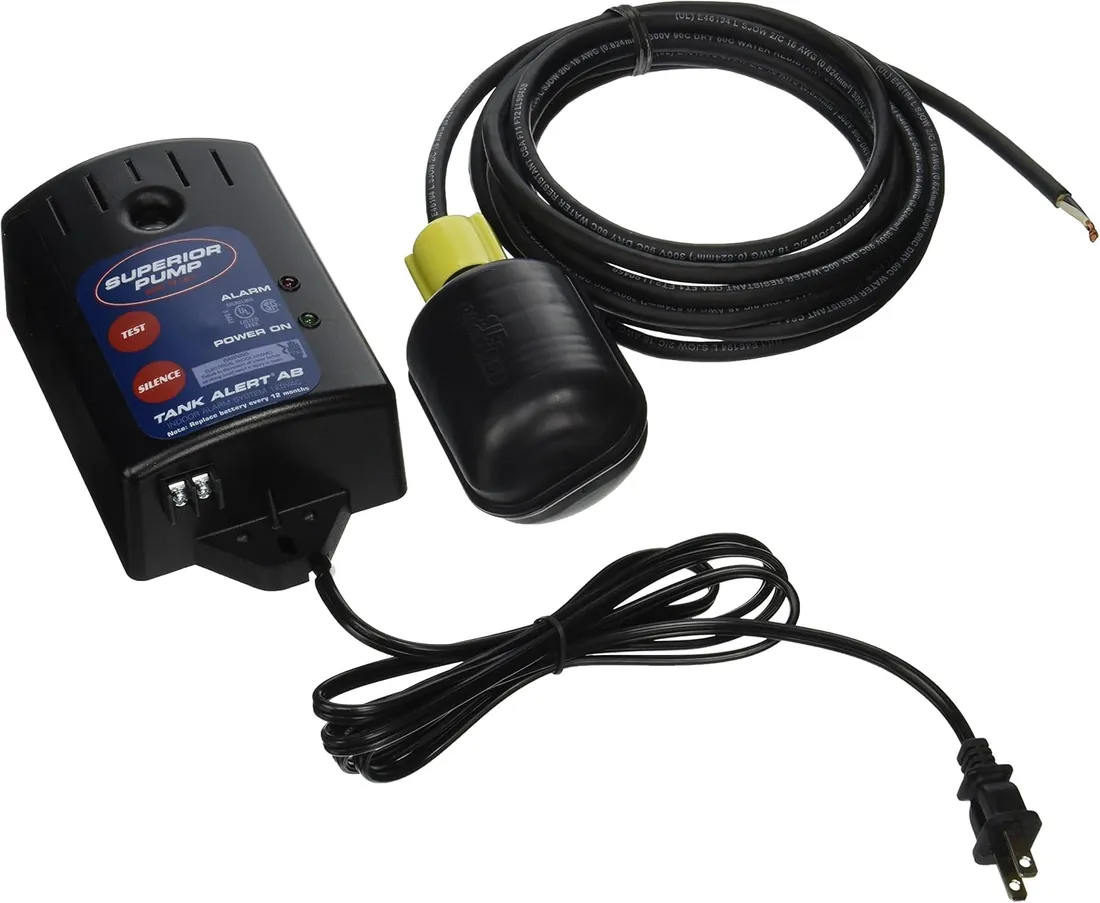
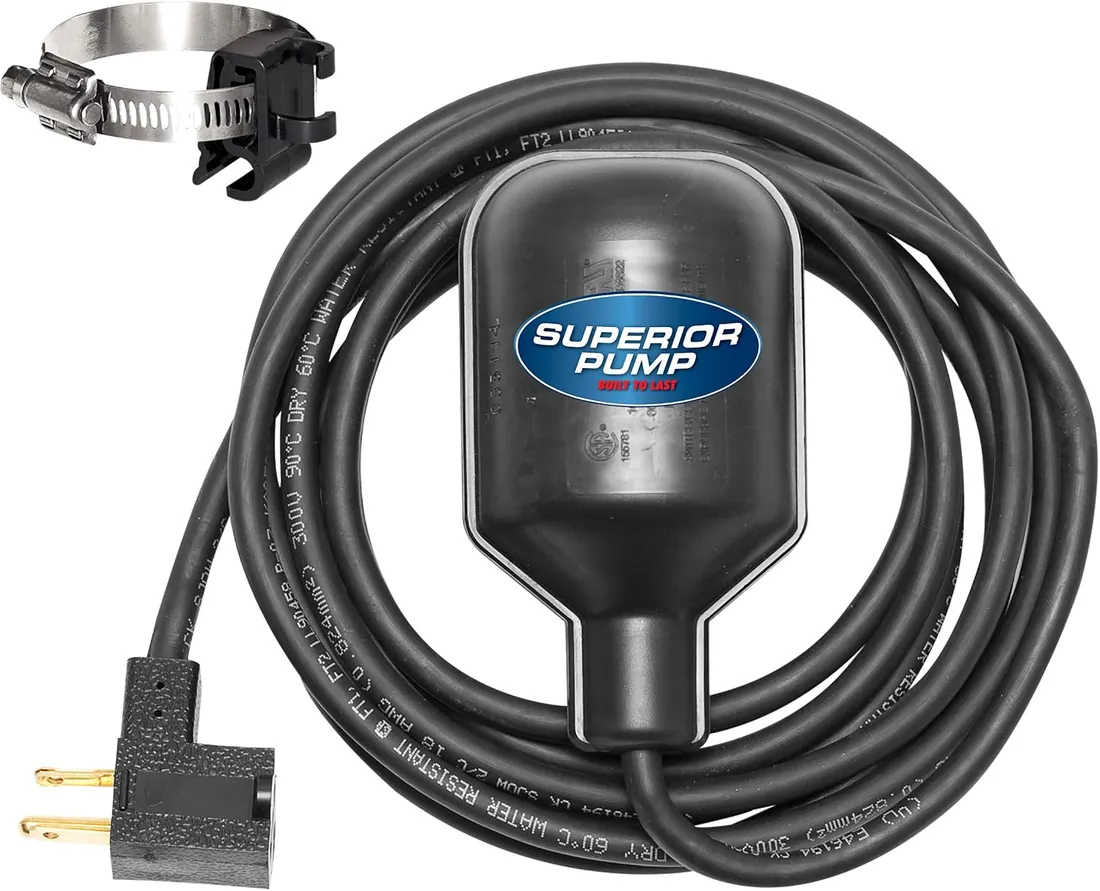
Compared with and featured in
Final verdict
Buy the 2359 when you need a wire-lead float for a panel, tank or alarm and want the choice of empty or fill. For a plain plug-in sump switch, the piggyback version is easier.
Where to buy
Each button opens this exact model's listing. We may earn a commission on tracked links; it never changes what we publish. Disclosure
Questions buyers ask
Is the part number 2359 or 2359-3?
The listing uses 2359-3 as both the model and the manufacturer part number for this 10 ft version. The seller's chart shows the same float in several cable lengths, so check the length you need before ordering.
Can the 2359 fill a tank?
Yes. The seller describes this wire-lead Water Boss as suitable for emptying or filling, depending on how it is connected. The piggyback version is emptying only, so it is the wrong pick for keeping a cistern or stock tank topped up.
Can I plug a sump pump into it?
Not directly. It has bare leads, so it must be wired into a box, a panel or a cord set by someone qualified. If you want plug-in convenience, the piggyback Water Boss is the simpler choice for most homes.
How warm can the water be?
The listing gives a range from 32 °F to 140 °F for the polypropylene casing. That covers groundwater and most drainage; let hot discharge from appliances cool before it reaches the float.