Choose a condensate pump by how high it must lift water and how much water your equipment produces, then make sure it has an overflow safety switch you can wire to shut the equipment down. Little Giant's VCMA-20 moves 48 gallons per hour at 10 ft with a 20 ft shut-off, against 25 gallons per hour and 15 ft for the VCMA-15. Mini-split systems use smaller, separate pumps.
When you need a condensate pump
Air conditioners, heat pumps, condensing furnaces and dehumidifiers all produce water. If a floor drain sits below the equipment, gravity can carry it away through a sloped line, and no pump is needed. A pump is needed when the drain is higher than the equipment or far away: a furnace in a basement with the drain upstairs, an air handler in a closet, or a dehumidifier in a crawl space.
Little Giant describes its VCMA pumps as made for automatic removal of condensate from air conditioning, refrigeration and dehumidification equipment when gravity drainage is not possible or practical, and also for high-efficiency condensing furnaces and boilers. If gravity works, use it; it has no moving parts.
Lift and flow
Measure the vertical distance from the pump to the highest point of the discharge line, then add the horizontal run. Little Giant says to route the tubing straight up but not beyond 75% of the pump's total head capacity, then slope it down to a drain at or below the bottom of the pump if possible, which creates a siphon and improves efficiency. If the line cannot slope down, it asks for an inverted U above the pump.
The table shows how much the two VCMA sizes differ. Both have a 1/2 gallon tank and a 3/8 in barbed outlet with a built-in check valve, but the 1/30 hp VCMA-20 moves far more water at height than the 1/50 hp VCMA-15. Furnaces and small air conditioners usually produce modest amounts; large systems, multiple units on one pump, or a high lift call for the larger model.
| Model | 1 ft | 5 ft | 10 ft | Shut-off |
|---|---|---|---|---|
| VCMA-15ULS (1/50 hp) | 65 | 50 | 25 | 15 ft |
| VCMA-20ULS (1/30 hp) | 80 | 70 | 48 | 20 ft |
Figures: Little Giant VCMA-15 spec sheet 995124; Little Giant VCMA-20 spec sheet 995125.
The overflow safety switch
A condensate pump that fails quietly floods the floor while the equipment keeps making water. Models with a safety switch, the S in Little Giant's VCMA-15ULS and VCMA-20ULS, add a second float that trips at high water. Little Giant ships it wired normally open, to break the low-voltage thermostat circuit and stop the cooling or heating unit, or it can be moved to the normally closed terminal to trigger an external alarm. The switch must be on a Class II low-voltage circuit, never the line voltage.
Little Giant advises a backup switch or alarm wherever a failed pump could cause damage. For most homes, wiring the switch to shut the equipment down is the right choice: a warm house or a stopped furnace gets noticed before a ceiling stain does.
- Turn off power to the furnace or air handler.
- Find the low-voltage thermostat wire that controls cooling or heating.
- Connect the pump's safety switch leads in series with it.
- Restore power and lift the safety float to confirm the unit stops.
Furnace condensate and acid
High-efficiency gas furnaces produce acidic condensate. Little Giant warns that in a gas furnace environment the tank should be cleaned or flushed with fresh water routinely, so pockets of acid do not form and cause pitting. Its maintenance steps include lifting the cover, checking that the floats move freely, backwashing the check valve, washing the tank with warm water and mild soap, and flushing with fresh water.
Before installing on a new air conditioner, Little Giant also suggests letting the system cycle a few times into a separate container to flush residual oils that can damage the pump and drain line.
Mini-split and dehumidifier pumps
Ductless mini-split heads hang high on a wall where a tank pump will not fit. They use small pumps, often with a separate sensor in the drip tray and a pump hidden in the line set cover or ceiling. These handle only the small flow from one head. The condensate pump category covers them, and the mini-split pump guide explains the layouts.
Dehumidifiers with a pump outlet can lift water on their own; those without one pair well with a tank-style condensate pump set below the unit's drain.
Condensate pump vs sump pump
They are not interchangeable. A sump pump moves thousands of gallons per hour of groundwater through 1-1/2 in pipe from a large pit. A condensate pump moves a few dozen gallons per hour through 3/8 in tubing from a 1/2 gallon tank, and it is built to stand on a floor, not to be submerged. Some homes route condensate into the sump pit, which is acceptable where local code allows. For choosing among tank pumps, the furnace and AC condensate pump list and the Little Giant VCMA-20ULS are good starting points.
Common mistakes
- Leaving the cardboard shipping insert in, which Little Giant says makes the pump overflow.
- Not wiring the overflow switch to the equipment or an alarm.
- Using tubing larger than the maker allows, which increases backflow.
- Running the discharge higher than the pump's practical lift.
- Never flushing the tank on a high-efficiency furnace.
Products that fit
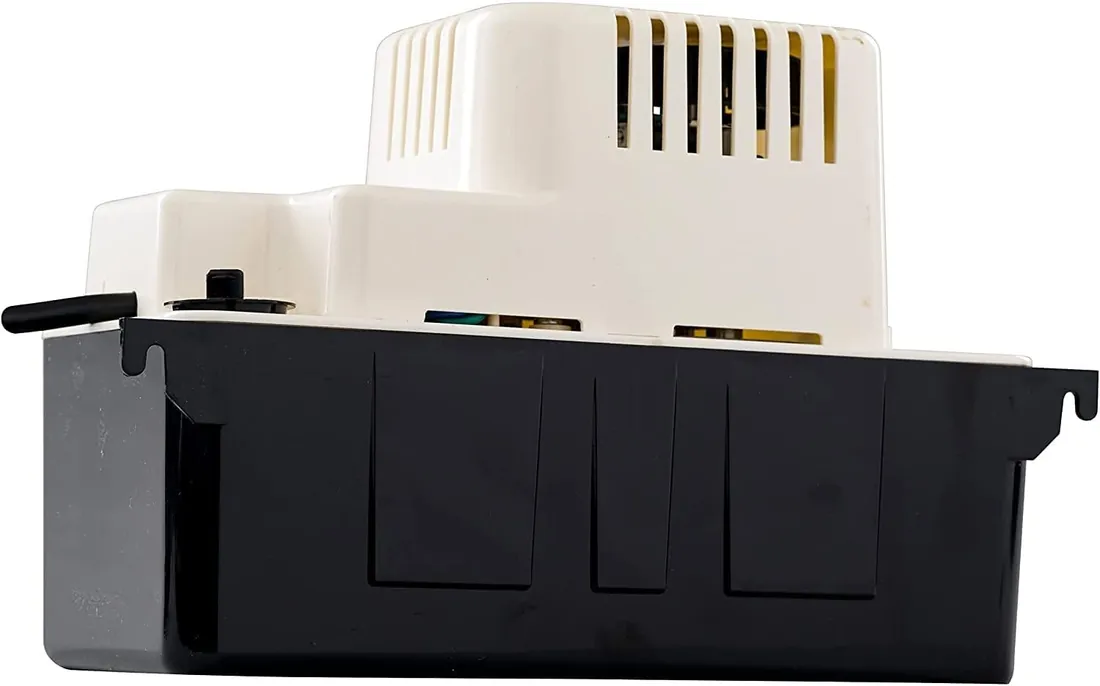
Little Giant VCMA-20ULS Condensate Pump
1/30 hp tank pump with an overflow switch and a 20 ft shut-off.
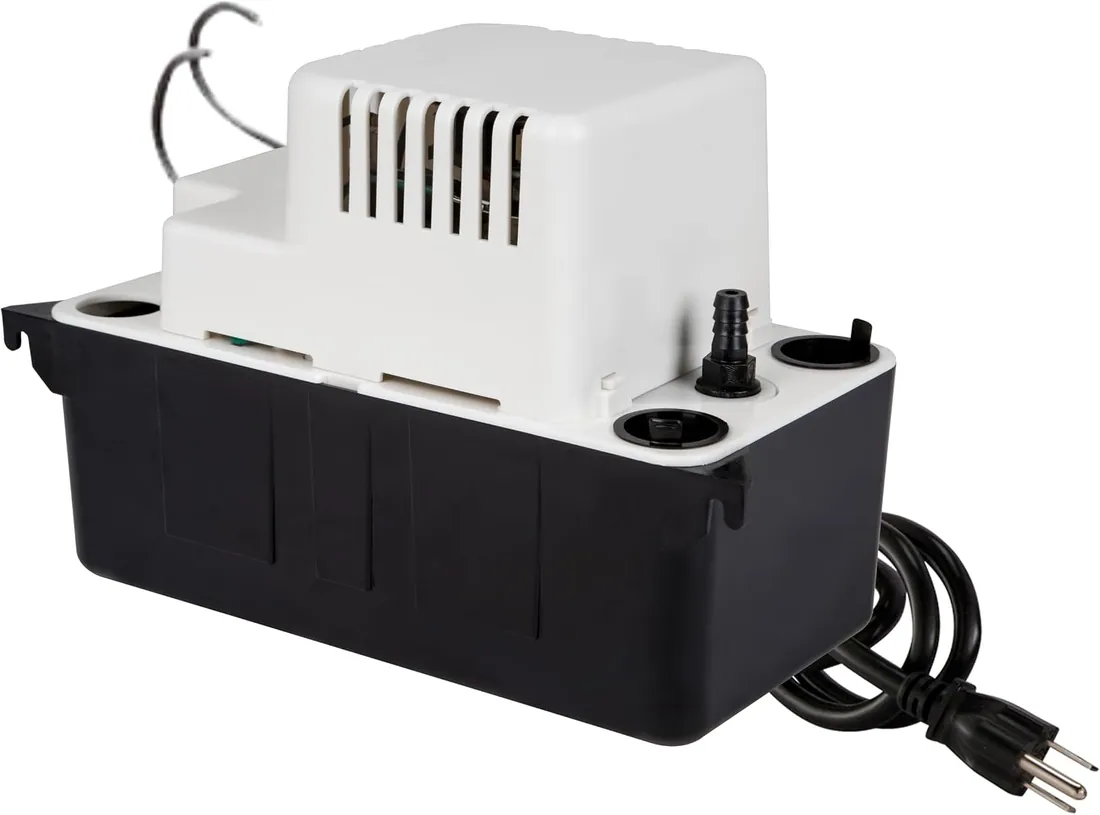
Little Giant VCMA-15ULS Condensate Pump
1/50 hp tank pump with an overflow switch for lower lifts.
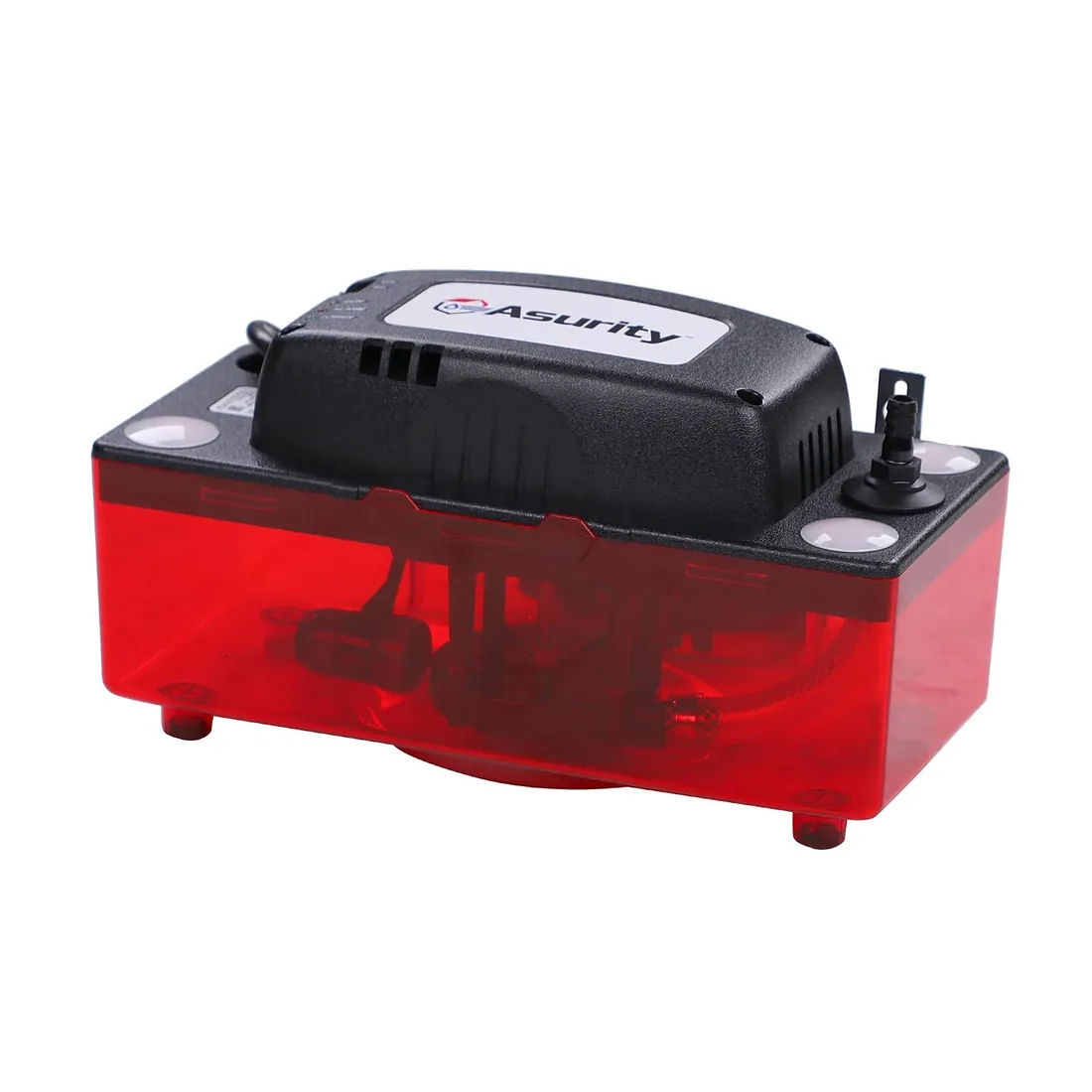
Diversitech ULTRACP-22 Condensate Pump
Compact tank pump for furnaces, air conditioners and dehumidifiers with a listed 22 ft lift.
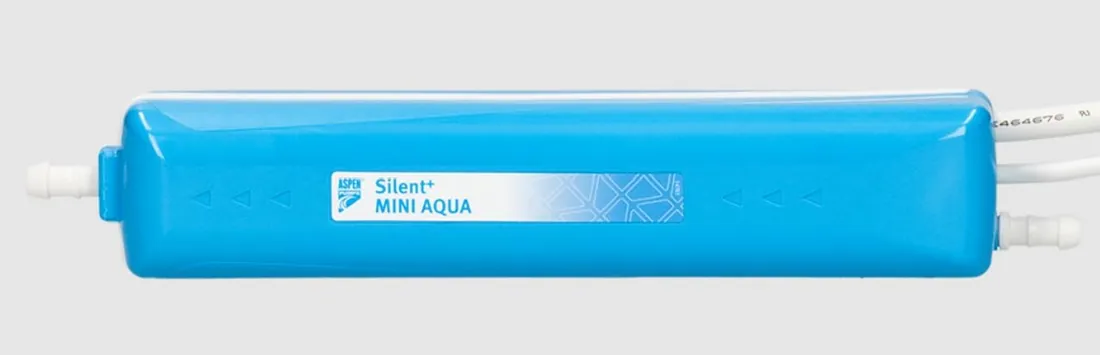
Aspen Silent+ Mini Aqua Condensate Pump
Small pump designed to sit near a ductless mini-split head instead of a floor tank.
Questions readers ask
What size condensate pump do I need?
Size it by lift and flow. Measure the height to the top of the discharge line and check the pump's flow at that height. Little Giant's VCMA-15 gives 25 gallons per hour at 10 ft and the VCMA-20 gives 48, so higher lifts favour the larger pump.
Does a condensate pump need a safety switch?
It should have one. An overflow switch shuts the equipment off or sounds an alarm if the pump fails. Little Giant's ULS models ship wired to break the thermostat circuit.
Can a condensate pump drain into a sump pit?
Often yes, where local code permits. The sump pump then carries the water out with the groundwater. Keep the condensate tubing secured so it cannot fall into the pit and siphon back.
How do I clean a condensate pump?
Unplug it, lift the cover, free the floats, backwash the check valve, wash the tank with warm water and mild soap, and flush it with fresh water, as Little Giant's manual describes.