Choose a mini split pump sized to the indoor unit's capacity, with enough lift for the route to the drain and a high-level safety switch wired to stop the unit. For quiet rooms, compact sensor-and-pump designs mounted out of the room are best; makers list figures as low as 16 dB(A) for the Aspen Silent+ Mini Aqua and 20 dB for Aquastrong's CDS036, though test conditions are not stated.
When a mini split needs a pump
A ductless indoor unit collects water on its coil and drains it by gravity through a small hose. That works when the head sits on an outside wall and the line can fall all the way to the ground. When the head is on an interior wall, the drain must rise into an attic, or the run to a drain is long and flat, the water needs help.
Mini split pumps are smaller than the box-style pumps used beside furnaces. Many have a separate water sensor that sits near the unit and a tiny pump that can hide in the line set cover, a ceiling void or the next room. Box-style tank pumps can also serve a mini split, but they are bulkier and usually noisier in a living space.
Reading the published figures
Three numbers matter: flow, lift and noise. Flow for mini split pumps is small and often given in liters per hour; FUJIWARA rates its FUJ-24S at 24 l/h for indoor units up to 2,200 W and its FUJ-40L at 40 l/h for units up to 3,700 W. Lift is the maximum height the pump can raise water, and you should plan to use well under it, since Little Giant asks that tank pumps not exceed 75 percent of their rated head.
Noise figures come from the listings and are not measured to a stated standard, so treat them as a ranking rather than a promise. The table collects what each seller publishes; where a figure is missing, it is not stated on the listing.
| Pump | Flow | Max lift | Stated noise | Matched unit size |
|---|---|---|---|---|
| Aspen Silent+ Mini Aqua | Not stated on the listing | Not stated on the listing | 16 dB(A) | Not stated on the listing |
| Aquastrong CDS036 | 9.6 GPH | 33 ft | 20 dB | Not stated on the listing |
| FUJIWARA FUJ-24S | 24 l/h | 33 ft | Not stated on the listing | A/C up to 2,200 W |
| FUJIWARA FUJ-40L | 40 l/h | 33 ft | Not stated on the listing | A/C up to 3,700 W |
| Aquastrong CDS325 (tank type) | 95 GPH | 26 ft | Not stated on the listing | Not stated on the listing |
Figures: Aspen Silent+ Mini Aqua listing; Aquastrong CDS036 mini split condensate pump listing; FUJIWARA FUJ-24S condensate pump listing; FUJIWARA FUJ-40L condensate pump listing; Aquastrong CDS325 condensate pump listing.
Getting the quietest result
The pump's own rating is only part of the story. Where you mount it often matters more. A pump hidden in a ceiling void or a closet behind the head is quieter in the room than a slightly quieter pump fixed to the wall beside the bed. Mount it on a solid surface with any supplied rubber grommets, and keep tubing from touching studs or drywall, where it can drum.
Short cycling is the other source of noise: a pump that runs for a few seconds every minute is more noticeable than one that runs longer, less often. Matching the pump to the unit's capacity and keeping the sensor clean keeps cycles regular. For a short list of quiet options, the Aspen Silent+ Mini Aqua and the Aquastrong CDS036 publish the lowest noise figures in this group.
The high-level safety switch
Every condensate pump can fail, and when it does the water goes into the wall or ceiling. A high-level safety switch stops that by shutting the indoor unit down, or by raising an alarm, when water rises too high. Aquastrong's CDS036 listing describes two choices: wire its leads to the normally closed and common terminals to stop the appliance, or to normally open and common to drive an alarm. Little Giant's VCMA manual describes the same arrangement for its tank pumps.
Wire the switch to stop the unit wherever the manufacturer allows it. An alarm in an empty house does not stop a ceiling stain. Mini split wiring varies by brand, so follow the indoor unit's installation manual for which terminals to break, and leave that work to an HVAC technician if you are not sure.
Care and common problems
Condensate carries dust and grows slime, so the sensor, filter and lines need regular cleaning. Aquastrong asks owners to clean the reservoir, float and filter basket at least every six months on its CDS325, and Little Giant gives the same six-month inspection interval. A pump that runs but moves no water usually has a blocked outlet line, a stuck check valve or more lift than it can manage.
When choosing, compare the pumps side by side on the condensate pump table, and see the installation guide linked below for routing the tubing.
Common mistakes
- Mounting the pump on the wall right beside a bedroom head.
- Leaving the safety switch unconnected so a failed pump floods the ceiling.
- Choosing a pump rated close to its maximum lift for the planned route.
- Skipping sensor and filter cleaning until the pump stops.
- Pairing a small mini split pump with a large multi-head system.
Products that fit
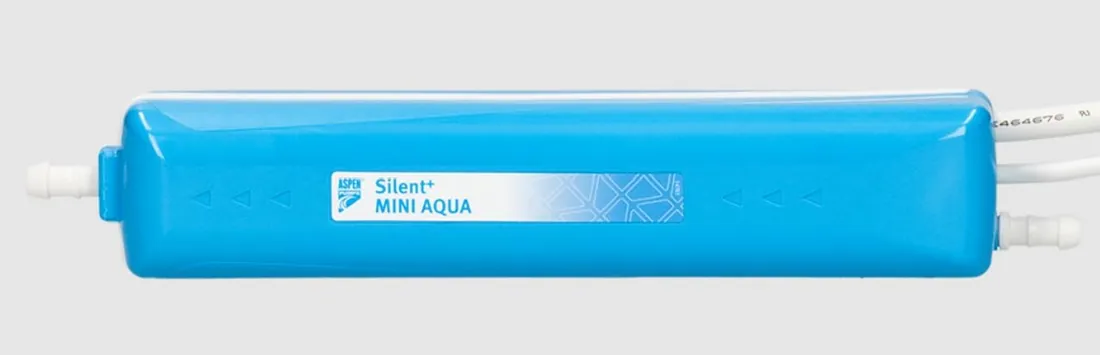
Aspen Silent+ Mini Aqua Condensate Pump
Compact mini split pump listed at 16 dB(A), the lowest figure in this group.
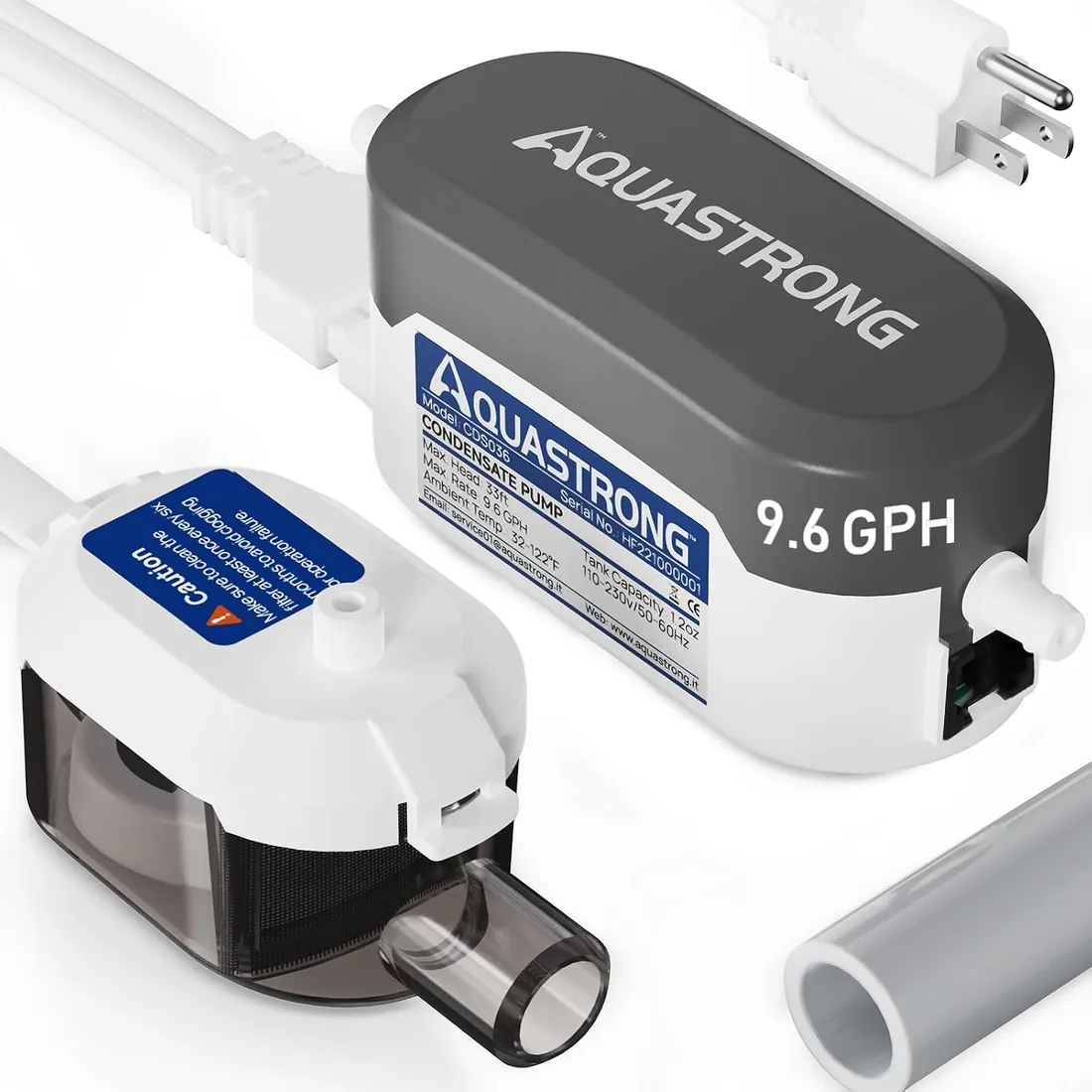
Aquastrong CDS036 Mini Split Condensate Pump
Small pump listed at 20 dB with a 33 ft lift and a wired safety switch.
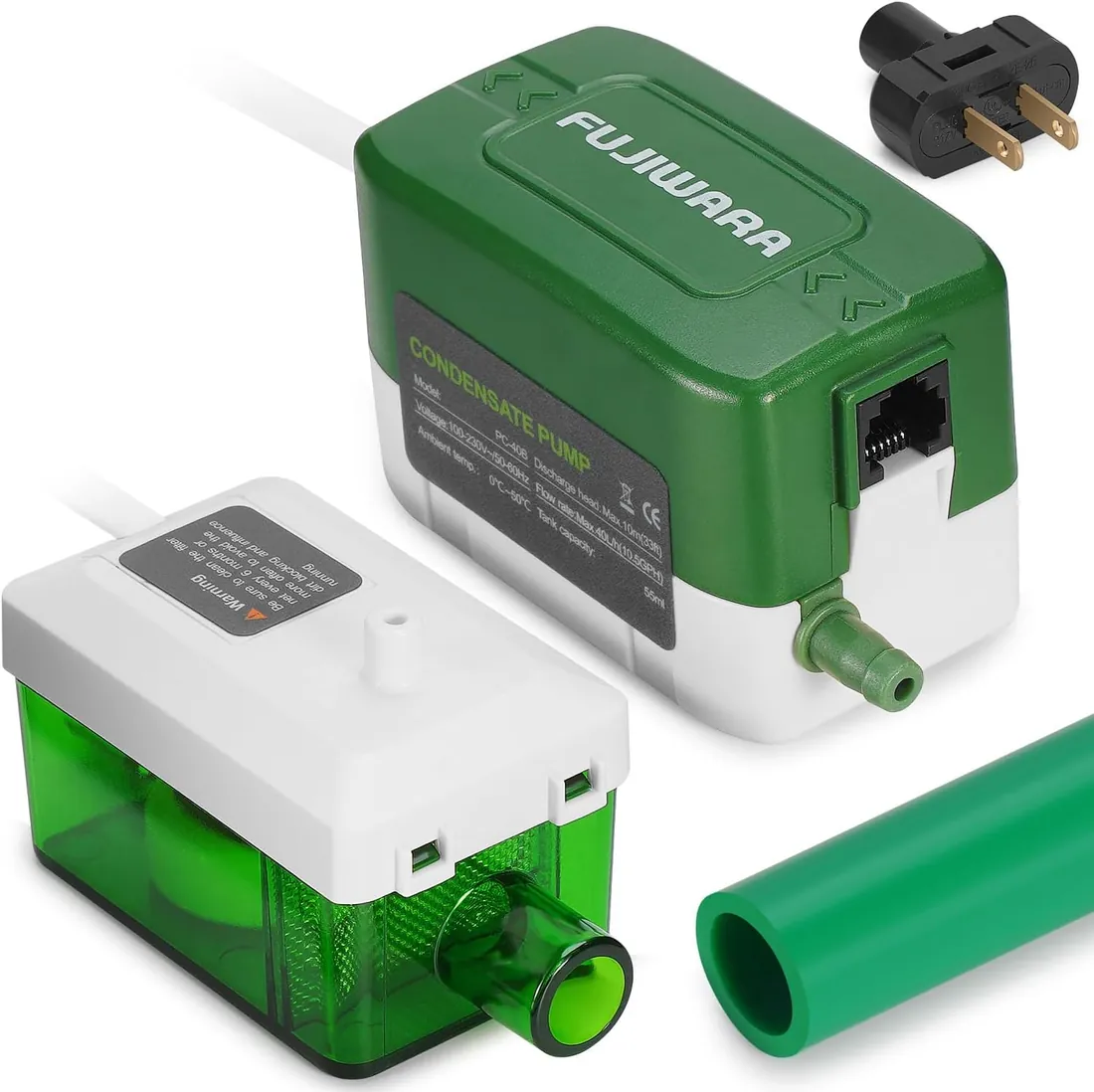
Fujiwara FUJ-24S Mini Split Condensate Pump
Mini split pump rated for indoor units up to 2,200 W at 24 l/h.
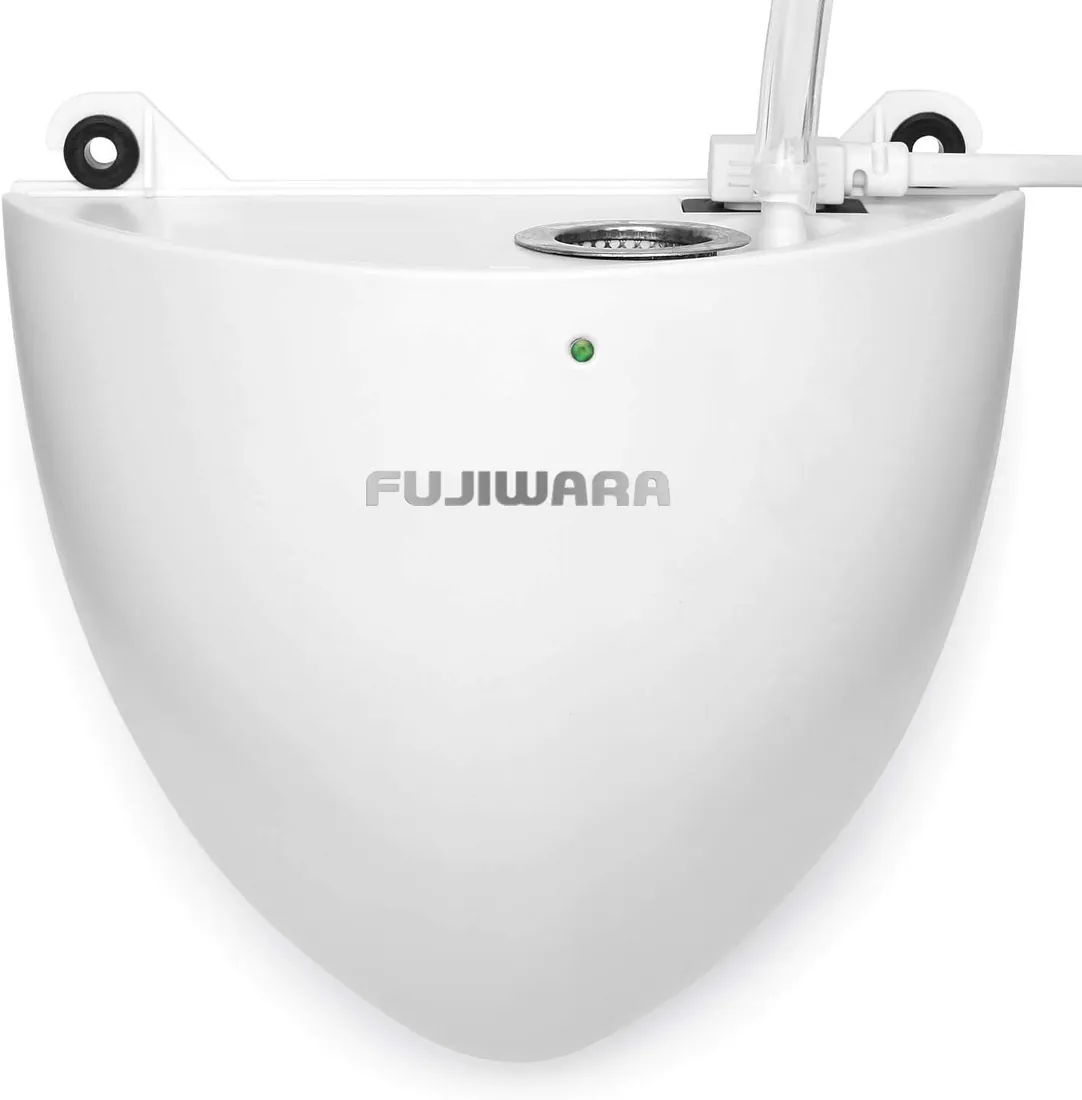
Fujiwara FUJ-40L Wall-Mounted Condensate Pump
Larger FUJIWARA model for units up to 3,700 W at 40 l/h.
Questions readers ask
What is the quietest mini split condensate pump?
Among the pumps listed here, the Aspen Silent+ Mini Aqua publishes the lowest figure at 16 dB(A), followed by Aquastrong's CDS036 at 20 dB. Neither listing states how noise was measured, and mounting location makes a large difference in the room.
Do mini splits need a condensate pump?
Only when gravity cannot drain the water: the head is on an interior wall, the drain must rise, or the run is long and flat. A head on an outside wall with a downhill line to the ground usually needs no pump.
Where should a mini split condensate pump be mounted?
Close to the indoor unit and below its drain outlet, ideally out of the room in a ceiling void, closet or line set cover. Keep the sensor where the condensate reaches it and the tubing clear of studs.
How often should a mini split condensate pump be cleaned?
At least every six months, per Aquastrong and Little Giant, and more often in dusty or humid conditions. Clean the sensor or float, the filter and the outlet tubing, and flush with fresh water.