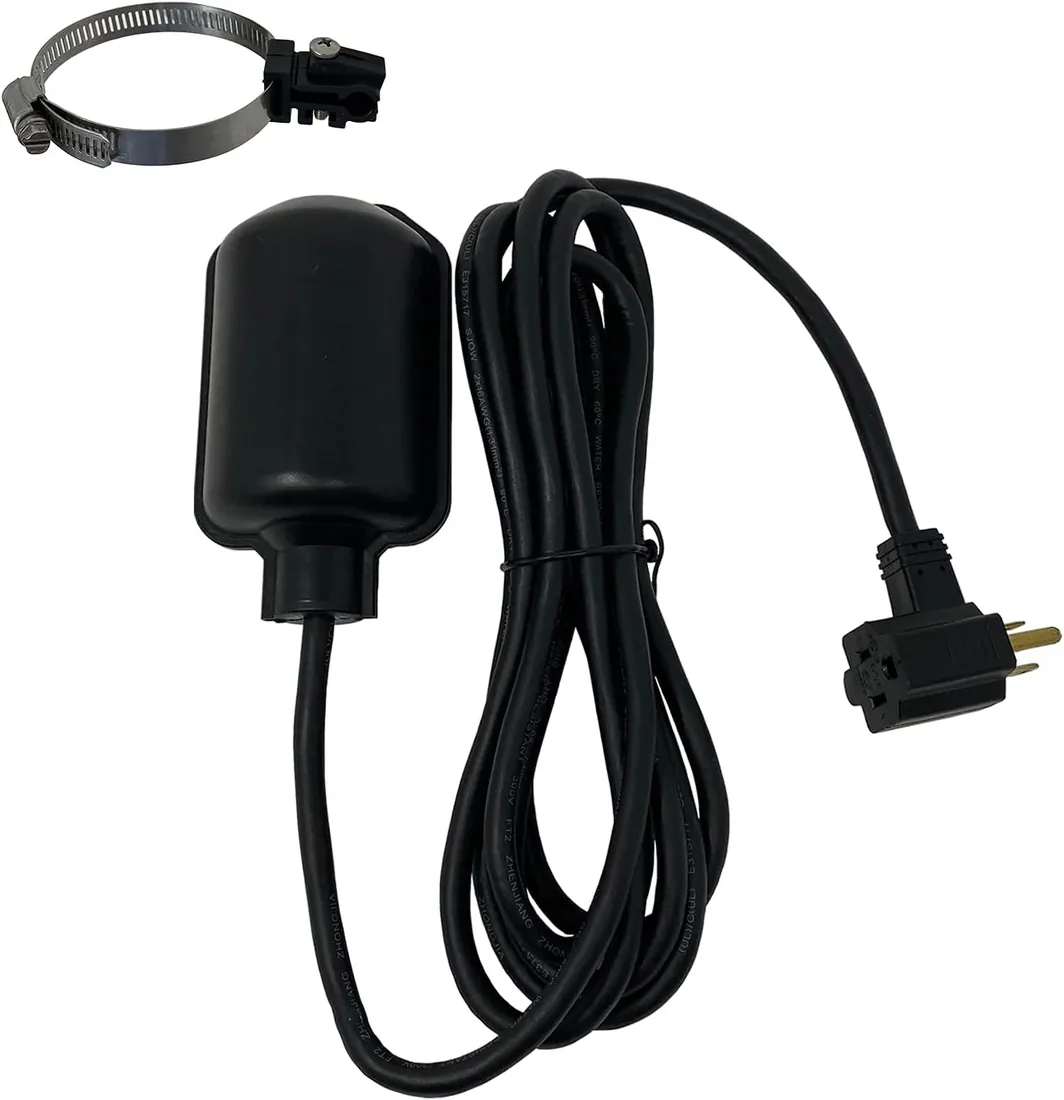
Quick verdict
A straightforward universal tether float that clamps to the discharge pipe and takes the pump's plug on its back. The listing pitches it for sump, sewage and effluent pits alike. Its current rating matches most household sump switches, so heavier pumps need something stronger, and a tether needs a pit wide enough to swing in.
Who it fits, and who should skip it
A good fit if
- A worn tethered switch needs a like-for-like replacement.
- Your pit is wide and the outlet is within reach of the cord.
- You want one spare float that suits sump and effluent pumps.
Look elsewhere if
- The pump draws more than 10 A.
- The pit is too tight for a float to swing.
Specifications
Electrical
| Switch type | Tethered float, piggyback plug, normally open |
|---|---|
| Rating | 10 A at 120 VAC |
| Contacts | Gold-plated electrical connections |
| Power cord | 10 ft with piggyback plug |
Figures: Amazon listing B093TMRTZZ (PumpSpy TS-100).
Use
| Rated use | Sump, sewage and effluent pumps |
|---|---|
| On / off levels | Set by tether length; no figures from PumpSpy |
Figures: Amazon listing B093TMRTZZ (PumpSpy TS-100).
Build
| In the box | Float switch, hose clamp, mounting clamp, mounting screw |
|---|---|
| Weight | 1.1 lb |
Figures: Amazon listing B093TMRTZZ (PumpSpy TS-100).
Installation and setup
Fit the hose clamp around the discharge pipe and use the cable grip to hold the cord at the height you want. The tether below the grip lets the float rise and fall; the longer that free length, the wider the gap between start and stop. Keep the float's path clear of the pump body, the pit wall and any incoming drain line.
Plug the TS-100 into a grounded 120 V outlet, then plug the pump into the piggyback socket. If the pump has a built-in switch, put the pump in manual mode or hold its switch on. Fill the pit with a hose and watch at least two complete cycles.
Compatibility
The TS-100 is a universal replacement for 120 V sump, sewage and effluent pumps whose running current is within 10 A. It suits pumps sold with a separate tethered switch, as well as pumps whose built-in switch has failed. Pumps on higher voltages, or wired to an alarm panel, need a wire-lead float instead. PumpSpy's own smart systems are a separate product; this float works without any app. Compare designs in the switch types guide.
Ownership and maintenance
Tether floats tend to fail by catching on something, so check the float's swing whenever the lid is off. In sewage and effluent basins, rinse the float at each pump-out. A quick bucket test every few months confirms the pump starts and stops; if the pump runs but the pit level never falls, look at the check valve and discharge rather than the switch.
Pros and cons
Pros
- Gold-plated contacts resist pitting.
- Rated for sump, sewage and effluent use.
- All mounting hardware in the box.
Cons
- Needs space for the tether to swing.
- No preset levels or maker manual to consult.
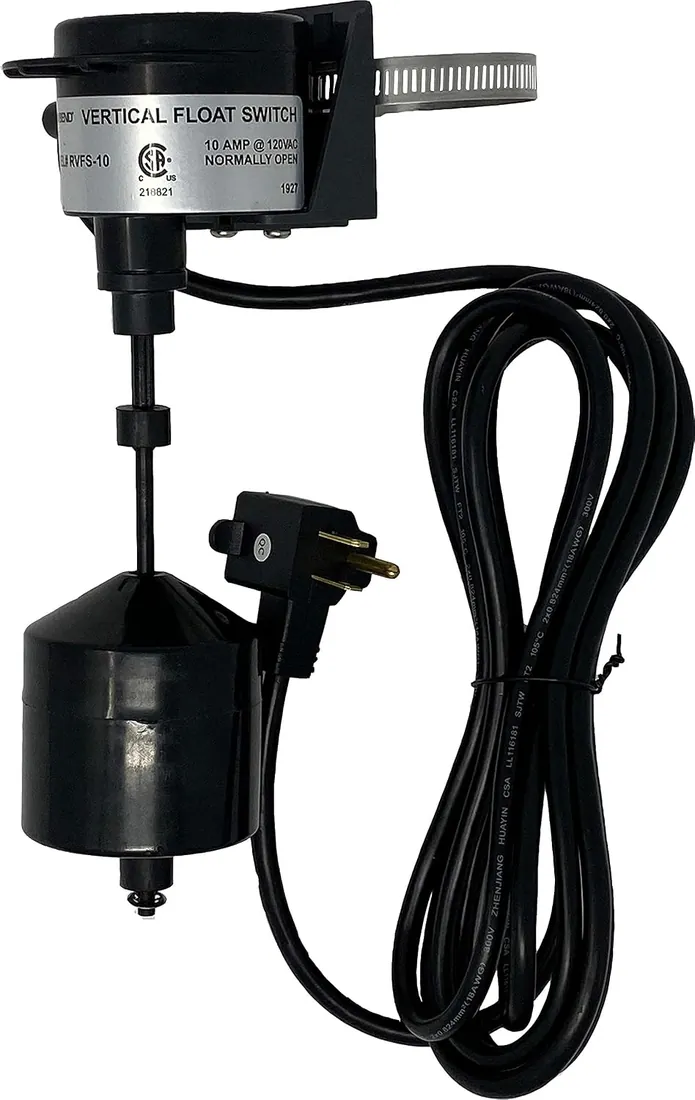
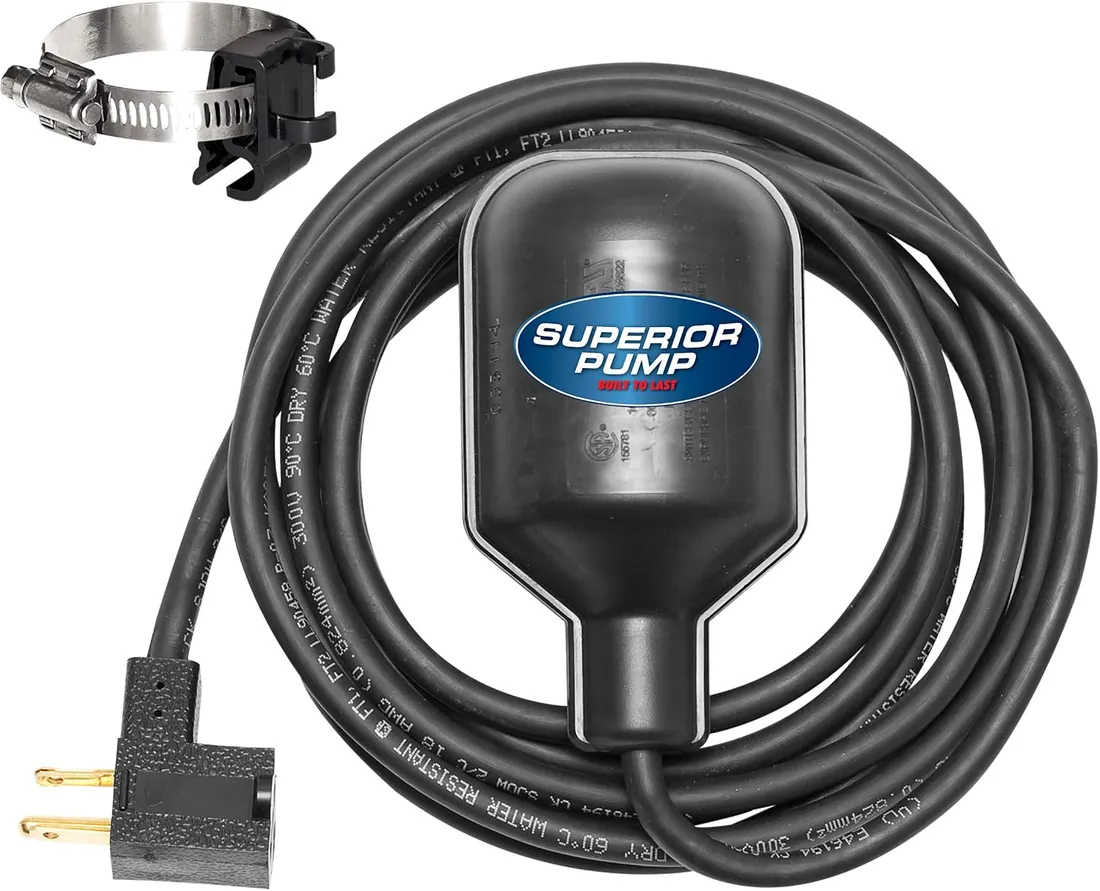
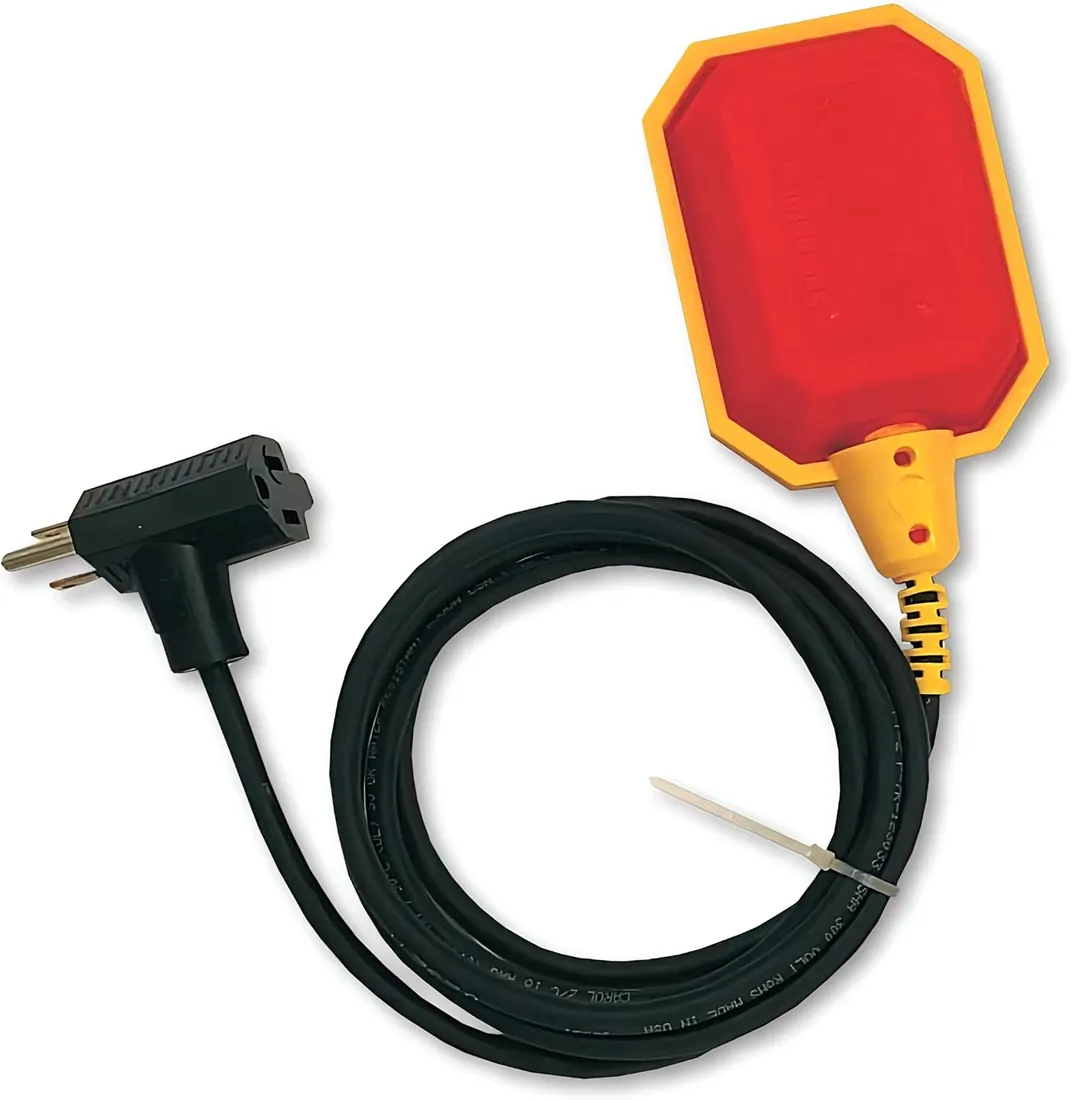
Alternatives worth comparing
Final verdict
Pick the TS-100 as a spare or replacement tether float for an ordinary 120 V sump, sewage or effluent pump in a pit with room to swing. Choose a vertical switch for tight pits.
Where to buy
Each button opens this exact model's listing. We may earn a commission on tracked links; it never changes what we publish. Disclosure
Questions buyers ask
Can the TS-100 run a sewage pump?
PumpSpy lists it for sump, sewage and effluent pumps on 120 VAC. Keep the pump's current within the 10 A rating and set the float so the basin never empties far enough to uncover the pump intake.
What does normally open mean on the TS-100?
The contacts are open, so the pump is off, while the float hangs down. When rising water tips the float, the contacts close and the pump runs. This is the usual setup for emptying a pit.
Does it work with PumpSpy's app?
It is a plain mechanical float with a piggyback plug and no electronics, so it works with any compatible pump on its own. App monitoring comes from PumpSpy's separate smart systems, not from this switch.
How do I adjust the TS-100's pumping range?
Slide the cord grip up or down. A longer free tether gives a larger range and fewer, longer runs; a shorter one makes the pump start sooner and run more often. Recheck a full cycle after any change.