A 30/50 switch starts the pump at 30 psi and stops it at 50; a 40/60 switch runs 40 to 60 psi and gives stronger pressure at the taps. To raise both points together, turn the large range nut clockwise; Pentair says each full turn adds about 2-1/2 psi. Reset the tank precharge to 2 psi below the new cut-in, and stay within the pump's ability.
How a pressure switch controls the pump
A well pump pressure switch is a diaphragm connected to a set of electrical contacts. Water pressure from the system pushes on the diaphragm against a spring. When the pressure falls to the cut-in point, the spring closes the contacts and the pump starts. When the pump has raised the pressure to the cut-out point, the diaphragm pushes the contacts open and the pump stops. The pressure tank stores water between those two points so the pump does not start every time a tap opens.
The Square D Pumptrol family, now sold under the Telemecanique name, is the switch found on most residential systems. Schneider's datasheet for the 9013FSG2J24 lists a nitrile diaphragm, double-pole contacts, and motor ratings of 1.5 hp at 115 V and 2 hp at 230 V single phase, which covers almost every household well pump.
30/50 vs 40/60: which setting to use
The two numbers are the cut-in and cut-out pressures. Both common settings keep a 20 psi differential, which Pentair calls best for pressure tank performance. The difference is where that band sits. A 40/60 setting delivers noticeably stronger flow at showers and upstairs fixtures. A 30/50 setting asks less of the pump and suits weaker pumps or deeper wells where the pump struggles to reach 60 psi.
A pump has to be able to reach the cut-out pressure comfortably at your water level. Pentair's rule is that the cut-out must be at least 5 psi below the pump's dead-head pressure, the most it can produce against a closed valve. If the pump can only just reach 60 psi, a 40/60 switch will leave it running and running. Pentair also warns that on its jet pumps the switch should never cut in below 20 psi or cut out above 60 psi.
| Setting | Cut-in | Cut-out | Tank precharge | Example switch |
|---|---|---|---|---|
| 30/50 | 30 psi | 50 psi | 28 psi | Square D FSG2J21 |
| 40/60 | 40 psi | 60 psi | 38 psi | Telemecanique 9013FSG2J24 |
Figures: Pentair instructions for adjusting well pump pressure switches U80-129; Amtrol Well-X-Trol installation and operation instructions 9015-868; Telemecanique Pumptrol 9013FSG2J24 product data sheet; Square D Pumptrol 9013FSG2J21M4 product data sheet.
How to adjust a pressure switch
Turn off the power before removing the cover; the terminals are live at line voltage. Inside, a two-post switch has a tall range nut on one spring and a short differential nut on the other. Pentair's instructions are clear on which does what. Turning the range nut, nut #1, clockwise raises both cut-in and cut-out together, by about 2-1/2 psi per full turn, so four turns raise the setting about 10 psi. Turning the differential nut, nut #2, clockwise raises only the cut-out. Counter-clockwise lowers either.
Pentair advises that very few systems need the differential nut touched, because the 20 psi spread suits the tank. Make small changes, restore power, and watch the gauge through a full cycle. Then reset the tank precharge to 2 psi below the new cut-in, with the tank empty. Schneider's datasheet gives an adjustable range on rising pressure of roughly 20 to 65 psi and a differential of roughly 15 to 30 psi for this switch family, so settings far outside those need a different switch.
- Switch off the pump circuit and remove the cover.
- Turn the range nut clockwise to raise both settings together.
- Count turns: about 2-1/2 psi per full turn.
- Restore power and watch the cut-in and cut-out on the gauge.
- Drain the tank and set its precharge 2 psi below cut-in.
Why the tank precharge must follow the switch
The tank's air cushion only works if it is set just below the cut-in. Amtrol's rule is 2 psi below, with the tank empty: 38 psi for 40/60 and 28 psi for 30/50. New Well-X-Trol tanks ship at 38 psi. If you raise the switch to 40/60 without raising the precharge, or lower it to 30/50 without releasing air, the tank delivers less water per cycle and the pump short cycles.
Amtrol adds a firm caution. If an older tank has lost air or the pump cycles faster than it used to, do not simply add air; that loss can mean corrosion inside, and Amtrol warns that repressurizing a damaged tank can cause it to burst. The pressure tank guide covers drawdown and sizing.
Low-pressure cut-off switches
Some switches add a lever that shuts the pump off if pressure falls well below cut-in, as happens when a well runs dry or a pipe bursts. On the Square D 9013FSG2J21M4 variant, Schneider describes this as a low-pressure cut-off that operates roughly 10 psi below cut-in. It protects a pump from running dry. The datasheet labels the feature AUTO-START-OFF, so read the switch instructions for how it restarts after a trip. Check your exact switch: the plain FSG2J21 used on many systems, including our FSG2J21CP page, is a 30/50 switch without that option unless the model code includes it.
When the switch itself is the problem
Pressure switches are wear parts. Schneider rates this family for 100,000 electrical cycles and a maximum of 10 cycles per minute, which is another reason short cycling from a waterlogged tank matters. Pitted or burned contacts cause the pump to chatter or fail to start; a clogged sensing port, often from sediment or iron, makes the switch respond late or not at all.
When replacing one, match the setting and the electrical rating, and confirm the pump's horsepower is within the switch's motor rating. The low well pressure guide covers the faults that look like a switch problem but are not, and the shallow well jet pump list shows which pumps ship with a switch fitted.
Common mistakes
- Adjusting the switch while the pump circuit is still powered.
- Turning the differential nut when the range nut was the one needed.
- Raising the cut-out above what the pump can reach at the well's water level.
- Changing the switch setting without resetting the tank precharge.
- Adding air to an old tank that has lost its charge.
Products that fit
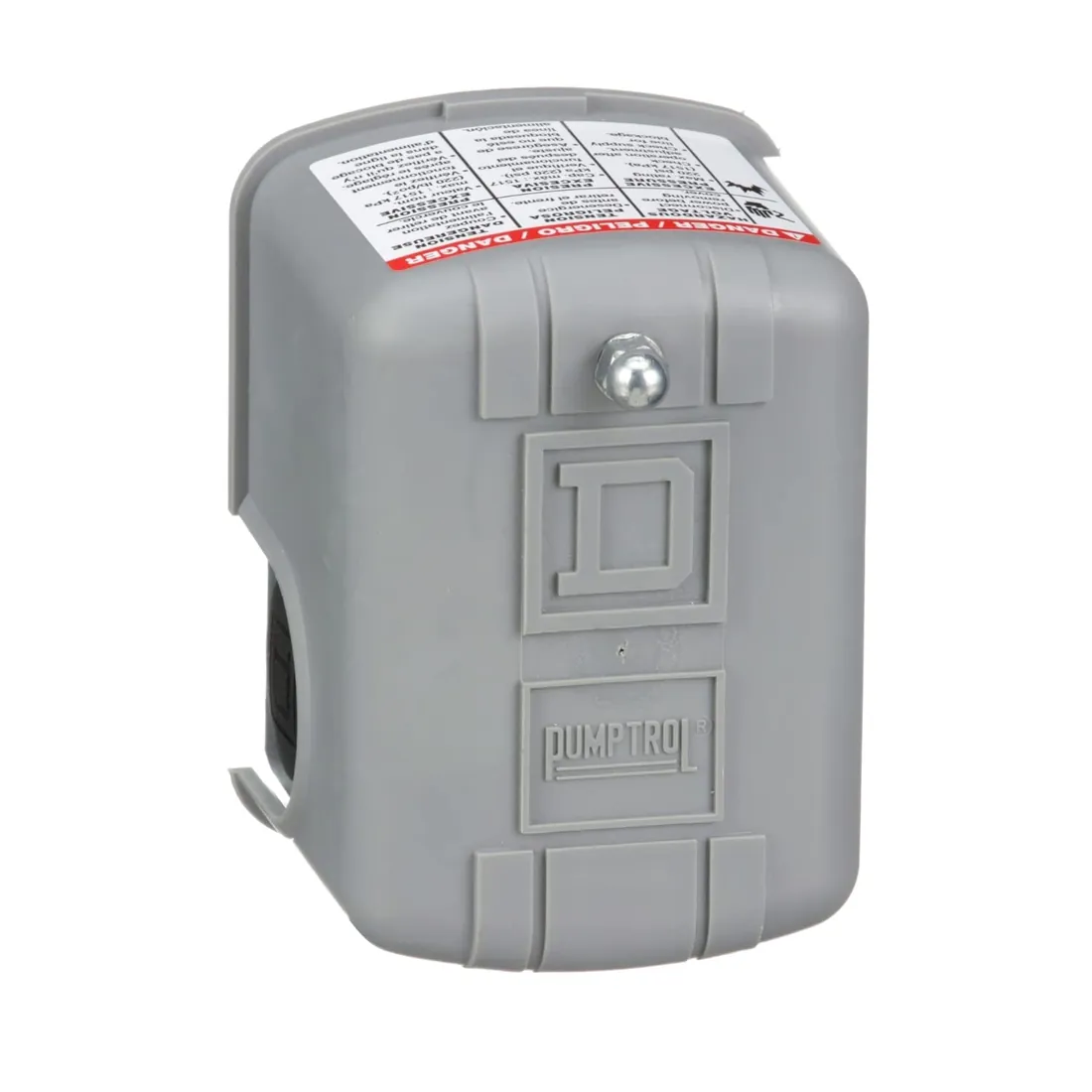
Square D 9013FSG2J24 40/60 PSI Pressure Switch
40/60 Pumptrol switch rated 1.5 hp at 115 V and 2 hp at 230 V.
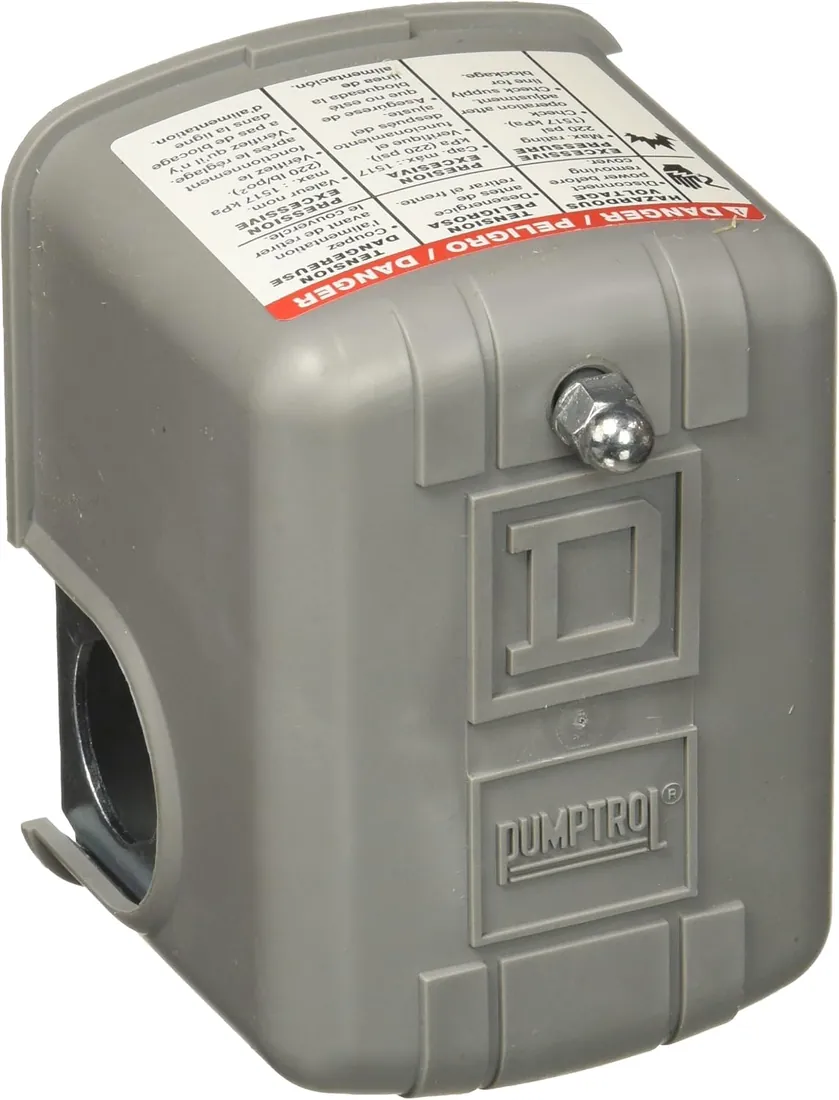
Square D FSG2J21CP 30/50 PSI Pressure Switch
30/50 Square D switch for pumps that should not run to 60 psi.
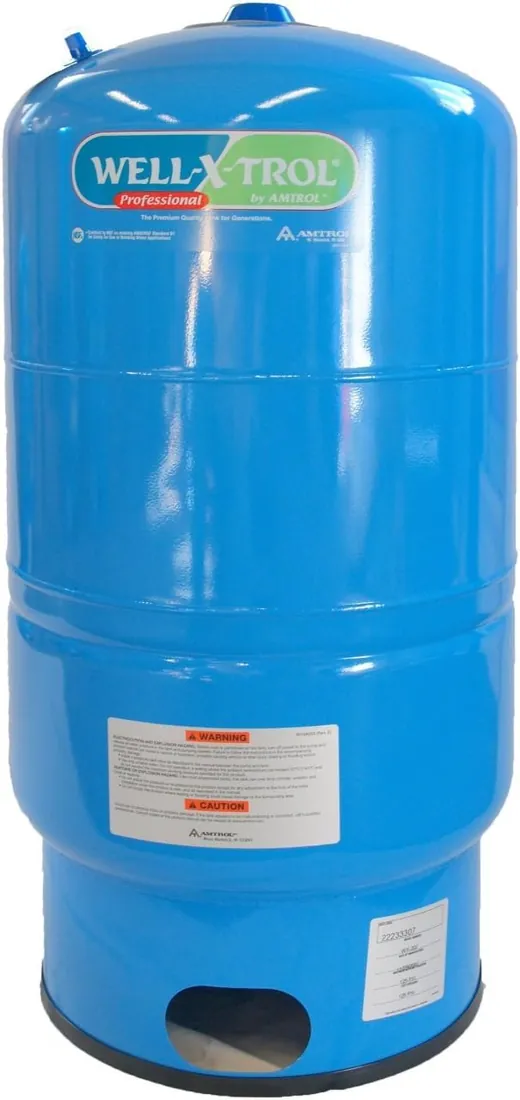
Amtrol WX-202 Well-X-Trol Pressure Tank
Well tank that ships at 38 psi, ready for a 40/60 switch.
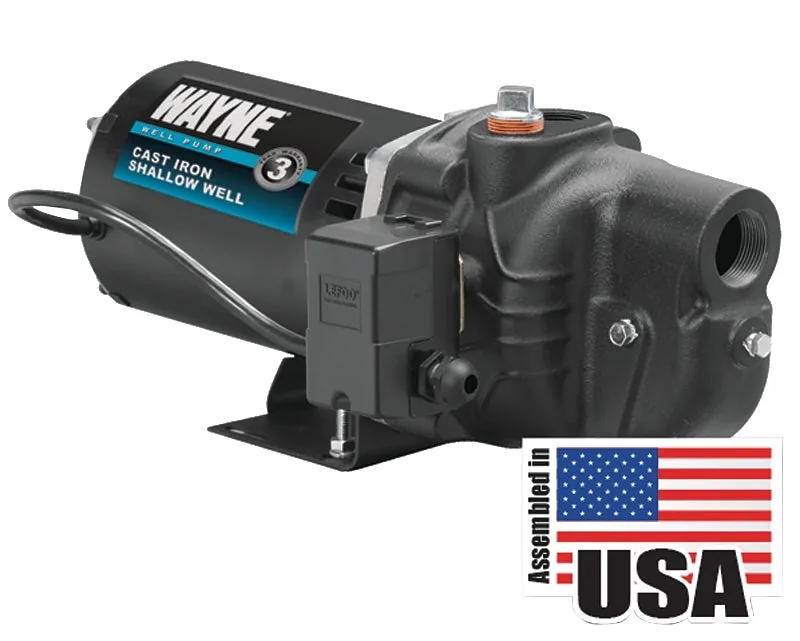
Wayne SWS50 Shallow Well Jet Pump
Shallow well jet pump that uses a standard pressure switch.
Questions readers ask
Can I change my 30/50 pressure switch to 40/60?
Yes, if the pump can reach at least 5 psi above 60 at your water level. Turn the range nut clockwise about four full turns, then switch off the power, drain the tank and set its precharge to 38 psi.
Which nut adjusts the cut-off pressure only?
On a two-post switch, the small differential nut. Pentair labels it nut #2 and says turning it clockwise raises only the cut-off. Most systems never need it; the large range nut moves both settings together.
What is the difference between a pressure switch and a pressure transducer?
A switch opens and closes contacts at two set pressures. A transducer sends a continuous pressure signal to an electronic controller, as on constant-pressure systems. The switch is simpler; the transducer allows variable-speed control.
Why does my pump keep running past the cut-out setting?
Either the pump cannot reach that pressure at your water level, or the switch contacts or sensing port have failed. Check the dead-head pressure against the setting and look for sediment in the switch inlet.